
This gets confusing fast. Buyers throw around "OEM," "ODM," and "system integrator" like they're interchangeable. They aren't, and picking the wrong type of manufacturing partner can mean overpaying, under-supporting, or ending up with hardware that fails in six months instead of running for a decade.
This guide breaks down what computer OEMs actually are, how they differ from ODMs and system integrators, and how to choose the right partner, especially if your application involves harsh industrial environments.
Key Takeaways
- OEM builds hardware sold under its own brand or a partner’s—separate from ODM and integrator roles.
- Cost, customization depth, and support ownership differ across OEM, ODM, and system integrator models.
- Rugged industrial computing needs purpose-built engineering, not a consumer PC in a tougher case.
- Match your OEM partner to order volume, customization scope, and real operating conditions.
What Is a Computer OEM?
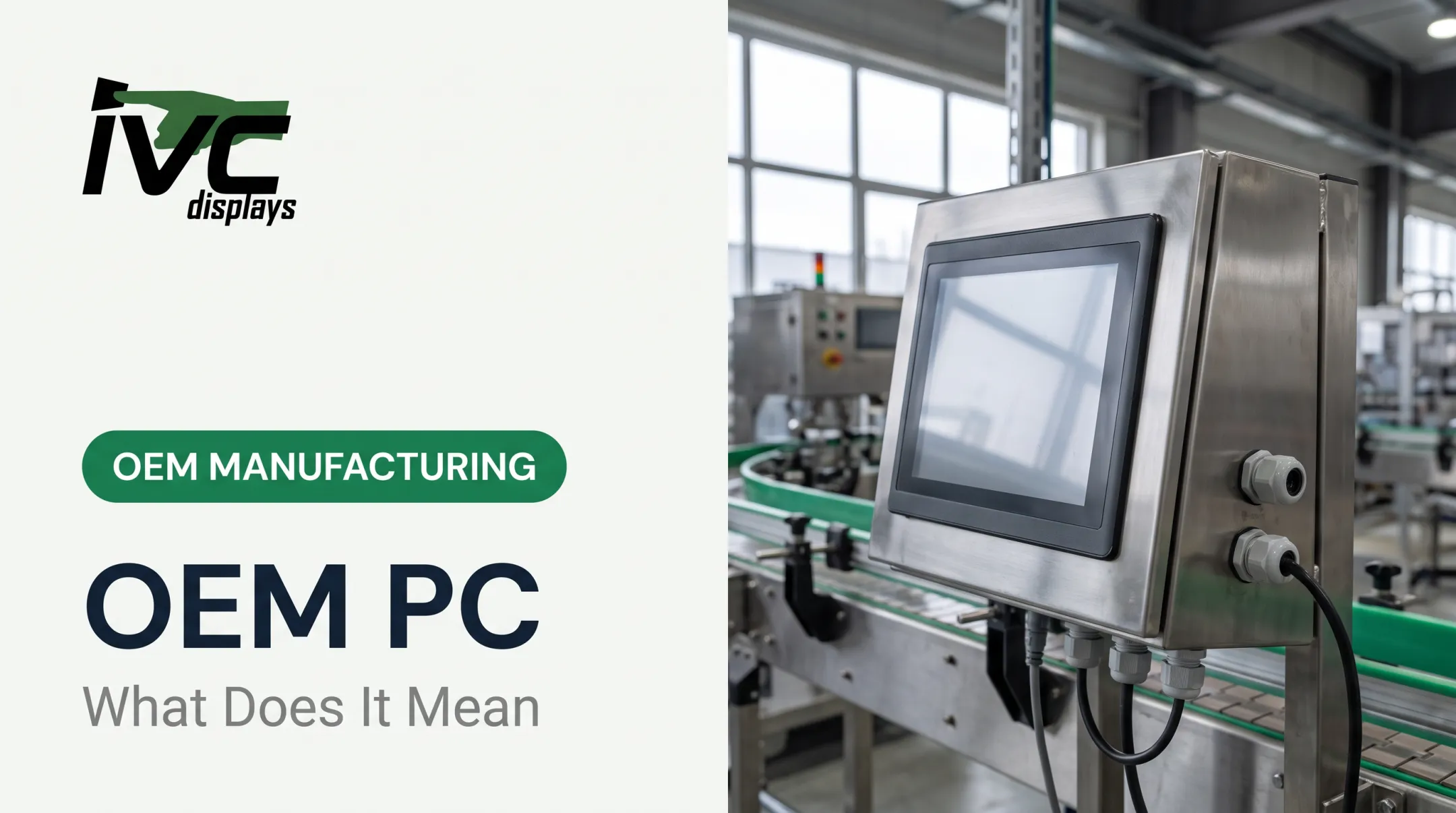
An OEM, in computing terms, is a company that manufactures hardware components or complete systems that get sold under its own brand or another company's name. The label is simple; the supply chain behind it usually is not.
Take Dell, HP, and Lenovo. They design, market, and sell computers under their own names, but they frequently rely on contract manufacturers like Quanta, Compal, or Wistron to actually build the units.
According to Pegatron's 2024 annual report, Taiwan-based ODM/EMS manufacturers produced roughly 72% of global notebook PC shipment volume — Quanta alone shipped 44.46 million units. The brand on the lid and the company that built the board are often two very different entities.
OEM Hardware vs. OEM Software
The term applies to software too, just differently:
- OEM hardware — components or full systems built for resale or integration under another brand
- OEM software — licensed to device makers for bundling, not sold directly to consumers (Microsoft's Windows licensing to PC manufacturers is the textbook example)
Why OEM Parts Cost Less
OEM components typically run cheaper than retail equivalents. The catch: they usually skip retail packaging, come with shorter or no standalone warranty, and offer limited direct support. You're paying less because the manufacturer expects the integrator or brand — not the end user — to handle support.
That same model extends to industrial equipment: OEMs and system integrators source computing hardware built for long production runs, custom I/O, and multi-year availability rather than retail shelf life.
OEM vs. ODM vs. System Integrator: Key Differences
Here's where most procurement confusion starts. All three terms describe companies that "make computers," but the design ownership and business model differ.
- OEM (Original Equipment Manufacturer): Builds hardware, often to its own design, for resale or rebranding under another company's name
- ODM (Original Design Manufacturer): Designs and manufactures products based on specifications, then ships them under the client's brand
- System Integrator (SI): Assembles systems from off-the-shelf parts, often for boutique, custom, or high-performance builds
Quick Comparison
| Factor | OEM | ODM | System Integrator |
|---|---|---|---|
| Design ownership | Often owns core design | Client owns final brand, ODM handles design work | Neither; combines existing parts |
| Typical scale | Mid-to-large manufacturing | Large-scale contract production | Smaller, project-based |
| Customization | Moderate to high | High (built to spec) | High, but limited to available components |
| Target market | Brands, integrators, industrial buyers | Major PC brands seeking volume production | Niche, custom, or performance-focused buyers |

Every OEM technically functions as a system integrator, since they're assembling parts into a finished product. Not every system integrator qualifies as an OEM, though. Many SIs just build custom rigs from parts they didn't design or manufacture.
For procurement teams sourcing industrial hardware, this distinction matters. A boutique SI building gaming PCs from retail components isn't equipped to certify a panel PC for a washdown environment. An industrial OEM is a different animal entirely.
Types of Computer OEMs and Manufacturers in the Market
Not all OEMs serve the same market. Three categories cover most of the field.
Consumer/commercial OEMs — Dell, HP, Lenovo, Asus — focus on mass-market laptops, desktops, and all-in-ones. Gartner's Q1 2026 data shows Lenovo held 26.5% of worldwide PC shipments, followed by HP at 19.3% and Dell at 16.5%, out of 62.8 million units shipped that quarter.
Contract manufacturers/ODMs — Quanta, Compal, and similar firms — build hardware at enormous scale behind major brand names, often without the end customer ever knowing.
Industrial and rugged computing OEMs specialize in purpose-built hardware for harsh environments rather than general office or home use. The requirements set them apart:
- Certifications for hazardous locations, marine use, or food-grade sanitation
- Environmental testing beyond standard consumer QA
- Long product lifecycle support, often measured in years, not product-refresh cycles
A consumer laptop line often disappears in 18 months. An industrial OEM supporting a factory-floor install has to keep the same configuration available for years.
Why Industrial and Rugged Applications Need Specialized OEMs
Standard consumer-grade PCs weren't built for dust, moisture, vibration, temperature swings, or a hose aimed directly at the enclosure. Put one in a plant environment and it's a matter of when, not if, it fails.
Purpose-built industrial hardware solves this through:
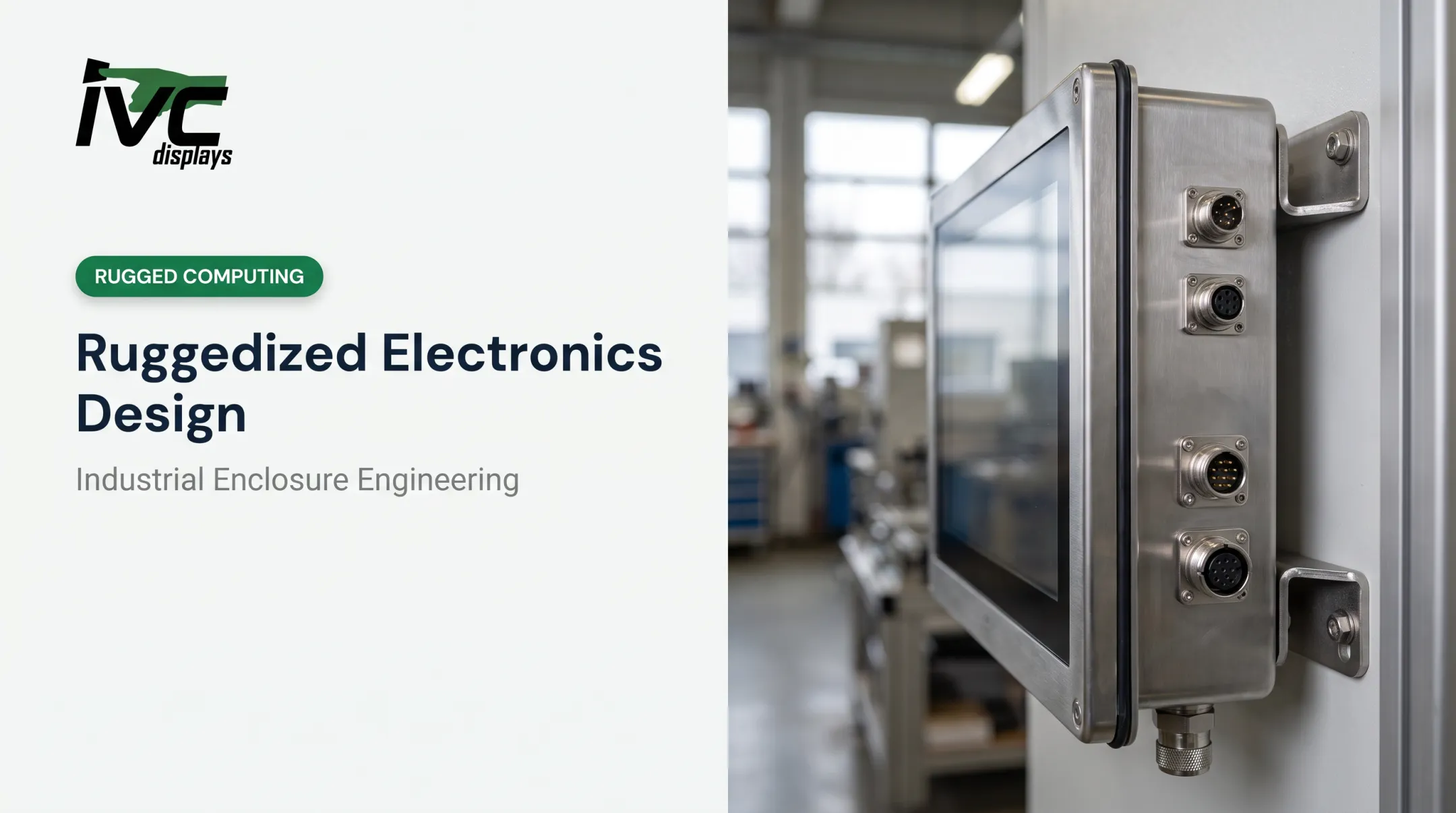
- Sealed enclosures rated IP65 through IP69K depending on exposure level
- Wide operating temperature ranges, often -20°C to +70°C or beyond
- Stainless steel or anti-corrosion aluminum housings for washdown and offshore use
- Fanless thermal designs that eliminate a major point of mechanical failure

Industries That Depend on This
Manufacturing, oil and gas, food processing, pharmaceuticals, marine and offshore, and defense all rely on hardware engineered for their specific conditions. A drilling site and a dairy packaging line need entirely different protections, but both need something a standard PC can't deliver.
IVC Displays builds specifically for this space.
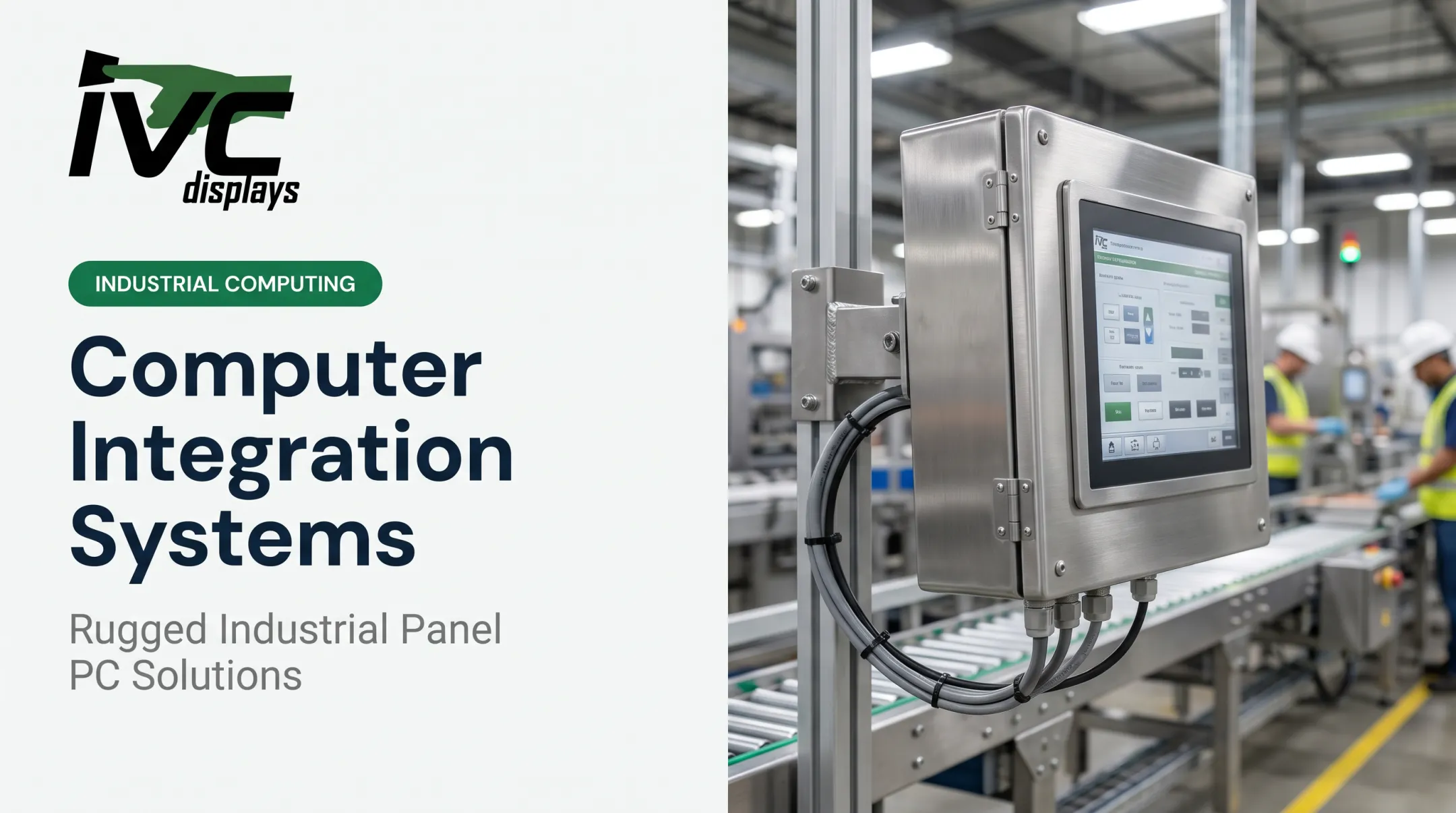
Its Stainless Steel Waterproof Industrial Computer line (model NP-71X4S) targets food and beverage processing with IP66/67/69K sealed construction, waterproof M12 connectors, and fanless cooling for sanitation-heavy environments.
For maritime work, the NP-9XX-MA Marine Grade Panel PC is built to IEC 60945, IACS E10, and DNV standards, with anti-corrosion aluminum housing and displays up to 24 inches.
For heavier industrial deployments, the IVC-XXPC-P series pairs industrial DDR4 memory (4GB to 16GB) and industrial SSDs with a sealed rugged metal chassis. It handles high-vibration, high-heat settings that would kill a standard office tower within months.

How to Choose the Right Computer OEM Partner
Picking a manufacturing partner comes down to four practical questions.
- What's your volume? High-volume consumer OEMs suit large standardized orders. Smaller, specialized manufacturers fit custom or niche production runs better.
- Can they actually customize? Check whether the OEM can modify enclosures, ports, software images, or environmental protections — not just swap a sticker on a stock unit.
- Do you need equipment integration support? If hardware needs to embed into existing machinery or control cabinets, look for a manufacturer experienced in that kind of fit-and-finish work.
- Do they have a track record in your industry? Prioritize partners who have shipped into environments like yours, not adjacent markets with different failure modes.

For harsh-environment applications specifically, prioritize manufacturers who've actually shipped hardware into your sector. IVC Displays, for example, has supplied light industrial computers to Timet Metals for titanium manufacturing controls, GENTEX Corporation for helmet manufacturing, and McCall Farms for canning automation — live deployments in manufacturing and food processing.
Customization options worth asking about:
- Enclosure and chassis modifications for ruggedization
- I/O configuration and connector changes
- Panel-mount, embedded-mount, or VESA mounting options
- Display size, brightness, and touchscreen technology (resistive vs. PCAP)
Long-term availability matters just as much as day-one specs. Ask any prospective OEM how they handle component consistency and replacement units three or five years into a deployment. If they can't answer clearly, treat it as a red flag for any multi-year industrial build.
Frequently Asked Questions
What is OEM in computers?
OEM stands for Original Equipment Manufacturer — a company that builds hardware components or complete systems sold under its own or another company's brand. It covers everything from board-level components to fully finished industrial PCs.
What is the difference between OEM and ODM?
OEMs often build to their own design and sell it under a brand (theirs or a client's). ODMs design and manufacture based on a client's specifications, with the finished product carrying the client's brand entirely.
Is OEM hardware the same quality as retail hardware?
Performance is comparable. The difference is in the extras: OEM hardware typically skips retail packaging, extended warranties, and bundled support that retail versions include.
Why do industrial companies need specialized computer OEMs instead of standard PC brands?
Standard PCs aren't built for dust, moisture, vibration, or temperature extremes found on factory floors, offshore platforms, or processing lines. Specialized OEMs engineer sealed, rugged systems designed to survive those conditions long-term.
Can computer OEMs build custom hardware for specific industries?
Yes. Industrial OEMs commonly build custom enclosures, I/O layouts, mounting options, and certifications for sectors such as food processing, marine, and defense.