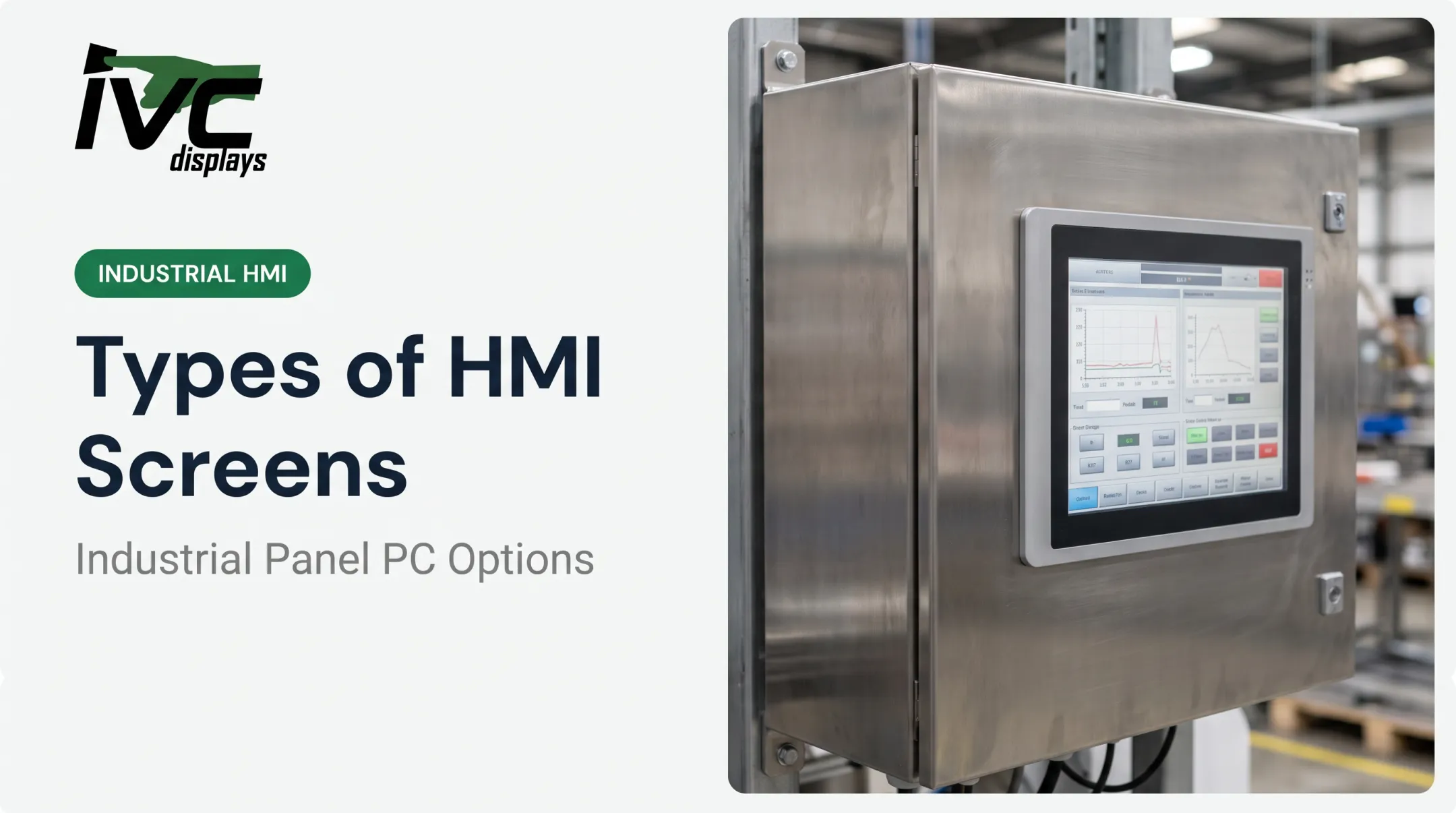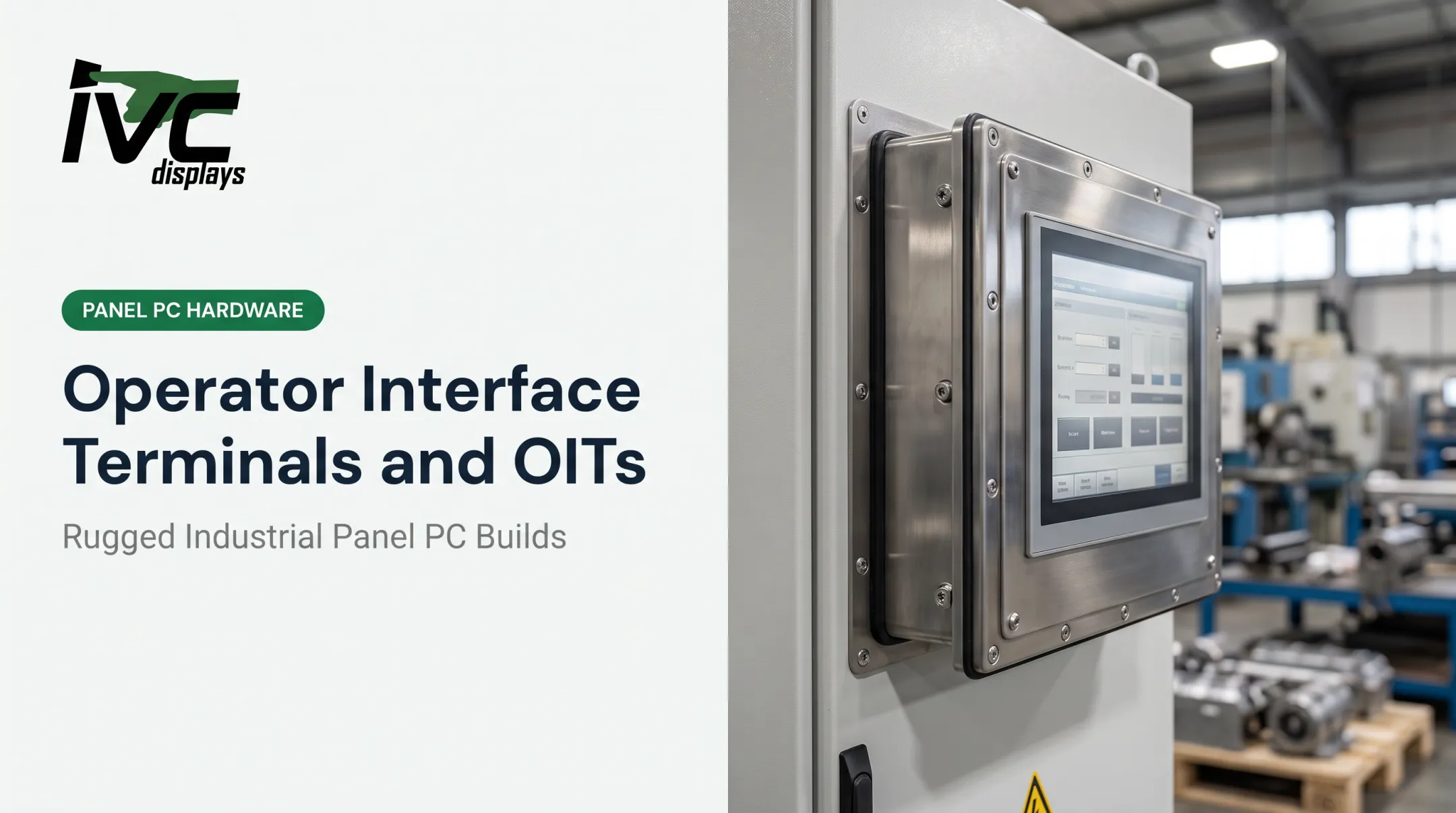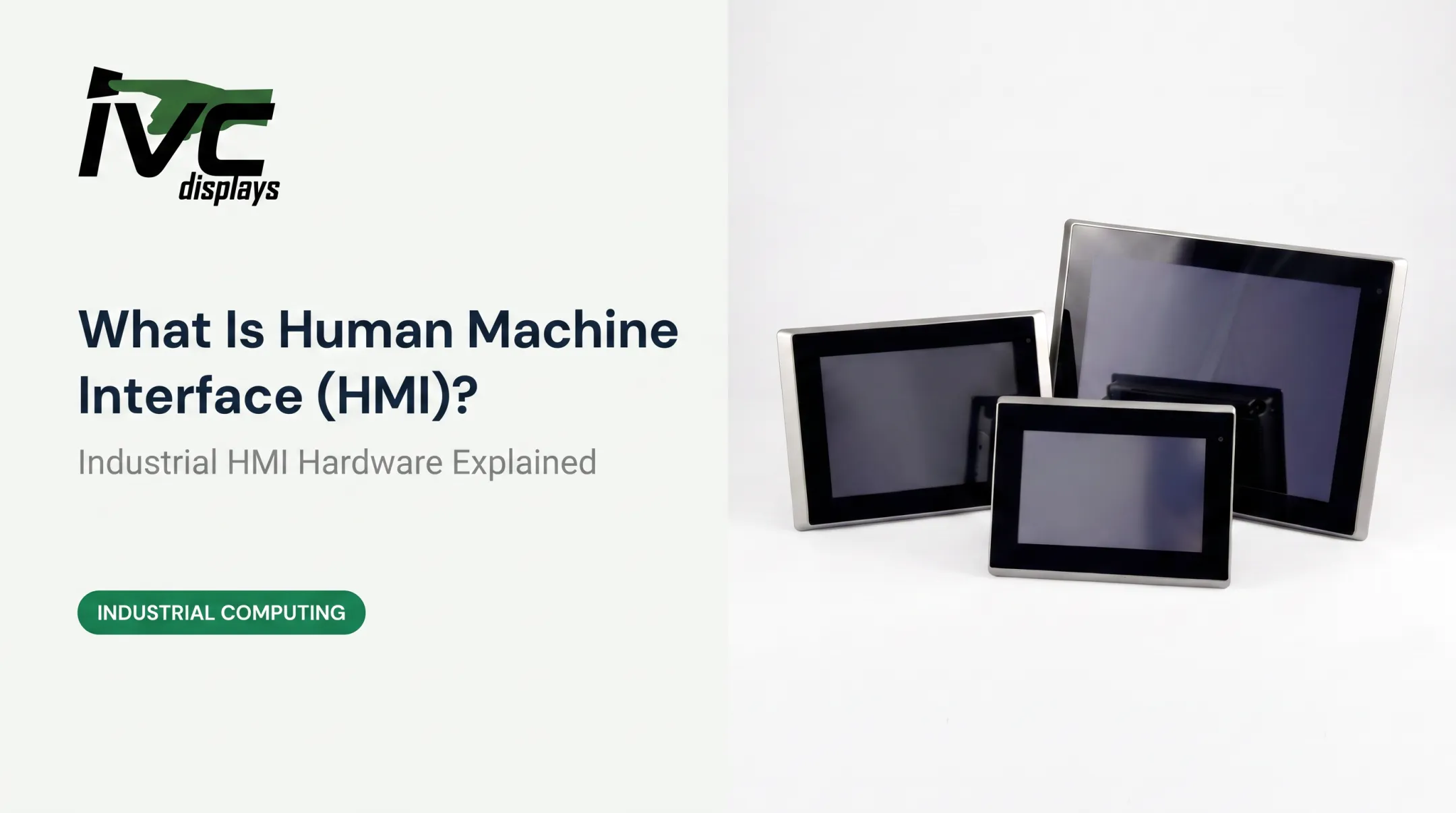

Getting this choice wrong isn't just a hardware mismatch. It affects upfront cost, cybersecurity exposure, and how well your system scales five years from now. This guide breaks down what each device actually does, where each one fits, and how to decide between them for your application.
TL;DR
- IPC: ruggedized industrial PC for SCADA, databases, MES, or multiple apps at once
- HMI: dedicated operator interface built specifically to visualize and control a PLC
- System role is the real split: HMIs are lightweight and closed; IPCs are powerful and open
- HMIs suit single-machine monitoring; IPCs handle data-intensive or integration-heavy systems
- Many plants run both: local HMIs for control, a central IPC for reporting and analytics
IPC vs HMI: Quick Comparison
| Factor | Industrial PC (IPC) | HMI |
|---|---|---|
| Cost | Higher upfront — about $2,700 for a 12.1" industrial panel PC (Maple Systems) | Lower — about $345–$679 depending on size (Maple Systems) |
| Processing power | Intel Core-class CPUs, high RAM, supports databases and edge computing | Sized for visualization and basic PLC control only |
| Operating system | Open OS — Windows or Linux, flexible but needs cybersecurity management (Automation World) | Closed, vendor-specific runtime — less flexible, generally more secure |
| Display | Larger, higher-res screens; multiple USB/Ethernet/PCIe ports | Typically 4–12" screens, ports tied to specific PLC protocols |
| Ruggedness | Built for extreme temps, vibration, IP65+ protection, 24/7 duty | Ruggedized too, but usually simpler enclosures |
Both devices are engineered to survive shop-floor abuse. Processing power, OS flexibility, and workload capacity define the real difference.
What Is an IPC?
An Industrial PC is a computer built on standard PC architecture — Intel or AMD processors, Windows or Linux — but hardened for factory-floor conditions: temperature swings, vibration, dust, and electromagnetic interference.
Because it runs a full OS, an IPC can host middleware, databases, recipe managers, SCADA, and MES on the same box used for automation computing, as noted by Automation World.
That consolidation cuts license costs, reduces hardware overhead, and can replace several operator screens with one unified dashboard.
Common IPC form factors:
- Panel PCs (display + computer combined)
- Box PCs
- Rackmount systems
- Vehicle-mount computers
IVC Displays builds rugged panel PCs for this role, including the fanless, sealed IVC-XXPC-P Heavy Industrial Computer, rated for −20°C to 70°C operation in manufacturing, logistics, and defense environments.

Use Cases of IPC
IPCs fit where a facility needs more than one machine talking to one screen:
- Centralized data collection across multiple PLCs
- Edge computing and machine vision on platforms such as Advantech’s ARK-3534
- MES/ERP integration
- Real-time AI inference for obstacle detection and predictive maintenance on high-vibration equipment
Common industries include:
- Automotive
- Oil and gas
- Mining
- Food and pharmaceutical processing
- Marine and offshore operations
IVC’s marine-grade NP-9XX-MA panel PCs, certified to IEC 60945 and DNV standards, are built for ships and offshore platforms.

What Is an HMI?
An HMI is the dedicated interface between a person and a PLC. It translates raw machine data into readable screens and turns operator taps into commands the controller understands, as outlined in ANSI/ISA-101.
Good HMI design has a direct impact on downtime. Cryptic interfaces that require PLC-programming knowledge to troubleshoot cost plants real production time. Clear parameter changes, built-in diagnostics, and contextual error messages let line operators fix problems without calling maintenance every time.
HMIs typically fall into two tiers:
- Machine-level HMIs — dedicated to one piece of equipment
- Supervisory-level HMIs — integrated into a broader SCADA system
Use Cases of HMI
HMIs are the right tool for:
- Single-machine monitoring
- Recipe selection
- Alarm handling
- Setpoint adjustment
They show up most often in packaging, food processing, HVAC control, and small-to-mid-scale manufacturing.
One food manufacturer's operator-interface upgrade, showing open doors, e-stops, and tripped devices in plain language, delivered 75% lower unplanned downtime, 50% less preventive-maintenance time, and roughly $70,000 in annual savings, according to a Rockwell Automation case study. A separate HMI virtualization upgrade cut server reboot time from 40 minutes down to 5 minutes.

IPC vs HMI: Which Is Better for Your Application?
There's no universal winner. Weigh these factors instead:
- Budget — HMIs cost less upfront for simple monitoring and control
- Software complexity — IPCs fit apps that need databases, analytics, or multi-program workloads
- Data integration — IPCs handle multi-machine data pulls; HMIs suit single-machine views
- Maintenance capability — open OS platforms need stronger patching and cybersecurity practices
- Expected lifespan — industrial computers commonly run 7–15 years; plan refresh cycles early
Quick rule of thumb:
- Choose an HMI for dedicated, single-machine monitoring and control
- Choose an IPC when the system needs to run multiple applications, aggregate data across machines, or integrate with plant-level systems

Many operations run both — local HMIs for immediate operator control, plus a central IPC pulling data for reporting and analytics.
Environment matters as much as processing power. In washdown areas, marine vessels, or mobile equipment, rugged hardware often decides whether the deployment holds up.
IVC Displays' stainless-steel washdown panel PCs (IP66/IP67/IP69K) and marine-certified systems are built for these conditions, with custom enclosure, I/O, and mounting options for HMI-style or IPC-style deployments.
Conclusion
Neither device wins by default. An HMI gives you a focused, cost-effective operator interface. An IPC gives you a broader computing platform capable of running SCADA, MES, and analytics side by side.
The right pick comes down to what your application actually needs — and it directly affects uptime, total cost of ownership, and how easily your system scales as automation demands grow.
Frequently Asked Questions
What is the difference between HMI and IPC?
An HMI is a dedicated operator interface for a PLC, while an IPC is a general-purpose ruggedized computer capable of running HMI software plus databases, SCADA, and other applications. The difference is scope, not appearance.
What is an HMI and what is it used for?
An HMI visualizes PLC data, lets operators adjust setpoints, and handles alarms on the plant floor. It's the direct link between a person and a single machine or process.
What is an IPC (industrial PC) and how does it differ from a regular PC?
An IPC uses ruggedized, often fanless construction with industrial-grade components, letting it run 24/7 in extreme temperatures, dust, and vibration that would kill a consumer PC.
Can an Industrial PC replace an HMI?
Yes, an IPC can run HMI software. But for a simple, single-machine application, that adds unnecessary cost and complexity compared to a dedicated HMI.
Can an HMI work without a PLC?
HMIs typically pair with a PLC or controller, but some models can connect to other data sources or controllers depending on the protocol support.
Which is better for PLC control, an HMI or an Industrial PC?
HMIs are usually the more focused choice for dedicated PLC monitoring. IPCs make more sense when the project needs broader software capability and system integration.