
Manufacturers in food processing, logistics, and heavy industry all wrestle with this differently. A canning line has different needs than a multi-axis packaging cell. This article breaks down what separates PC-based control from PLCs, where each wins, and how to decide which fits your operation.
TL;DR
- PC-based control runs on mainstream computing hardware (Windows/Linux) for flexible, high-power, multi-function control
- PLCs use proprietary hardware built for simple, rugged, single-task control with decades-long field life
- PLCs are generally faster to program and more field-proven
- PC-based systems offer stronger diagnostics and easier IT integration
- Cost, application complexity, and required system lifespan drive the decision
- Rugged industrial PC hardware is closing the reliability gap that once favored PLCs by default
PC-Based Control vs PLC: Quick Comparison
| Factor | PC-Based Control | PLC |
|---|---|---|
| Cost | Often less per unit of processing power; Automation World cites an oil-and-gas example where PLC valve controllers ran about $7,000 versus $3,000 for PC-based equivalents | Higher upfront cost, but hazardous zones still favor PLCs |
| Architecture | Standard CPU/RAM/storage with Windows or Linux, programmed via IEC 61131-3 or custom software | Proprietary electronics and firmware, ladder logic, integrated I/O |
| Durability & lifespan | Ruggedized industrial PCs can match PLC-grade durability, though software support cycles run shorter — Beckhoff commits to six years for Industrial PCs and 10 years for Embedded PCs | Control Design notes a PLC's useful life often runs around 10 years, with fewer forced upgrade cycles |
| Ease of use | Demands broader IT and software knowledge; steeper learning curve for teams without that background | Ladder logic is faster to learn and troubleshoot for controls engineers |
| Scalability & diagnostics | Superior diagnostics through third-party software; simpler IIoT integration in a single-layer architecture | Often needs added gateways or PCs bolted on for SCADA, database, or IIoT connectivity |

Choosing between the two often comes down to which trade-offs matter most for a given application: raw processing economy and diagnostic depth versus proven durability and a shorter learning curve.
What Is PC-Based Control?
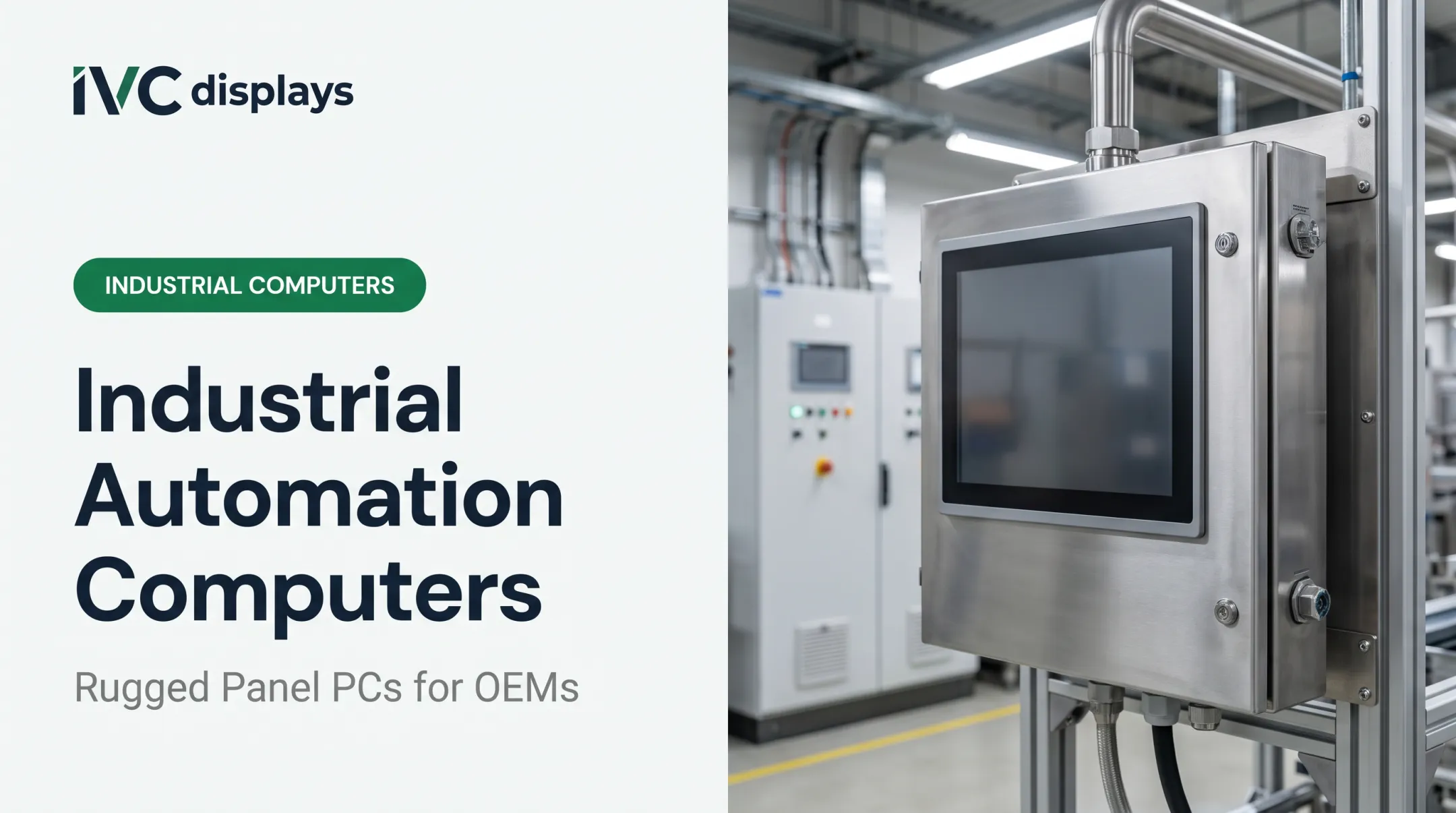
PC-based control is an industrial control system built on an industrial PC (IPC) — functionally similar to a standard computer but ruggedized for plant conditions like heat, vibration, and shock. It combines multi-core processing power with the ability to run HMI, real-time control, and enterprise connectivity in one device.
Variations include:
- Fanless IPCs for dusty or high-vibration environments
- Panel-mount systems built into operator stations
- Open-frame units for OEM and kiosk integration
- Vehicle-mount computers for mobile industrial equipment
Durability concerns historically pushed manufacturers toward PLCs, but purpose-built panel PCs now close that gap. IVC Displays' NP-9XXi Medium Industrial Panel PC series, for example, carries an IP66 front-panel rating and runs from 0°C to 50°C.
The IVC-XXPC-P Heavy Industrial Computer goes further, operating from −20°C to +70°C in a sealed, fanless chassis. That range covers the same conditions that once made PLCs the default choice.

Use Cases of PC-Based Control
PC-based control fits well where you need simultaneous HMI, data logging, and real-time control:
- High-speed packaging lines requiring coordinated motion and vision systems
- Multi-axis motion control applications
- Operations needing extensive diagnostics or IIoT connectivity, such as logistics sortation
A documented example: Beckhoff reports that NPI's package-sortation systems, running on Beckhoff IPC and Embedded PC control, saw throughput more than double along with 50% less cabling and $4,700 saved per Xstream system. That's a vendor case study, not an industry-wide guarantee, but it illustrates the kind of gain PC-based architectures can deliver when diagnostics and throughput matter most.

What Is a PLC?
A PLC is a purpose-built industrial controller programmed with ladder logic, integrated directly with I/O inside a control panel. NIST defines PLCs as computer-based solid-state devices generally used for discrete control of industrial equipment.
Core benefits:
- Simple, fast implementation for well-defined tasks
- Robust single-task performance
- Minimal need for IT-level maintenance
Variations include compact vs. modular PLCs, plus brand ecosystems like Allen-Bradley and Siemens, each with its own proprietary upgrade path.
Use Cases of PLC
PLCs remain the default for straightforward, repetitive control:
- Conveyor sequencing
- Motor start/stop logic
- Basic sensor-actuator control loops
They're especially common where decades-long system life matters: heavy manufacturing, warehousing, and process plants. The global PLC market reflects that staying power: Grand View Research pegs it at $17.2 billion in 2024, growing toward $23.1 billion by 2030. PLC adoption keeps expanding right alongside PC-based systems, rather than losing ground to them.
PC-Based Control vs PLC: Which Is Better?
Neither wins outright. Weigh these factors:
- Application complexity — simple discrete logic vs. multi-function coordination
- Required system lifespan — 10+ years with minimal changes, or shorter refresh tolerance
- In-house technical expertise — controls engineers vs. IT-savvy staff
- IT integration needs — standalone machine vs. connected, data-driven line
- Total cost of ownership over a decade or more
| Factor | Choose a PLC | Choose PC-Based Control |
|---|---|---|
| Task type | Simple, repetitive logic | Multi-tasking (HMI + control + data) |
| Lifespan priority | Decades-long stability | Faster refresh cycles acceptable |
| IT overhead | Minimal | Higher, but manageable |
| Processing needs | Basic | High-performance diagnostics, IIoT connectivity |

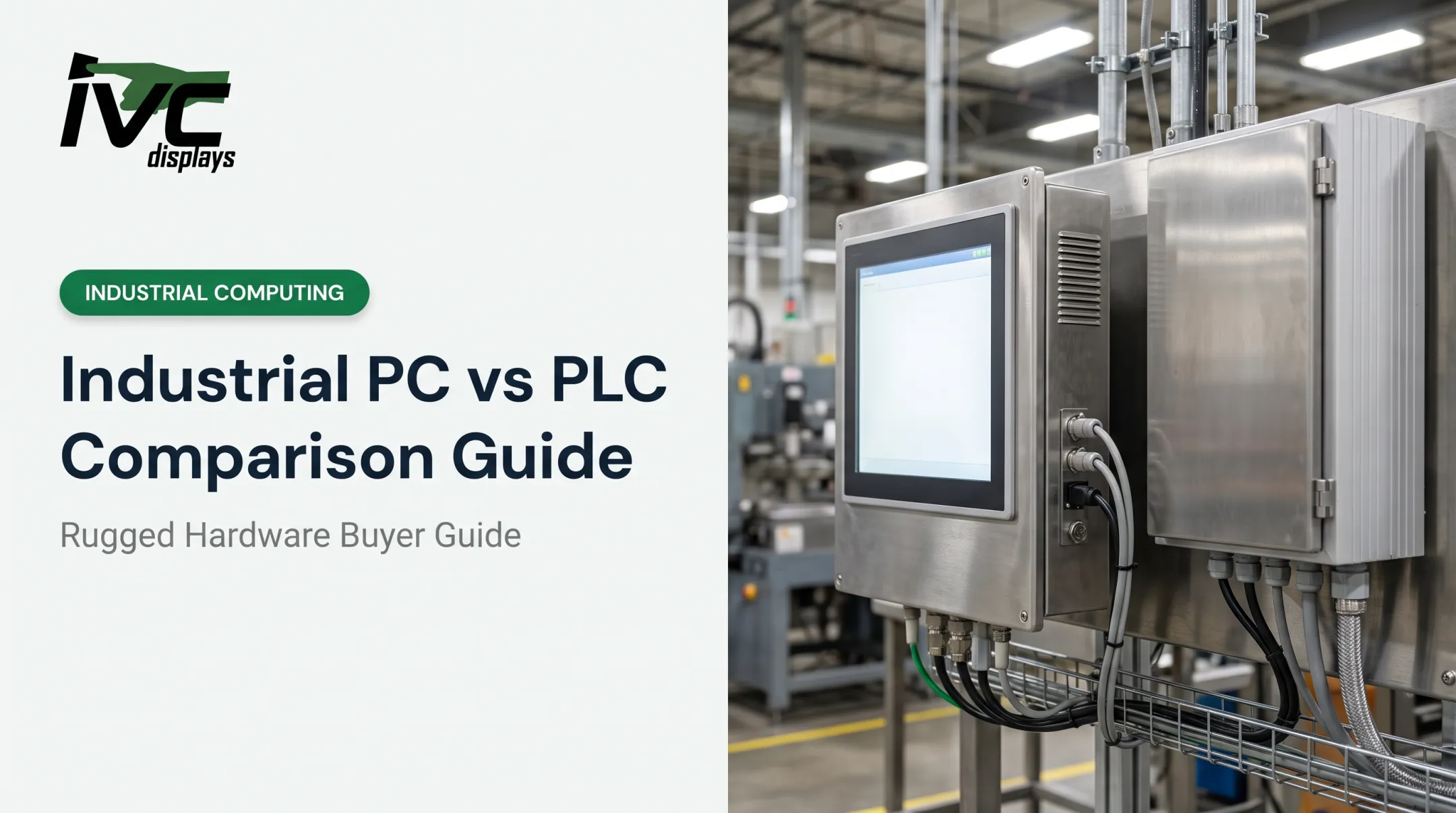
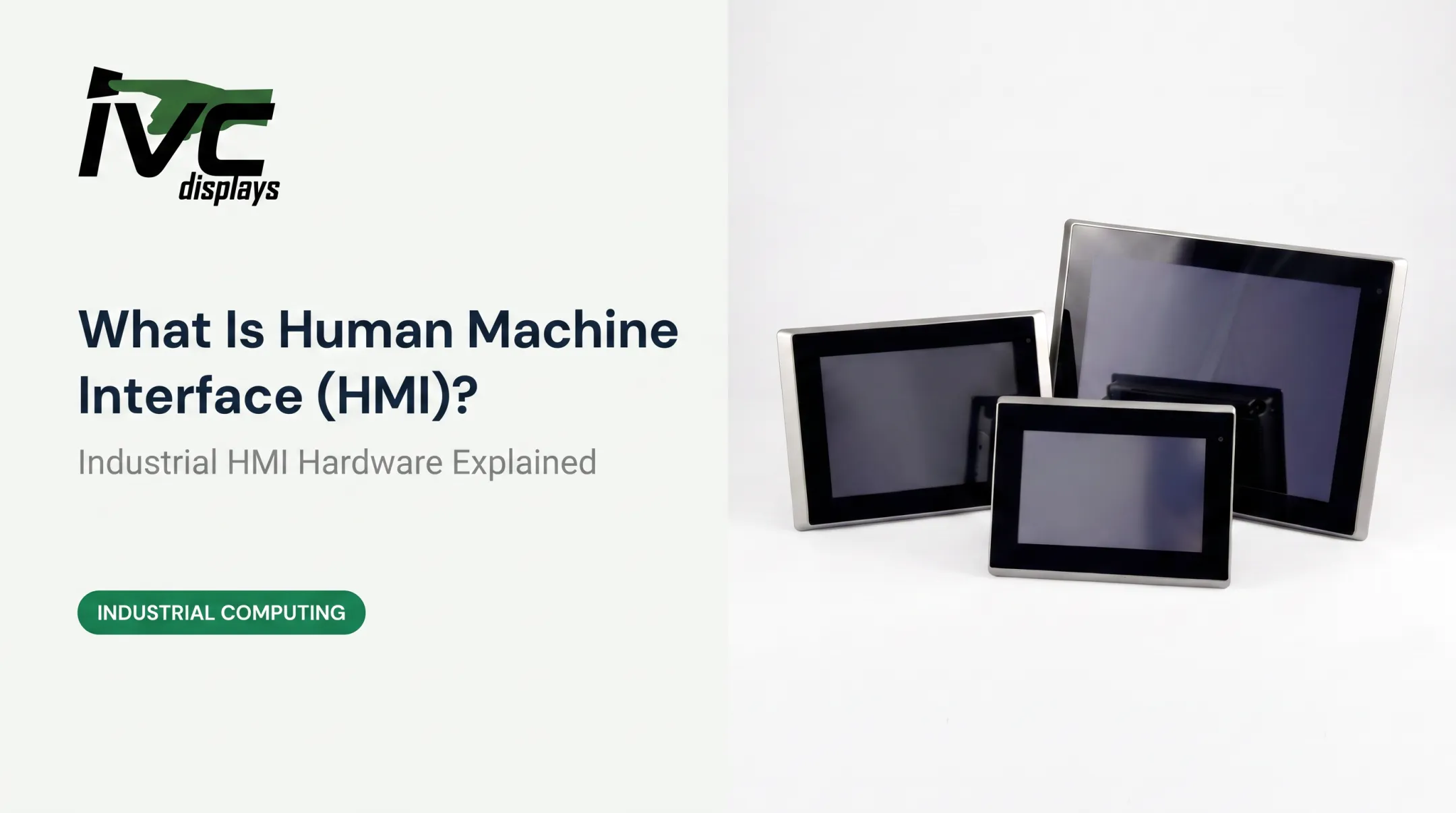
Hybrid architectures are increasingly common: a PLC handles I/O-heavy machine control while a rugged industrial PC manages HMI, SCADA, and data collection. This middle path lets you keep proven ladder logic where it matters most while gaining PC-level visibility elsewhere. Rugged panel PCs and fanless industrial computers, like those built by IVC Displays, are commonly deployed in these hybrid setups to handle the HMI and data side without disrupting existing PLC logic.
Real-World Example: Choosing the Right Control System
Manufacturers considering a control upgrade usually face one of three triggers: unplanned downtime, poor visibility into production data, or aging proprietary hardware nearing end-of-life.
IVC Displays' work with TIMET (Timet Metals) illustrates the application, if not a full before/after case study. TIMET uses an IVC Displays industrial computer to support titanium manufacturing, a harsh, high-heat environment where equipment failure isn't an option.
The broader pattern across IVC's customer base, including NOAA's engine monitoring aboard the Ship Fairweather and BioCold's environmental-chamber control, points to a consistent decision logic:
- Replace fragile consumer-grade or aging proprietary hardware with sealed, fanless industrial PCs
- Choose configurations rated for the specific environment (IP66 washdown, extended temperature range, or vibration resistance)
- Prioritize hardware that supports HMI, SCADA, and control in a single device rather than bolting on separate systems
The takeaway: the control philosophy matters less than the hardware reliability behind it. A PC-based upgrade only succeeds long-term if the industrial PC underneath it can survive the plant floor. If you're evaluating an upgrade, look closely at rugged, industry-specific industrial computing hardware built for your exact environment before committing to an architecture.
Conclusion
Neither PC-based control nor PLC is universally "better." The right choice depends on your application's complexity, how long the system needs to run without major changes, your team's technical expertise, and how deeply you need to integrate with IT and data systems.
Consider these general patterns:
- Simple, single-task machines with long lifespans still lean PLC
- Complex, data-hungry, multi-function lines increasingly lean PC-based or hybrid
What's consistent across both paths is this: hardware reliability, not control philosophy, is usually the real differentiator. A PLC panel or an industrial PC is only as good as its ability to survive vibration, heat, moisture, and years of continuous operation on your specific floor. IVC Displays builds rugged industrial computers and panel PCs engineered for exactly these conditions, whichever control philosophy your line runs on.
Frequently Asked Questions
Why use a PLC instead of a PC-based control system?
PLCs offer simpler programming, faster implementation, and long field-proven reliability for single-task machine control. They typically don't require IT-level maintenance, which suits teams without dedicated software support.
How is a DCS different from a PLC?
A Distributed Control System (DCS) manages large, continuous process plants with centralized oversight across many control loops. A PLC handles discrete, localized machine control tasks within that broader picture.
What industries typically use PC-based control systems?
Automated manufacturing, logistics, food and beverage packaging, and OEM equipment builders favor PC-based control when high processing power and data integration are priorities.
Can PC-based control systems be used in harsh industrial environments?
Yes. Ruggedized industrial PCs use fanless designs, extended temperature ranges, and vibration/shock-resistant enclosures. IVC Displays' heavy industrial IVC-XXPC-P Series, for example, is built with sealed metal enclosures rated for extreme temperature swings and constant vibration.
Is it more expensive to maintain a PC-based system or a PLC?
PLCs generally have lower long-term software maintenance needs. PC-based systems may require periodic OS or hardware refreshes but often cost less per unit of processing power upfront.
Can PLCs and PC-based controls work together?
Yes, hybrid setups are common. PLCs handle I/O-heavy control tasks while industrial PCs manage HMI, SCADA, and data collection — combining proven logic with modern visibility.