
Many buyers assume a higher second digit automatically means "more protection." That's not how it works. Choosing the wrong rating for your actual environment can mean water ingress, warranty disputes, and expensive replacements down the line.
This guide breaks down what IP66 and IP68 actually test for, where each one fits, and how to pick the right rating for your hardware.
Key Takeaways
- IP66 and IP68 both block dust completely; the real difference is liquid protection
- Powerful water jets from any direction: IP66 is built for washdown use
- Continuous submersion is IP68’s strength, with depth and duration set by the manufacturer
- Neither rating is universally better; match it to spray versus submersion exposure
- IVC Displays builds sealed panel PCs engineered for washdown and marine environments
IP68 vs IP66: Quick Comparison
| Factor | IP66 | IP68 |
|---|---|---|
| Dust protection | Complete (first digit 6) | Complete (first digit 6) |
| Water test method | Powerful jet spray from any direction | Continuous or prolonged immersion |
| Test conditions | 12.5mm nozzle, 100 L/min, 3-minute minimum, per IEC 60529 testing standards | Manufacturer-specified depth and duration: no fixed universal test |
| Typical use case | Outdoor washdown, food processing lines, hose-down cleaning | Marine/offshore, submersible sensors, flood-prone installs |
| Cost driver | Sealed bezel, gaskets | Fully sealed enclosure, corrosion-resistant materials, custom cabling |

IP68 isn't automatically "better" than IP66. Each rating answers a different water-exposure question—jets and washdown versus immersion depth and duration.
What is IP66?
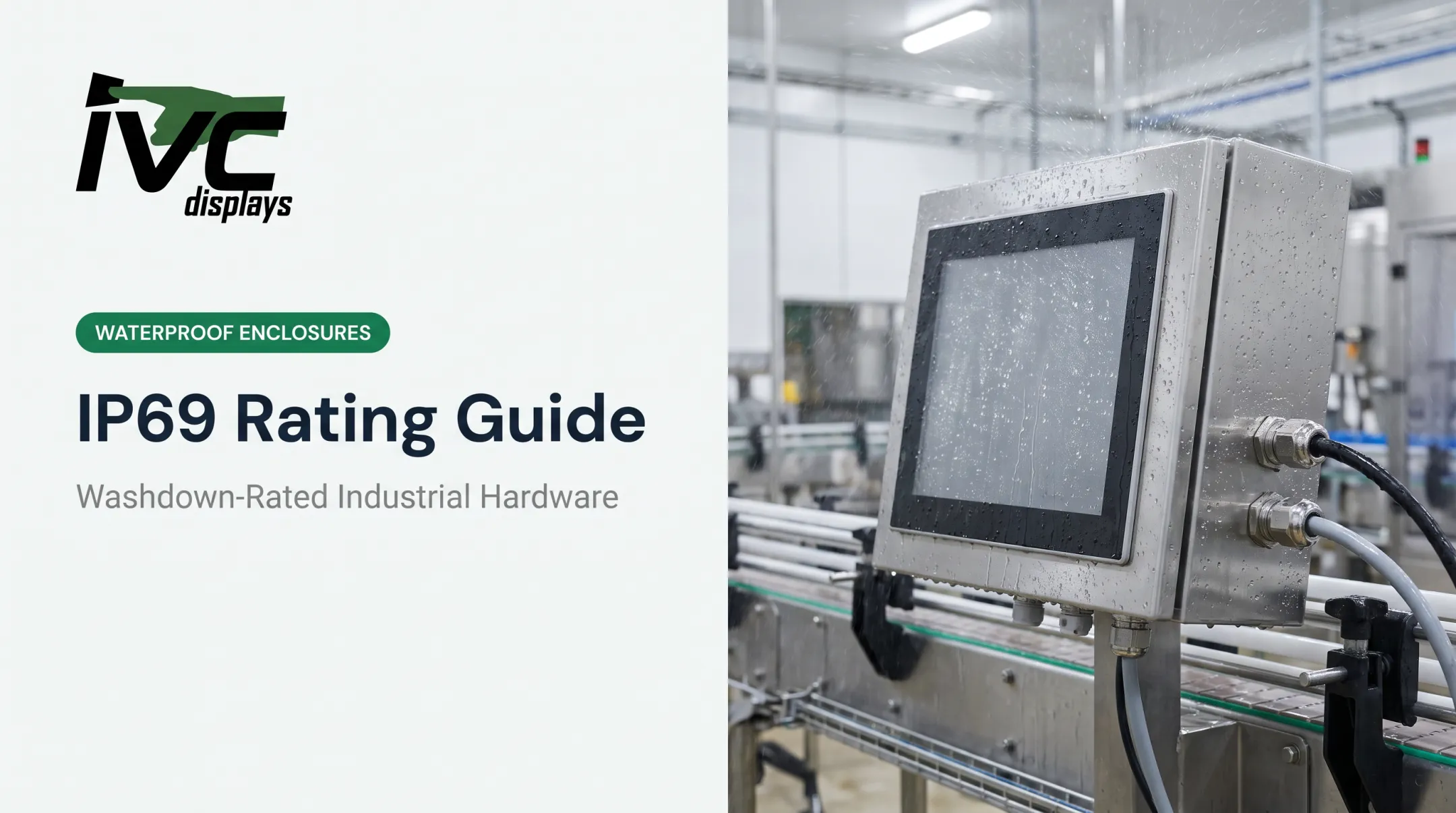
IP66 means an enclosure is dust-tight and rated to withstand powerful water jets from any direction. That's the second digit doing the work: it's tested against high-pressure spray, not submersion.
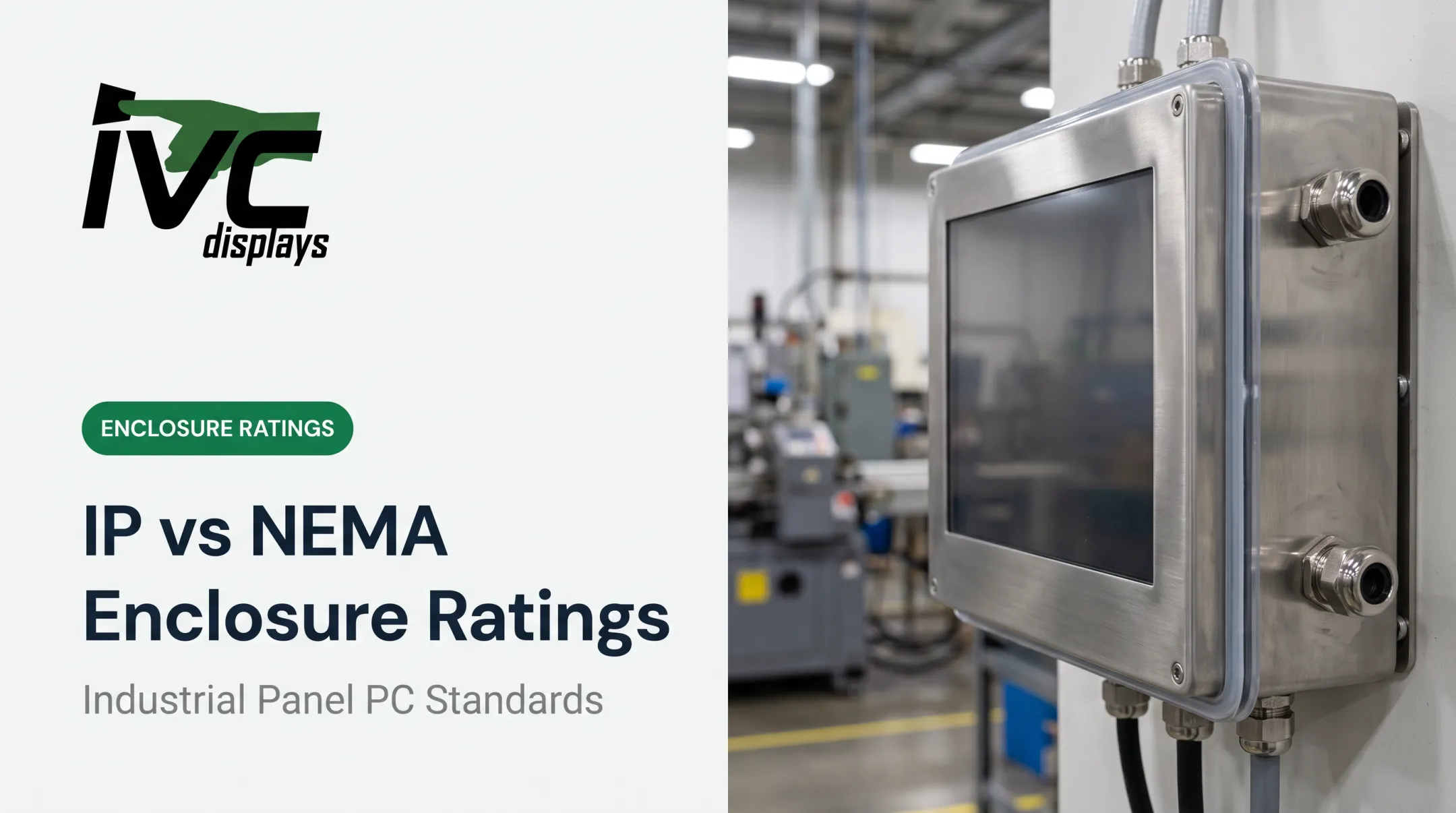
For US buyers, NEMA 4/4X is commonly referenced as a rough North American equivalent. NEMA itself is clear that its Type ratings can't be exactly converted to IEC IP codes, so treat this as procurement shorthand, not a certification match.
Where IP66 Fits
- Outdoor-mounted panel PCs exposed to rain and wind-driven dust
- Food and beverage washdown stations requiring daily hose-downs
- Oil and gas field equipment
- Marine deck equipment mounted above the waterline
IVC Displays' NP-9XXi Series medium industrial panel PCs carry an IP66 front panel suitable for washdown, dust, and harsh industrial conditions when properly installed.
The Stainless Steel Waterproof Industrial Computer (NP-71X4S) goes further. Depending on the model, it is fully sealed to IP66, IP67, or IP69K, with 304 or 316 stainless steel construction and waterproof M12 connectors for food, beverage, dairy, and pharmaceutical sanitation-critical lines.

What is IP68?
IP68 also guarantees complete dust protection, but the liquid test shifts to continuous or prolonged submersion. Unlike IP66's fixed jet-spray parameters, IP68's actual depth and duration aren't standardized. Each manufacturer sets and publishes its own limits. That gap is easy to miss. Two products can both say "IP68" while one survives 1 meter for 30 minutes and another survives far more. Always request the exact depth/duration spec, not just the rating number.
Where IP68 Fits
- Marine and offshore computing systems that may take on water
- Submersible sensors and underground utility monitoring
- Vehicle-mount computers in flood-prone regions
- Subsea oil and gas operations Marine deployments show why the distinction matters. Industry examples pair IEC 60945, IACS E10, and DNV certifications with sealed enclosures for shipboard and offshore use. Marine certification and an IP68 water rating answer two separate qualification questions. A product can be marine-certified without being IP68, and vice versa. Always verify both independently rather than assuming one implies the other.

IP68 vs IP66: What's Better for Industrial Hardware?
There's no universal winner here. The right call depends on four factors:
- Actual water exposure risk — Does the equipment get hosed down, or could it end up underwater?
- Cost tolerance — Fully sealed IP68 enclosures generally cost more due to gasket engineering and corrosion-resistant materials.
- Dust exposure — Both ratings handle this equally, so it's rarely the deciding factor.
- Overlapping risks — Some sites face both spray and occasional flooding, which may call for dual-rated or IP69K equipment.
Choose IP66 for outdoor or washdown equipment that stays above water: food processing lines, outdoor kiosks, and logistics yards.
Choose IP68 for equipment that may be submerged: offshore sensors, bilge-area installations, and flood-prone vehicle mounts.
IVC Displays' stainless-steel systems (IP66/IP67/IP69K, model-dependent) suit the washdown and outdoor cases above. For marine hardware that stays above the waterline, the NP-9XX-MA Marine Grade Panel PC series pairs an IP65 front panel with IEC 60945, IACS E10, and DNV certifications for vessel navigation, ship automation, and offshore operations.
Real World Example
Picture a food processing plant running panel PCs on a canning line. The equipment sits near daily high-pressure washdown stations, with hoses blasting at close range multiple times per shift.
A general-purpose enclosure without a true jet-spray rating fails within months:
- Water works past seams
- Corrodes internal boards
- Forces unplanned line stoppages
The right move is matching the rating to the actual hazard, not defaulting to the highest IP number available. In this scenario, a fully sealed IP66-rated stainless steel computer, like IVC's NP-71X4S, addresses the real exposure: direct jet spray, not submersion. Swapping to correctly-rated, sealed hardware eliminates the water-ingress failure mode entirely, since the enclosure was tested for exactly that condition.

Takeaway: Matching the IP rating to the actual environment, not chasing a higher number, reduces long-term maintenance costs and downtime. If your facility runs washdown cycles, explore IVC Displays' stainless steel waterproof panel PCs. If your equipment lives near saltwater, check out the marine-grade panel PC line.
Conclusion
Neither IP66 nor IP68 is universally "better." IP66 handles powerful water jets; IP68 handles submersion. The right choice comes down to what your equipment actually faces day to day. Buyers should always verify exact test conditions with the manufacturer rather than assuming a higher digit means broader protection.
For manufacturing, marine, and industrial operators, getting this right means fewer failures, longer hardware lifespans, and lower total cost of ownership.
Frequently Asked Questions
Which IP rating is better, IP68 or IP66?
Neither is universally better. IP66 protects against powerful water jets and spray; IP68 protects against submersion. The right choice depends on your actual water exposure.
How do IP65, IP66, IP67, and IP68 compare?
IP65 handles low-pressure jets; IP66 handles powerful jets from any direction. IP67 covers temporary immersion (about 1 meter for 30 minutes), while IP68 covers prolonged or continuous immersion under manufacturer-specified conditions.
Is IP68 waterproof?
IP68 means dust-tight and resistant to continuous immersion, but the exact depth and duration limits vary by manufacturer. Always check the datasheet.
Is IP68 suitable for swimming?
No. IP68 is an industrial and consumer electronics standard tested under controlled lab conditions. It is not a certification for recreational swimming use.
Is IP66 waterproof?
IP66 resists powerful water jets from any direction but isn't rated for submersion. It's built for washdown and heavy rain, not for underwater use.
Are IP65 or IP66 sufficient for rain?
Yes, both handle heavy rain and general outdoor exposure well. IP66 offers stronger protection specifically against high-pressure spray, like hose-down cleaning.