
Choosing the wrong type isn't just an inconvenience. A screen that fogs in a washdown bay, glares out in direct sun, or drops connection in a remote yard directly affects uptime, safety, and how fast your team can respond to trouble. This article breaks down the main types of HMI screens, how they differ, and how to match one to your actual operating conditions.
TL;DR
- HMI screens give operators real-time display, control, and monitoring of industrial processes
- Main types: standard, rugged/washdown, marine-grade, outdoor, and web/headless
- Match the screen to environment, protocols, display needs, and compliance requirements
- Purpose-built rugged HMIs cut downtime and outlast standard panels in harsh conditions
What Is an HMI Screen?
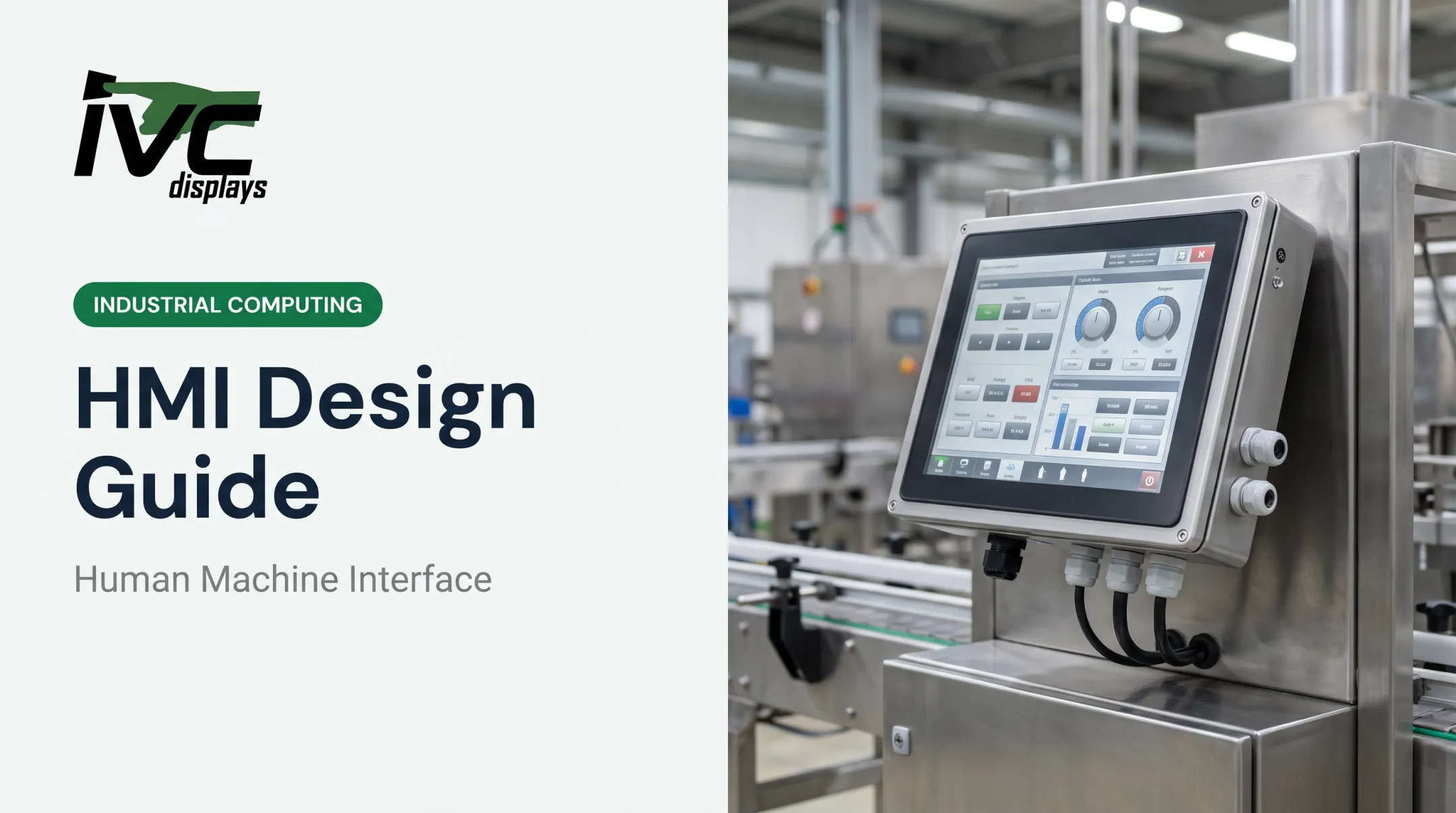
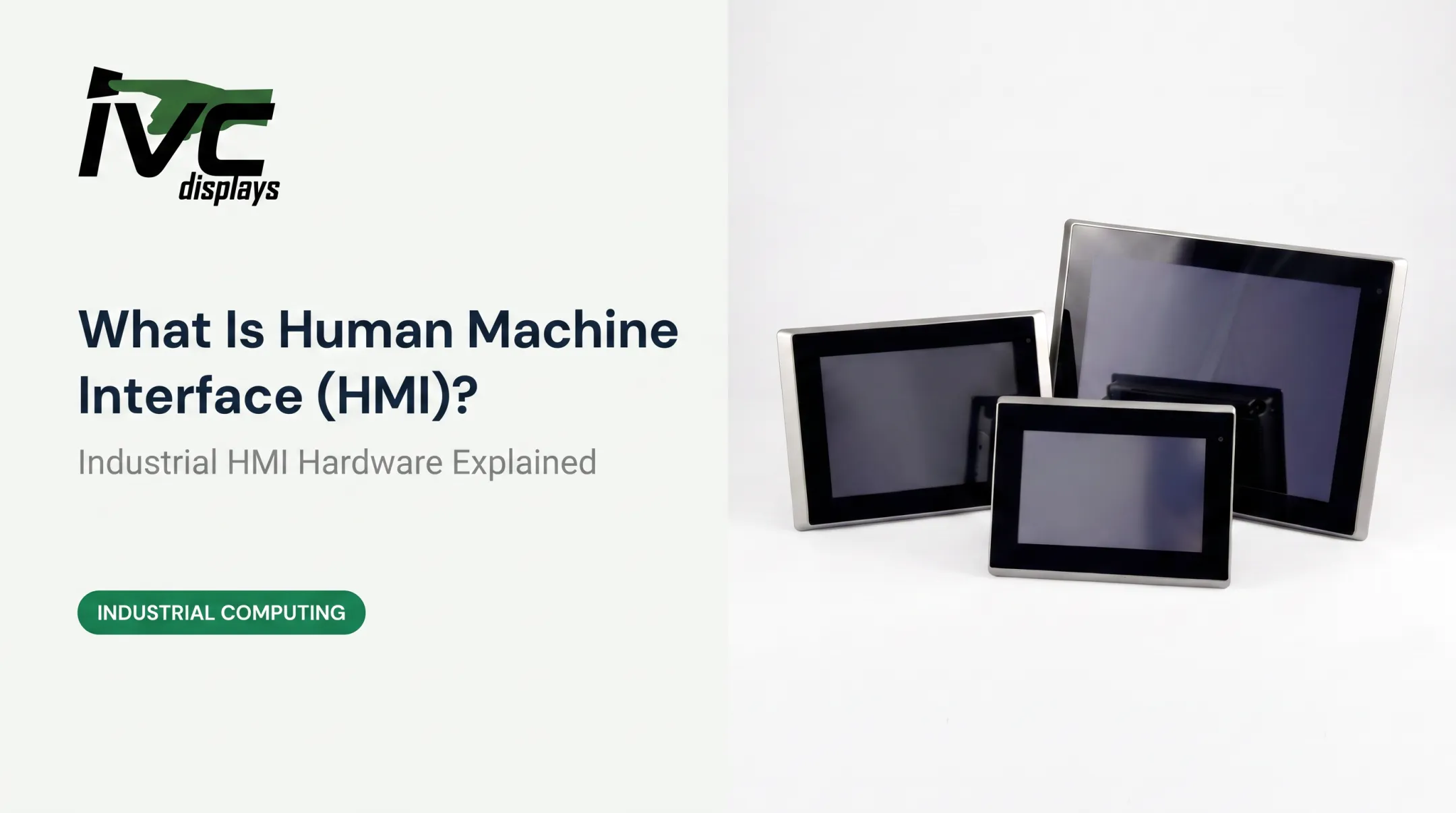
HMI stands for Human-Machine Interface: the touchscreen or display an operator uses to monitor and control a machine or process. It takes raw data from PLCs and SCADA systems and turns it into readable dashboards, alarms, and control buttons.
Rockwell Automation describes it as the interface connecting operators to machines and processes, providing real-time visualization, control, and diagnostics. That's the software side. But an HMI is also physical hardware — a screen that has to survive heat, moisture, vibration, or direct sunlight depending on where it's mounted.
HMIs show up across manufacturing, automation, defense, logistics, and marine operations. The interface logic might look similar across industries, but the box housing that screen looks very different on a factory floor versus the deck of a ship.
Why Are HMI Screens Important in Industrial Operations?
A well-placed HMI gives operators real-time visibility into what a machine is doing, which cuts down manual errors and speeds up troubleshooting. ISA-101.01-2015 treats operator usability as a full lifecycle: design, implementation, training, and continuous improvement.
The stakes are real. Control Engineering has reported that 80% of process-disruption losses were considered preventable, with 40% of those tied primarily to operator error. That doesn't mean a better HMI fixes everything — but poor screen visibility, unreliable touch response, or a unit that fails in the field certainly doesn't help operators catch problems early.
Here's what happens when the wrong HMI type gets deployed:
- Unreadable screens in direct sunlight, forcing operators to guess or shade the display
- Failures in washdown or corrosive areas, where moisture works into a non-sealed enclosure
- Lost connectivity in remote or offshore locations without the right network architecture
This is why HMI selection is fundamentally a hardware decision, not just a software configuration choice.
Types of HMI Screens
HMI screens aren't one-size-fits-all. Hardware choices shift with environment, connectivity, and durability needs — and the right category depends on where the unit will actually run.
Standard Panel HMIs
Standard panel HMIs are versatile touchscreen units that connect to most PLCs for general industrial use. They're the default choice for indoor manufacturing floors. Best suited for: standard indoor manufacturing, food and beverage lines, and general automation applications. Strengths and limitations: Cost-effective and straightforward to program, but not built for extreme temperatures, moisture, or corrosive washdown exposure. IVC's NP-9XXi series is a typical fit: a fanless embedded panel PC with an Intel Core i5 processor, IP66 front-panel protection, dual Gigabit Ethernet, USB 3.0, and RS-232/422/485 ports for factory automation and machine control.

Rugged Industrial & Stainless-Steel Washdown HMIs
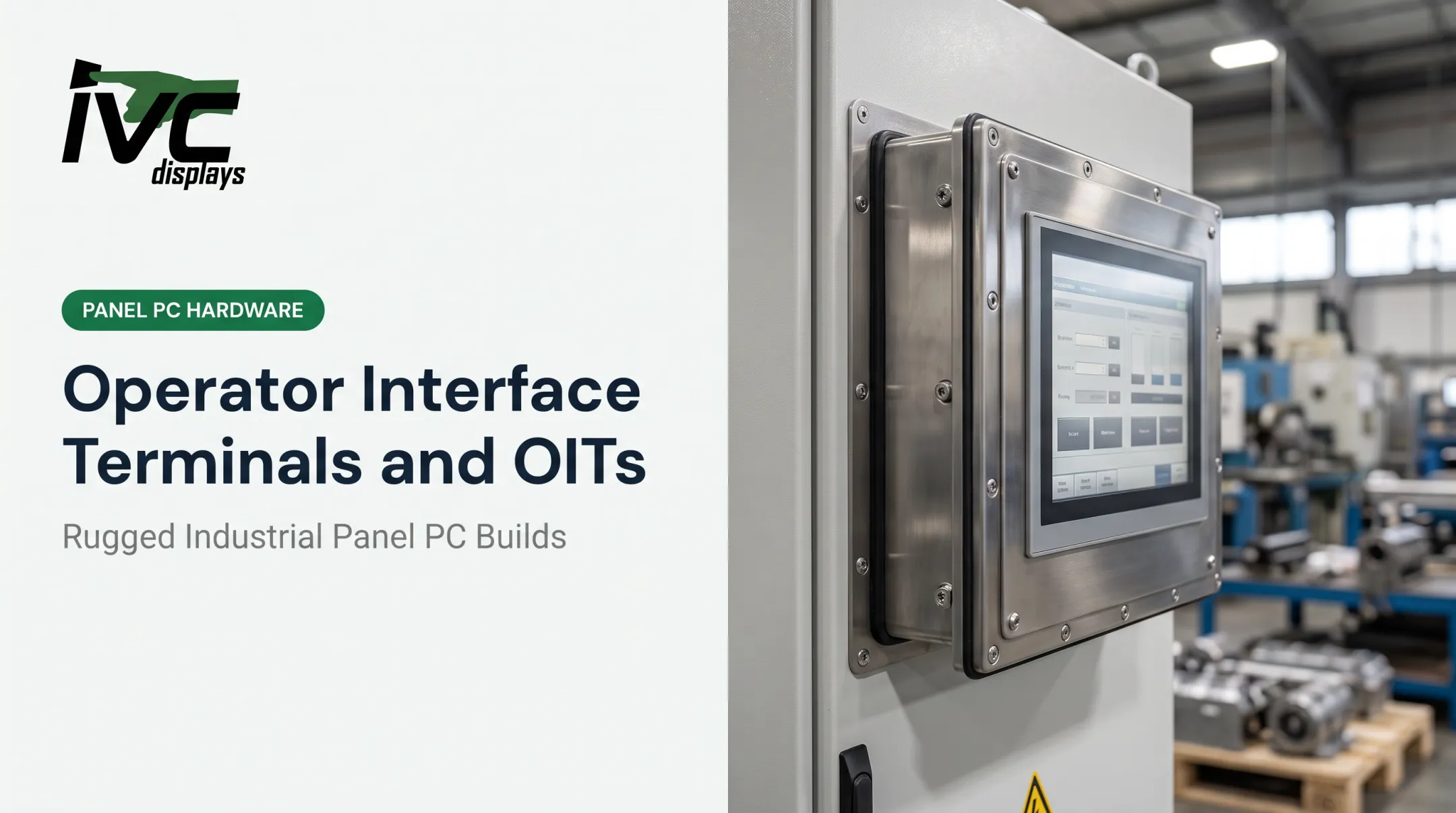
These are sealed, IP-rated panel PCs and monitors built with stainless steel or reinforced enclosures for extreme conditions. Best suited for: pharmaceuticals, food processing washdown areas, oil and gas, and heavy manufacturing. Strengths and limitations: Long-term reliability in harsh environments, at a higher upfront cost than standard units. IVC's stainless steel washdown systems are available with IP65, IP66, IP67, and IP69K ratings, in 304 or 316 stainless steel. Grade 316 adds salt and chemical resistance for dairy, meat processing, and cleanroom lines. IP tip: IP67 covers temporary immersion, not high-pressure spray. Close-range washdown at high temperature and pressure needs IP69K — one rating does not stand in for another.

Marine-Grade HMIs
Marine-grade HMIs are computers and displays engineered for offshore, saltwater, and vibration-heavy conditions. Best suited for: ships, oil rigs, and offshore operations. Strengths and limitations: Strong corrosion resistance and shock/vibration tolerance, with specialized marine certifications and a higher cost than standard panels. IVC's NP-9XX-MA Marine Grade Panel PC is documented as compliant with IEC 60945, IACS E10, and DNV requirements. It ships in 12.1", 19", and 24" sizes with anti-corrosion aluminum housing and 24V DC input.
Marine certifications aren't interchangeable with general durability claims. Request the exact certificate, revision, and installation location class for your model. A DNV mark on one product line does not automatically cover every deck or bridge location.
Outdoor/Sunlight-Readable HMIs
These use high-brightness displays engineered to reduce glare and stay touch-responsive in direct sunlight. Best suited for: transportation, energy, logistics, and outdoor kiosks or vehicle-mount applications. Strengths and limitations: Excellent outdoor visibility, usually at a premium versus standard-brightness screens. As a benchmark, normal daylight viewing sits around 400–700 nits, with 1,000+ nits recommended for direct bright sunlight. IVC's NP-5XXM series offers both 350-nit standard and 1,000-nit high-brightness configurations, so you can match luminance to the site instead of paying for brightness you will not use indoors.
Web Panel & Headless HMIs
Web panel HMIs use built-in browsers for remote access. Headless HMIs have no local screen; you control them over the network from a PC, tablet, or separate display. Best suited for: remote monitoring, space-constrained installations, and OEM equipment integration. Strengths and limitations: Flexible and space-saving, but dependent on network reliability and a separate display for viewing. IVC's ATOMIC-22 and NP-500-iX are compact fanless embedded computers built for this role. The NP-500-iX runs dual Gigabit Ethernet for network redundancy; the ATOMIC-22 adds optional Wi-Fi and Bluetooth alongside wired connectivity. Both support Windows, Windows IoT, and Linux.

How to Choose the Right Type of HMI Screen
Match HMI hardware to real operating conditions rather than defaulting to the most advanced model on the shelf.
Environment and durability:
- Temperature extremes (check the operating range, not just room temperature)
- Washdown, chemical, or corrosive exposure
- Marine/offshore conditions requiring specific certifications
- Direct sunlight or high-glare outdoor settings
Communication and integration:
- PLC driver support and protocol compatibility (EtherNet/IP, Modbus TCP/RTU, Profinet)
- Available ports: RS-232/422/485, Gigabit Ethernet, USB 3.0/2.0
- Compatibility with your existing programming software
Display and performance:
- Screen size and resolution for the operator's task
- CPU/RAM matched to application complexity
For reference, IVC's light-industrial NP-6XXS line runs Atom/Celeron processors with 4-32GB RAM. The heavy-industrial IVC-XXPC-P series scales to Celeron, Pentium, or Core processors for mission-critical control.
Certification and compliance:
- Food/pharma: sanitary design evidence in addition to IP rating (IP rating alone doesn't confirm hygienic design)
- Marine: IEC 60945, IACS E10, DNV — with exact model and revision
- General: CE, FCC Part 15/Class A or B, RoHS
Common mistakes to avoid:
- Overspending on brightness, processing power, or certifications you don't need
- Ignoring environmental trade-offs (a great indoor HMI is a poor fit outdoors)
- Choosing based on brand familiarity instead of fit

Working with a manufacturer that offers purpose-built hardware, such as IVC Displays' rugged panel PCs, stainless steel washdown systems, and custom industrial solutions, helps match the box to the job instead of forcing a generic unit into a hostile environment. For OEM runs, IVC can also engineer enclosures, I/O, touchscreen type, and mounting to fit the application.
Conclusion
HMI screens are the control point for manufacturing, automation, marine, and defense operations. There's no single "right" HMI. Standard panels, rugged washdown units, marine-grade systems, sunlight-readable displays, and headless architectures each solve a different problem.
Understanding these differences before you spec hardware leads to more reliable deployments—and fewer surprises on the floor.
Frequently Asked Questions
Which HMI is best?
There isn't one universal answer. The best HMI depends on your application's environment, PLC compatibility, and durability requirements. A washdown-rated unit in a dry indoor plant is overkill; a standard panel in a marine environment is a liability.
What are the different types of HMI?
The main categories are standard panel HMIs, rugged/stainless-steel washdown HMIs, marine-grade HMIs, outdoor/sunlight-readable HMIs, and web panel or headless HMIs. Each is built around a specific environmental or connectivity need.
What is PLC, HMI, and SCADA?
A PLC executes the real-time control logic for a machine. An HMI is the operator's visual interface for monitoring and control. SCADA sits above both, aggregating data across multiple PLCs and HMIs for centralized supervision.
How do I know if I need a rugged HMI versus a standard one?
If your installation involves washdown cleaning, extreme temperatures, vibration, or corrosive chemicals, a rugged or stainless-steel unit is worth the added cost. Standard panels work fine in controlled, indoor, low-exposure settings.
Can HMIs be customized for specific industries?
Yes. Manufacturers like IVC Displays offer custom enclosure design, I/O configuration, touchscreen technology, and mounting options tailored to specific environmental and OEM application requirements.
How long do industrial HMI screens typically last?
Lifespan varies by build quality and environment. Industrial systems commonly stay in service for 10-20 years or more, with ruggedized units generally outlasting standard hardware in harsh conditions.