
Industrial Computer Technology (ICT) and Information Technology (IT) solve different problems. Confuse them, and you risk equipment failure on the plant floor or wasted budget on hardware your office never needed. A washdown-rated panel PC does nothing useful in a call center. A standard office PC won't survive a week next to a stamping press.
This guide breaks down the real differences across cost, durability, applications, and lifecycle, so you can match the right technology to the right environment.
TL;DR
- ICT = ruggedized hardware (panel PCs, industrial monitors, vehicle-mount computers) built for harsh environments
- IT = general-purpose computing and networking for business operations
- Differences center on durability, environmental tolerance, lifecycle, and deployment location
- ICT drives manufacturing, oil & gas, marine, and defense; IT drives data management and networking everywhere else
- Most operations need both, working together
Industrial Computer Technology vs Information Technology: Quick Comparison
Side by side, industrial computer technology and information technology diverge on cost, durability, lifecycle, and where each system actually runs.
| Dimension | Industrial Computer Technology | Information Technology |
|---|---|---|
| Cost | Higher upfront cost from rugged materials and certifications | Lower upfront cost using standard commercial components |
| Build & Durability | Sealed, IP-rated enclosures resistant to dust, water, vibration, and temperature swings | Built for climate-controlled office environments |
| Lifecycle | Long service life with consistent hardware availability | Shorter refresh cycles due to fast consumer-tech turnover |
| Application Focus | Process control, machine interfacing, automation, floor-level data capture | Network administration, data storage, business software, cybersecurity |
| Maintenance | Built for minimal upkeep in harsh, remote conditions | Requires regular patching, updates, and IT staff support |

Manufacturer data matches that split. CONTEC notes that mass-produced commercial PCs cost less because they scale easily, while industrial PCs cost more for specialized, durable design.
On lifecycle, WINSYSTEMS puts commercial replacement at two to three years, versus five to ten years or longer for industrial designs.
What Is Industrial Computer Technology?
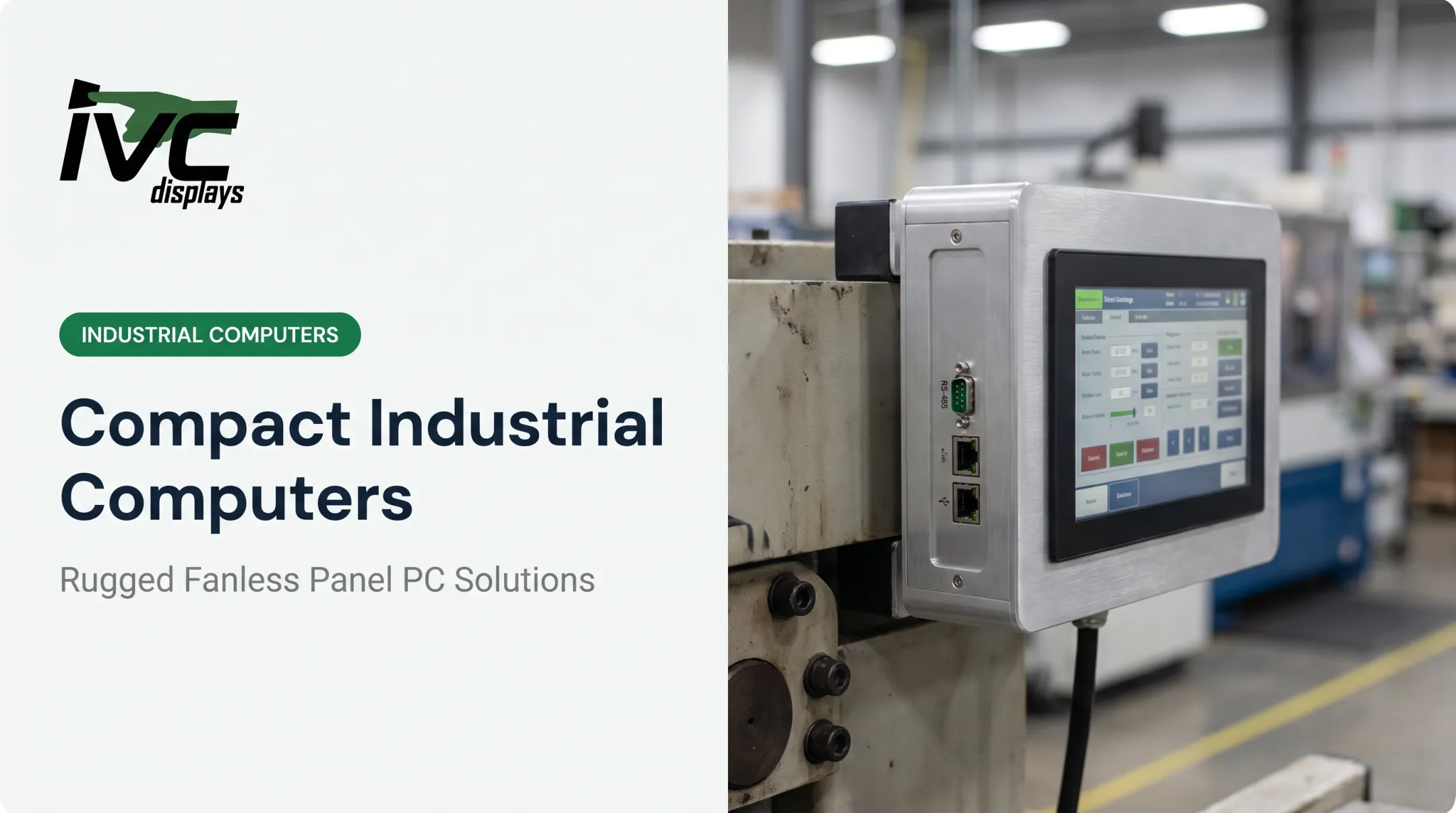
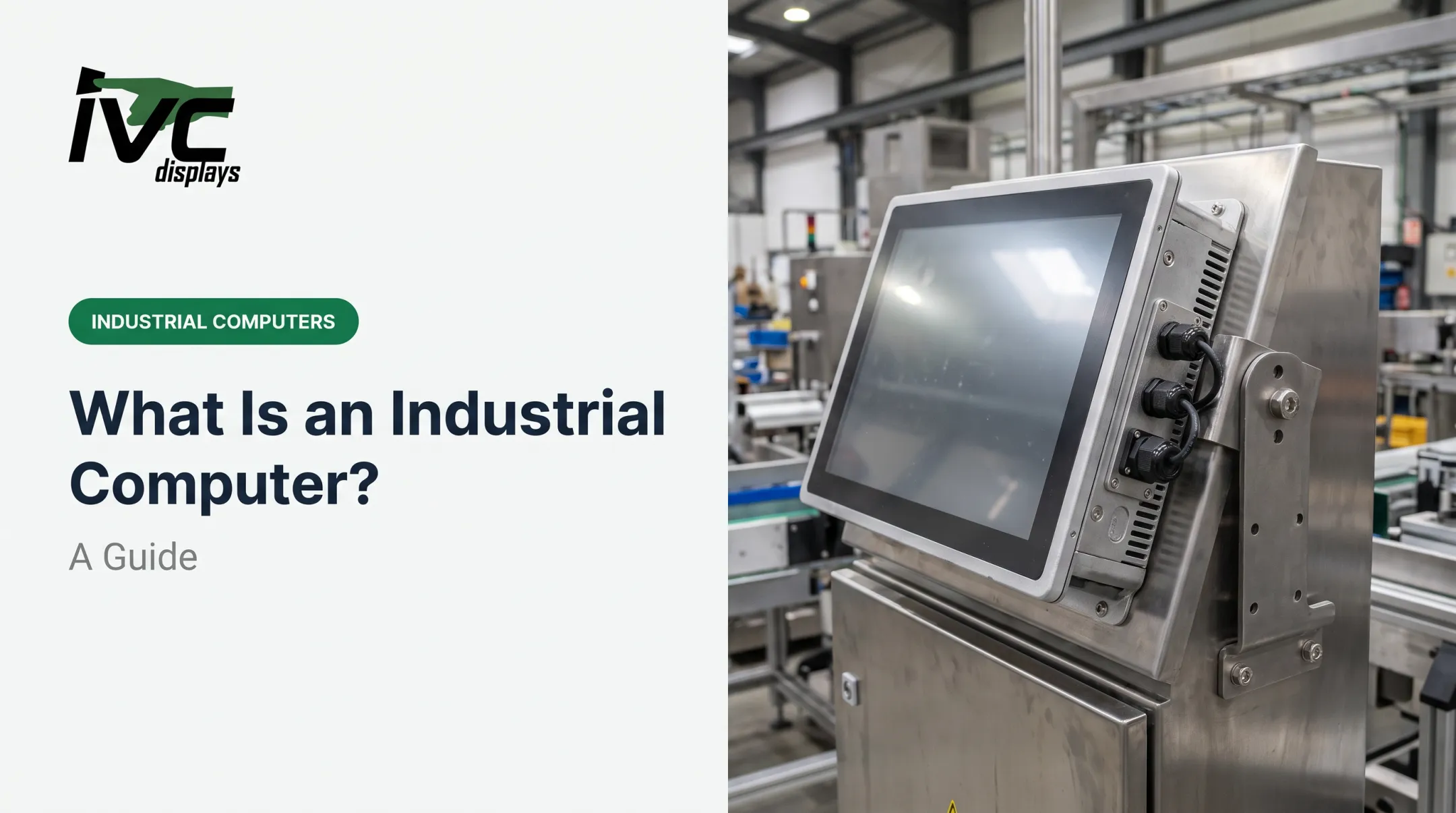
Industrial Computer Technology (ICT) is purpose-built computing hardware engineered to operate reliably where standard PCs fail: panel PCs, industrial monitors, vehicle-mount computers, and marine-grade systems. Sealed enclosures, fanless cooling, wide temperature tolerance, and vibration-ready mounting define the category—not raw processor speed.
As OnLogic explains, all rugged computers qualify as industrial, but not every industrial computer is technically "rugged." The category spans a spectrum of protection levels matched to specific environments.
Common ICT Variations
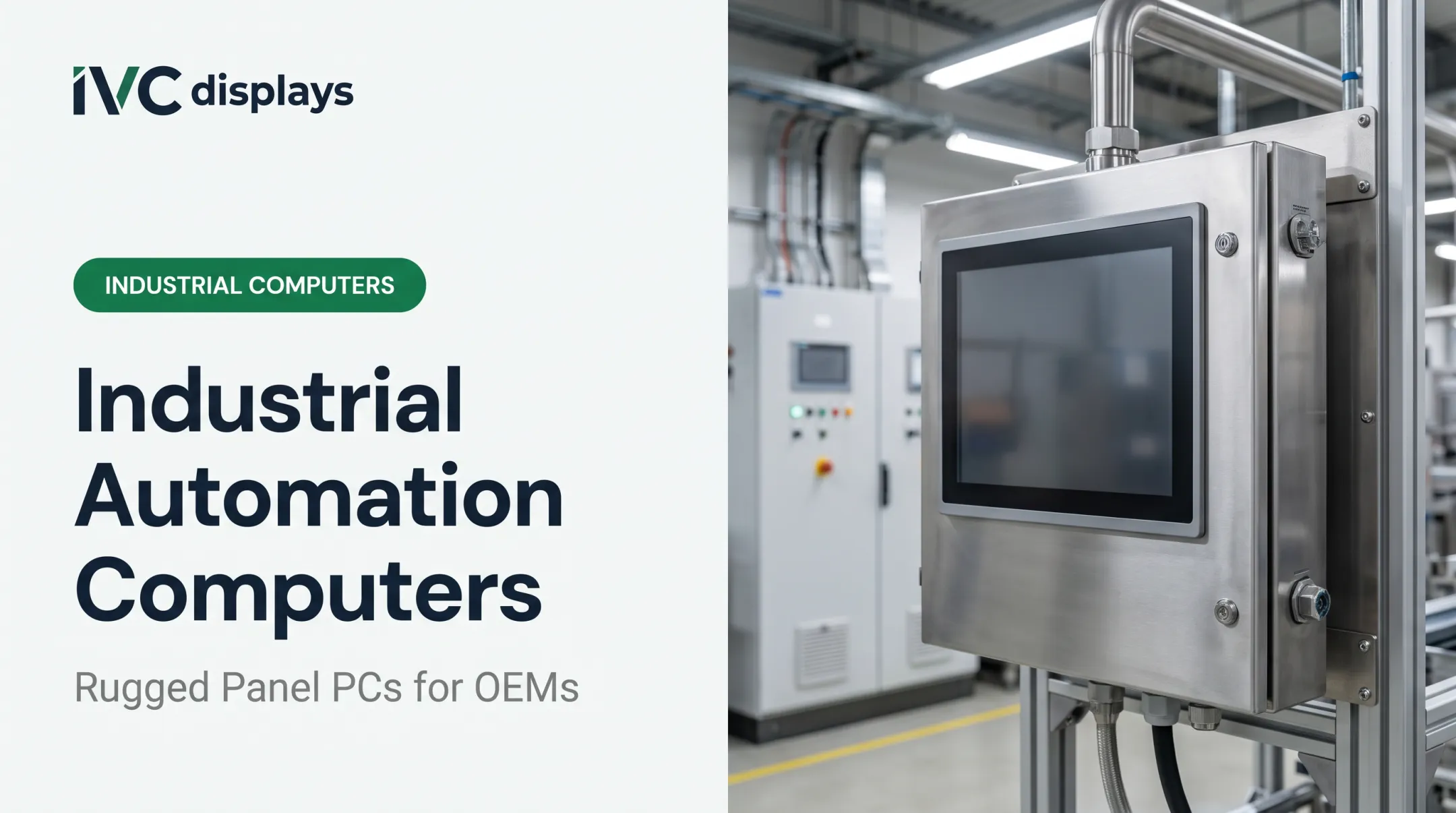
- Rugged panel PCs for HMI and SCADA control (like IVC Displays' NP-9XXi Series, with IP66 front protection and Core i5 processing)
- Heavy-duty industrial computers for extreme conditions (the IVC-XXPC-P Series, sealed and fanless, rated from -20°C to +70°C)
- Stainless steel washdown systems for food and pharma production, built in 304/316-grade steel with IP66/IP67/IP69K sealing
- Open-frame displays for OEM and kiosk integration
- Marine-grade computers certified to IEC 60945, IACS E10, and DNV standards
Manufacturers such as IVC Displays build this class of hardware for manufacturing, oil and gas, marine, and defense environments where commercial PCs cannot hold up.

Use Cases of Industrial Computer Technology
ICT shows up wherever conditions would destroy a standard PC:
- Factory floor HMI — operators need touchscreens that survive dust, grease, and constant handling
- Automation control rooms — process control demands 24/7 uptime with minimal downtime tolerance
- Logistics fleet management — vehicle-mount computers take constant shock and vibration
- Offshore rigs — corrosion, salt spray, and temperature extremes rule out office equipment
A JLT case study at A/S Løgstrup-Steel shows the cost of getting this wrong. Forklift-mounted terminals were crashing and rebooting, and unstable connectivity drove repeated warehouse downtime.
After the company switched to rugged vehicle-mount computers, it reported zero connectivity interruptions over a month-long trial.

What Is Information Technology?
IT covers the management of hardware, software, networks, and data systems that keep business operations running. Think network administration, cybersecurity, cloud infrastructure, and systems administration — the layer that handles communication, data flow, and decision support rather than physical process control.
Core IT benefits include:
- Centralized data management across departments
- Secure networking and identity protection
- Faster workflows through business software
- Analytics that support faster decision-making
According to CompTIA's IT Industry Outlook 2026, a survey of over 1,000 business and technology professionals, 51% cited improved operational efficiency as a key driver behind IT investment. That's a perception metric, not a lab result, but it reflects how central IT has become to daily operations.
Use Cases of Information Technology
- Corporate offices — email, file sharing, collaboration tools
- Data centers — storage, backup, and disaster recovery
- Enterprise resource planning (ERP) — inventory, finance, supply chain coordination
- Customer relationship management (CRM) — sales and service tracking
IT dominates in finance, healthcare administration, retail, and professional services, industries where the "product" is data, transactions, or service, not physical manufacturing.
What's Better for Your Operation?
There's no universal winner here. The right choice depends on three questions:
- What's the environment? Dust, moisture, vibration, or temperature extremes favor ICT. Climate-controlled offices are fine with standard IT.
- How critical is uptime? If downtime halts production or risks safety, invest in rugged hardware designed for minimal maintenance.
- What's your hardware lifecycle budget? ICT costs more upfront but needs replacing far less often.
Choose ICT if you're running manufacturing, marine, oil and gas, food processing, or defense operations that need hardware to survive years of harsh exposure.
Choose standard IT for office-based data management, networking, and administrative functions.
Most operations, honestly, need both. Rugged ICT hardware captures data on the floor; that data feeds into broader IT systems for reporting, analytics, and enterprise-wide visibility. One layer without the other leaves gaps.
Real World Example
Titanium manufacturer TIMET (Timet Metals) turned to IVC Displays for hardware capable of handling the demands of metal production, where standard commercial computers struggle against heat, particulate, and constant operation.
Rather than relying on off-the-shelf office PCs prone to failure in these conditions, TIMET deployed an IVC Displays Light Industrial Computer built for metal production:
- Rugged metal enclosure for heat and impact resistance
- Fanless cooling that keeps dust out of the chassis
- Solid-state storage with no moving parts vulnerable to vibration
The broader pattern across industrial deployments supports this shift. Industrial-grade computers commonly see service lives of 7 to 15 years, compared to just 3 to 5 years for standard commercial PCs. That gap means fewer replacement cycles, less unplanned downtime, and lower long-term maintenance overhead.

The takeaway: in harsh manufacturing environments, purpose-built hardware delivers predictable uptime where general-purpose PCs produce recurring, costly failures.
If your floor faces heat, dust, or continuous duty cycles, specify rugged industrial computing for that environment instead of retrofitting office hardware after failures start.
Conclusion
ICT and IT manage different layers of an operation: one handles the physical front line where dust, moisture, and vibration are constants; the other handles the data and networks that connect everything together.
Start by assessing your environment and uptime requirements. From there, the right mix, whether rugged hardware, standard IT infrastructure, or both working in tandem, becomes clear.
Frequently Asked Questions
What are examples of industrial computer technology?
Examples include rugged panel PCs, industrial touch monitors, automation controllers, and vehicle-mount computers. These are used across manufacturing, logistics, and process control environments.
What are industrial computers?
Industrial computers are ruggedized systems engineered to withstand harsh conditions, including dust, moisture, vibration, and extreme temperatures. They typically use fanless cooling and solid-state storage for reliability.
What is the difference between a PC and an industrial PC?
Standard PCs are built for climate-controlled offices with basic protection. Industrial PCs feature sealed, IP-rated enclosures, wider temperature tolerances, and components rated for continuous, demanding use.
How long does an industrial computer last compared to a standard IT computer?
Industrial computers often reach 7 to 15 years of service life, while standard commercial PCs typically last 3 to 5 years before replacement. Actual lifespan varies by manufacturer and model.
Can industrial computer technology and IT systems work together?
Yes. Rugged ICT hardware captures data on the plant floor, which then feeds into broader IT and network infrastructure for monitoring, analytics, and enterprise-wide reporting.
Which industries rely most on industrial computer technology?
Manufacturing, oil and gas, marine and offshore, defense, and food processing rely heavily on ICT. These industries face environmental conditions that standard commercial computers can't reliably handle.