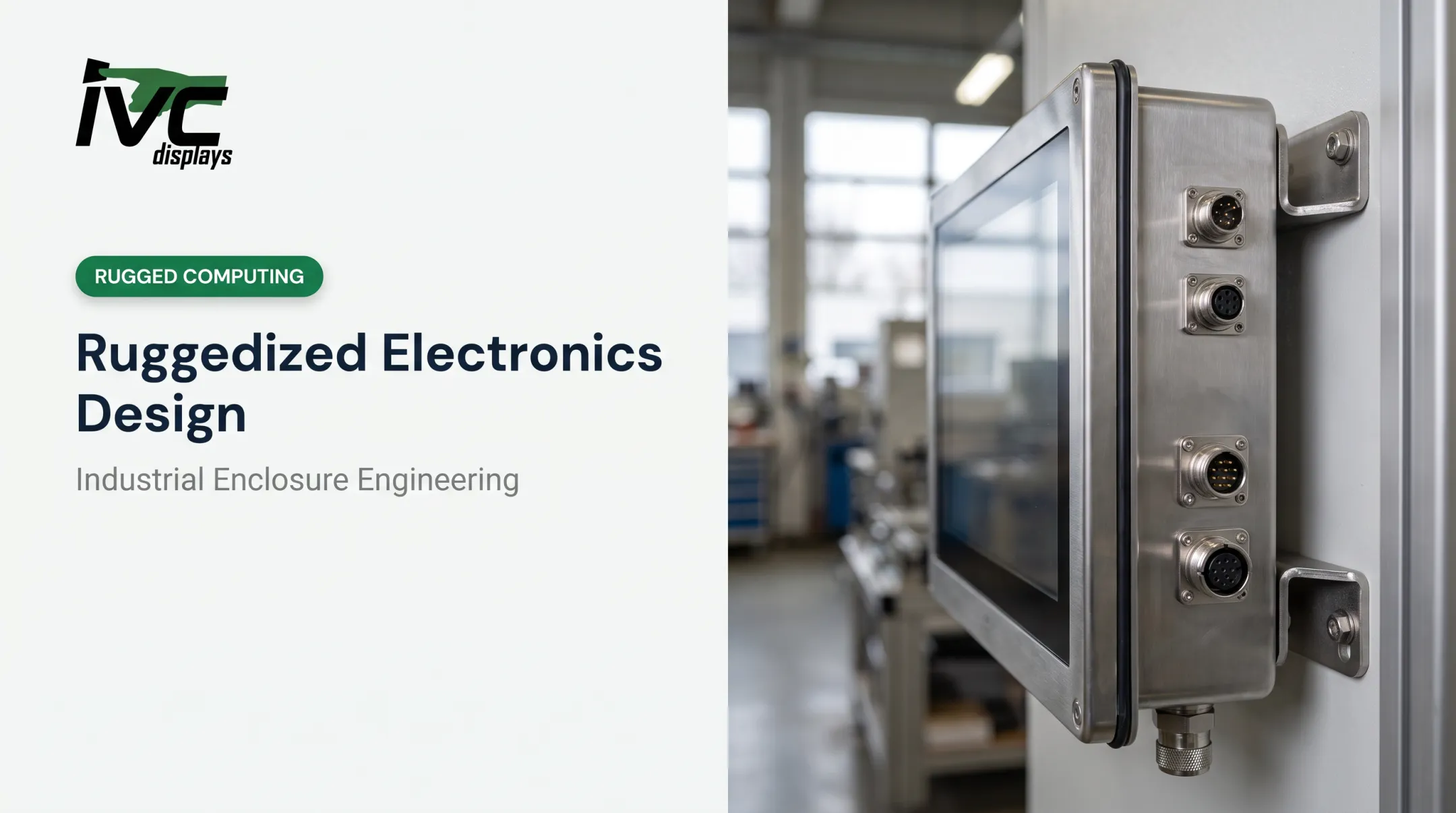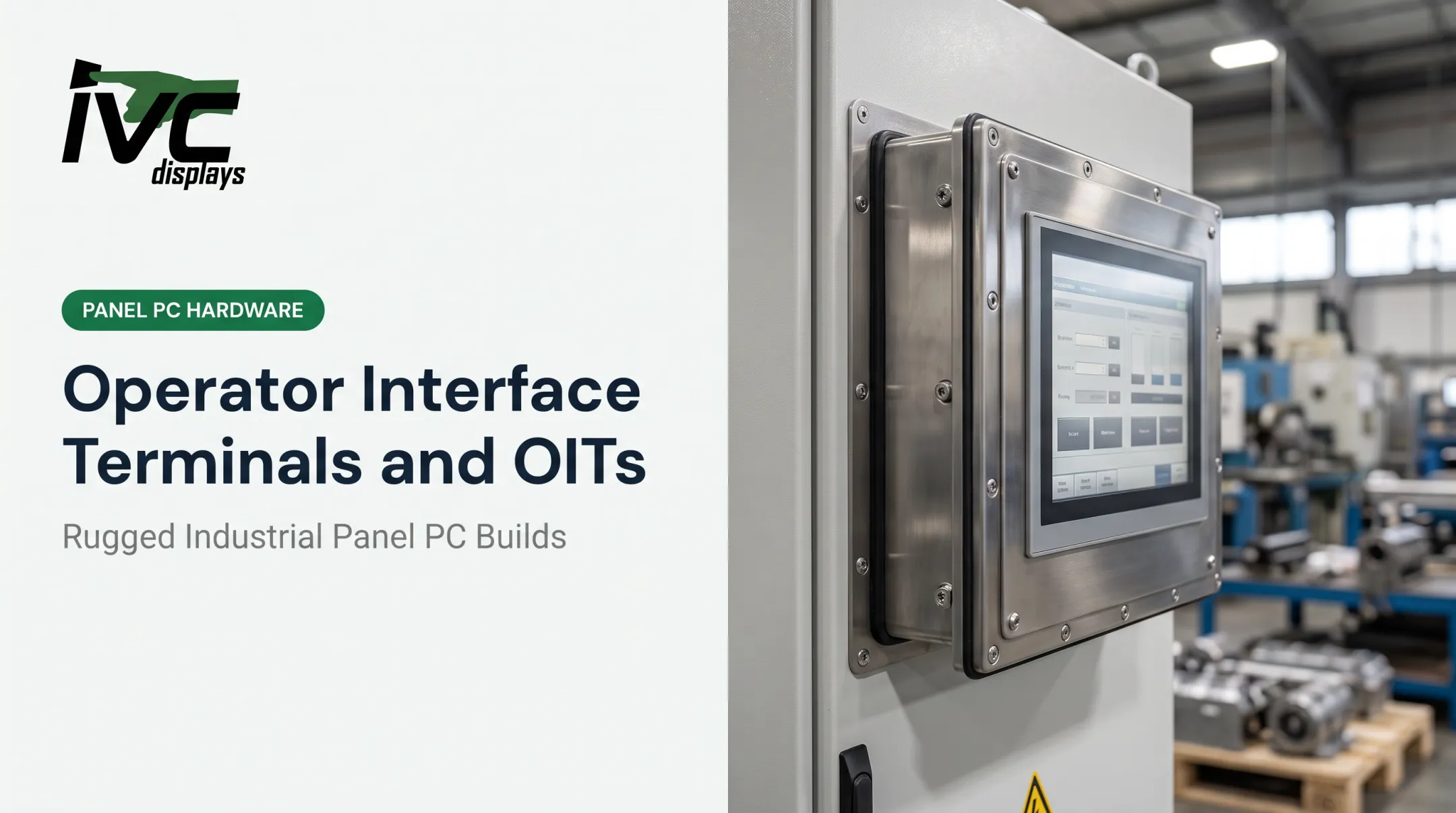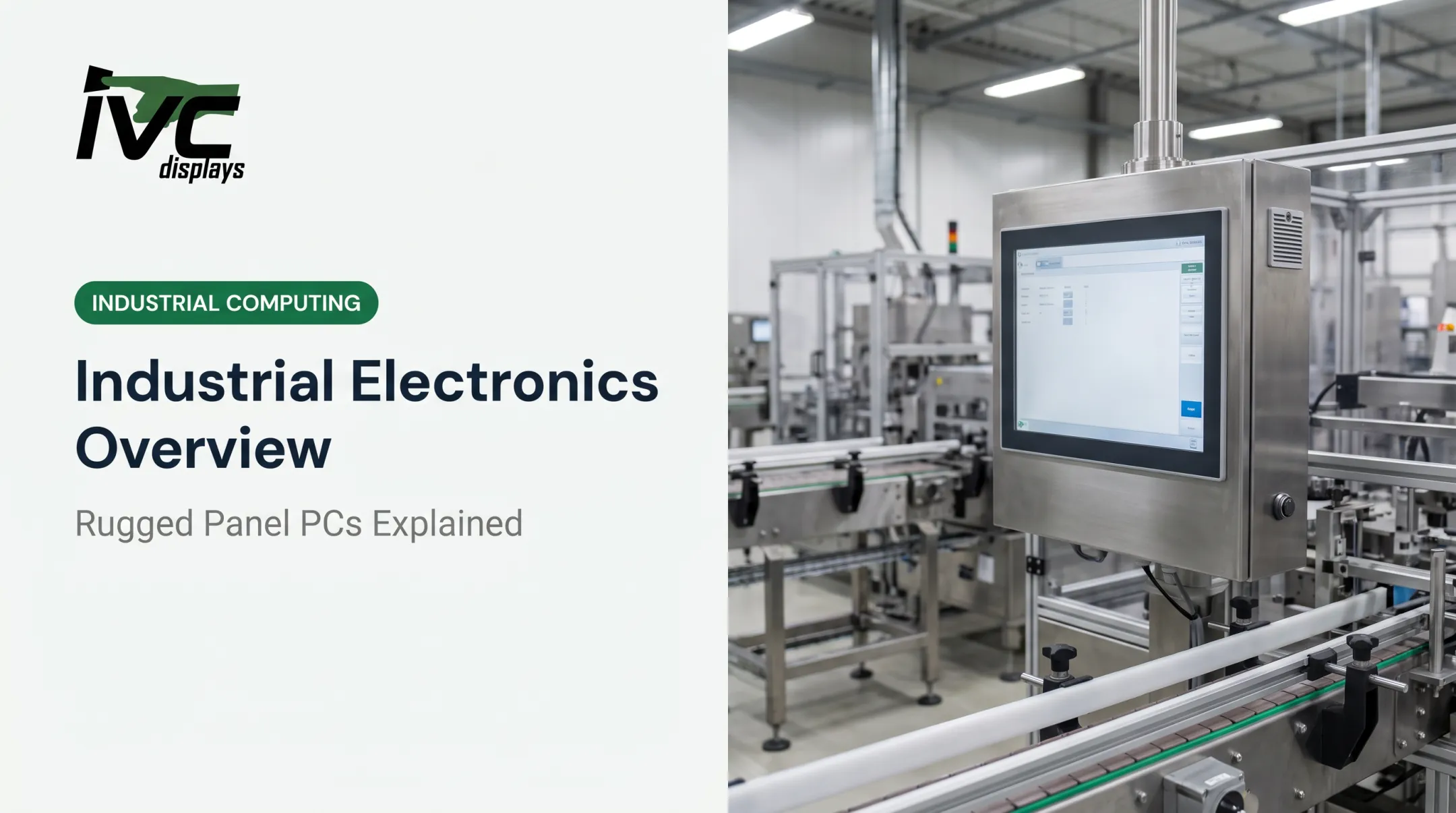

But there's a problem operators face daily: the environments these systems live in are brutal. Dust, moisture, vibration, and temperature swings destroy consumer-grade electronics fast. A laptop that works fine in an office will fail within months on a plant floor or offshore rig.
This guide breaks down what industrial electronic systems are, their core components, where they're used, and how to choose hardware that actually survives demanding conditions.
Key Takeaways
- Industrial electronic systems control, monitor, and automate processes in manufacturing, logistics, defense, and energy
- Core hardware spans sensors, PLCs, panel PCs, and rugged industrial displays built for continuous duty
- Harsh environments demand purpose-built equipment, not standard commercial electronics
- Typical uses include process automation, HMI control, and safety monitoring on the plant floor
- The right hardware provider cuts downtime risk and protects long-term system reliability
What Are Industrial Electronic Systems?
Industrial electronic systems are the devices, controls, and computing hardware used to monitor, control, and optimize industrial processes. A typical loop includes:
- Sensors feeding real-time data to a controller
- Controllers sending instructions to actuators
- Operator interfaces displaying status and accepting input
The difference from consumer electronics is durability. Industrial hardware is built for continuous operation, extreme temperatures, and years of uninterrupted service, not a three-year replacement cycle.
From Relays to Smart Systems
Early industrial control relied on basic relays and vacuum tubes. Today's systems are networked, data-driven, and increasingly connected through industrial IoT. According to McKinsey, connectivity and industrial IoT are growing at 18%, faster than any other segment of the industrial automation market.
Why Reliability Isn't Optional
A dropped connection or frozen panel PC doesn't just cause inconvenience. It stops production.
NIST research on predictive maintenance found that manufacturers relying more heavily on predictive approaches saw 52.7% less unplanned downtime and 78.5% fewer defects compared to reactive-focused operations, based on NIST's manufacturing maintenance survey. That gap starts with hardware built to hold up on the plant floor.
Core Components of Industrial Electronic Systems
Every industrial electronic system, regardless of industry, relies on a handful of core building blocks working together.
- Sensors and measurement devices gather real-time data on temperature, pressure, flow, and other process variables. They're the eyes of the system, feeding accurate information to whatever's making decisions downstream.
- Controllers and PLCs interpret sensor signals against set points and issue commands to actuators like valves, motors, and switches. NIST describes this loop as the foundation of operational technology in industrial settings.
- Industrial computers and panel PCs act as the brain connecting operators to machinery. Rugged hardware matters here: a panel PC on a factory floor must survive vibration, dust, and heat while running 24/7 without a hiccup.
- Industrial displays and HMIs let operators visualize and control processes. Sunlight-readable touchscreens with IP-rated front panels are standard in this category, not a luxury add-on.
- Power electronics (transformers, circuit breakers, wiring) handle safe, efficient power distribution. Miniature circuit breakers, for instance, protect connected equipment from overloads and short circuits.
The computing and display layers are where purpose-built hardware earns its keep. IVC Displays manufactures rugged panel PCs, industrial monitors, and open-frame displays built to serve as HMIs and computing hardware within these systems. The NP-9XXi and IVC-XXPC-P series, for example, combine Intel processor options with industrial I/O to handle SCADA, HMI, and machine-control roles in a single unit.

Key Applications Across Industries
Industrial electronic systems drive process automation across sectors—cutting manual intervention, steadying production flow, and improving safety. Deloitte's 2025 Smart Manufacturing Survey of 600 US manufacturing executives found smart manufacturing implementations delivered 10–20% gains in production output and 7–20% gains in employee productivity.
The same hardware also reduces unplanned downtime. Industry-specific applications include:
- Manufacturing and automation — machine control, HMI, and process monitoring
- Food and pharmaceutical processing — washdown-capable systems for hygienic environments
- Oil and gas — rugged computing for extreme temperature and vibration exposure
- Marine and offshore — saltwater and humidity-resistant systems
- Military and defense — hardware built for shock, vibration, and unpredictable conditions
- Logistics and transportation — vehicle-mount computers for fleet and warehouse operations

OEM equipment integrators often embed this hardware directly into their machinery rather than building computing systems from scratch. Machine builders stay focused on their core product and rely on established, tested industrial computing platforms.
Real-world example: Timet Metals runs an IVC Displays Light Industrial Computer in its titanium manufacturing operation.
Choosing the Right Hardware for Harsh Environments
Selecting industrial hardware means matching the equipment to the environment it will face. Processor speed matters less than dust, water, heat, and vibration resistance.
Ingress Protection and Temperature Tolerance
IP ratings tell you how well an enclosure resists dust and water. Per Intertek's IEC 60529 explainer:
- IP65: Protects against water jets
- IP67: Allows temporary immersion
- IP69/IP69K: Withstands high-pressure steam cleaning
Pair those ratings with temperature tolerance. Some heavy industrial computers operate reliably from -20°C to +70°C. Add vibration and shock resistance when equipment sits near heavy machinery.

Washdown and Marine-Grade Requirements
Food and pharmaceutical facilities need stainless steel washdown-rated systems that survive daily sanitation cycles.
IVC's NP-71X4S stainless steel waterproof computer comes in 304 or 316 grade with model-dependent IP66, IP67, or IP69K ratings. The 316 grade is built for salt, chemical, and high-sanitation exposure common in food and pharma production.
Marine and offshore deployments face different conditions: humidity, salt spray, and continuous vibration. Marine-grade computing systems use corrosion-resistant enclosures and wide operating-temperature ranges to handle them.
IVC's broader portfolio covers rugged panel PCs, vehicle-mount computers, marine-grade systems, and custom industrial hardware because these demands vary so widely. A single "rugged" spec sheet does not cover a food plant, an offshore platform, and a defense application equally well.
Maintenance and Safety Best Practices
Preventive maintenance keeps downtime planned. Skip it, and a production line can stop without warning.
Basic safety protocols for personnel working around industrial electronic systems should include:
- Employee training on equipment-specific hazards and procedures
- Lockout/tagout compliance under OSHA 29 CFR 1910.147, isolating equipment before service to prevent unexpected energization
- Verification steps before work begins, with each authorized employee using a personal lock or tag
- Periodic inspections of energy-control procedures

Those procedures protect people on the floor. Hardware longevity shapes how often the line needs that work in the first place.
Systems with long product lifecycles cut redesign costs from frequent equipment swaps. IVC supports multi-year deployments with consistent hardware platforms and long-term OEM production support. U.S.-based technical support, available since 2003, covers both standard and custom configurations.
The Future of Industrial Electronic Systems
Smart, connected industrial devices are reshaping how plants operate. Remote monitoring and predictive maintenance are no longer experimental. They are becoming standard practice.
Deloitte's 2025 survey found 46% of US manufacturers are already using IIoT solutions at the facility or network level, with 27% listing IIoT among their top investment priorities for the next two years, according to Deloitte's 2025 Smart Manufacturing Survey.
That growth does not reduce the need for rugged hardware. It increases it. As automation and data collection move into harsher settings, plants still need purpose-built industrial computers and panel PCs that hold up on the floor:
- Deeper offshore and marine platforms
- Cold storage and washdown areas
- High-vibration machinery cells
Demand for durable, long-lifecycle computing platforms will keep rising with every connected deployment.
Frequently Asked Questions
What are some examples of industrial electronics?
Examples include sensors, PLCs, rugged panel PCs, industrial monitors, controllers, and power distribution components like transformers and circuit breakers. They form the control and power backbone of manufacturing and automation lines.
What does industrial electronics do?
It controls, monitors, and automates industrial processes to improve efficiency, accuracy, and safety. That covers machine control, process monitoring, and quality checks on the production line.
How is industrial electronic hardware different from standard computer equipment?
Industrial hardware features sealed, IP-rated enclosures, extended operating temperature ranges, and vibration/shock resistance. Standard commercial computers simply aren't built to survive dust, moisture, or continuous 24/7 operation.
What industries rely most heavily on industrial electronic systems?
Manufacturing, oil and gas, food processing, marine and offshore, and defense sectors depend heavily on these systems. Each one needs hardware rated for its own mix of heat, washdown, vibration, or hazardous conditions.
How often should industrial electronic systems be maintained?
Preventive maintenance should follow a regular schedule, but frequency depends on environment severity and usage intensity. Harsher conditions and heavier use call for more frequent inspections and servicing.
Can industrial electronic hardware be customized for specific applications?
Yes. Custom engineering options include enclosure design, I/O customization, and mounting solutions tailored to specific machinery or OEM production needs, with long-term availability programs when multi-year supply matters.