
Many businesses struggle to distinguish embedded computers from standard PCs when specifying hardware for new equipment. That confusion gets expensive fast, especially when a general-purpose PC fails in an environment it was never built to survive.
This guide breaks down what embedded computers actually are, their core components, the main system types, and where they show up across manufacturing, marine, defense, and food processing operations.
Key Takeaways
- Embedded computers perform one dedicated function inside a larger system, unlike general-purpose PCs
- Fanless cooling and IP-rated enclosures let them survive extreme temperatures and washdowns
- Common types include SBCs, industrial PCs, panel PCs, and box PCs
- Match processor choice (ARM vs. x86) and environmental ratings to your deployment conditions
What Is an Embedded Computer?
An embedded computer is a specialized computing device built into a larger system to do one job reliably. The National Institute of Standards and Technology defines it as "a computer system that is an integral part of a larger system." Unlike a general-purpose PC that juggles apps and browser tabs, this hardware stays locked to one function.
Every embedded computer combines:
- A processor for computation
- Memory for storing programs and data
- I/O interfaces for talking to sensors, machines, and equipment
Embedded Computer vs. Embedded System
These terms get used interchangeably, but they're not the same thing. The IEEE describes embedded systems as dedicated computational systems built into a larger mechanical or electronic product.
- Embedded computer = the physical hardware unit
- Embedded system = hardware + software/firmware + peripherals working together
Common form factors include box PCs, panel PCs, single board computers, and industrial PCs. Each shows up in different deployment scenarios, which we'll cover shortly.
Is a Laptop an Embedded Computer?
No. Laptops are general-purpose computers designed for varied tasks such as browsing, spreadsheets, and video calls on the same machine. Embedded computers are locked to a dedicated function. A panel PC running a production line's HMI doesn't switch to email between shifts.
Embedded Computer vs. General-Purpose PC
The core difference comes down to purpose: general-purpose PCs prioritize flexibility, while embedded computers prioritize reliability under specific, often harsh, conditions.
| Factor | Embedded Computer | General-Purpose PC |
|---|---|---|
| Purpose | One dedicated function | Multiple varied applications |
| Design | Compact, often fanless | Larger, ventilated |
| Power draw | Optimized for the workload | Higher, workload-dependent |
| User interaction | Minimal or none | Constant, interactive |
| Real-time capability | Often required | Rarely built-in |
| Operating conditions | 24/7, harsh environments | Climate-controlled offices |

Embedded computers are built for continuous, autonomous operation, sometimes running non-stop for years without a reboot. A standard office PC dropped onto a factory floor with dust, vibration, and temperature swings would fail within months. Rugged industrial designs close that gap with sealed enclosures, fanless cooling, and components rated for wide temperature ranges.
Key Systems and Components of an Embedded Computer
Processing Units
Three main processing options exist, and the right choice depends on the workload:
- Microcontrollers (MCUs): A single chip combining processor core, program memory, data memory, and peripheral interfaces, according to IEEE. Best for simple, dedicated control tasks.
- Microprocessors (MPUs): Standalone processor cores that rely on external memory and peripherals. They take more system-integration effort but handle heavier workloads, according to a 2025 Microchip comparison.
- System-on-Chip (SoC): A complete processing system packaged into one chip, as Arm defines it. Common in compact, high-performance embedded designs.
Memory and Storage
Embedded systems need two memory types working together:
- Volatile (RAM): Fast, temporary storage cleared on power-off
- Non-volatile (flash/ROM): Retains data when power is off, according to Micron
Solid-state storage dominates industrial embedded computers because it has no moving parts. That matters when the hardware sits on equipment shaking from vibration all day.
I/O Interfaces and Peripherals
Embedded computers talk to sensors, actuators, and other equipment through several standard interfaces:
- GPIO for basic digital input/output
- I2C and SPI for serial communication between chips
- USB and Ethernet for peripherals and networking
- RS-232/422/485 for industrial serial links to PLCs, drives, and legacy equipment
- CAN bus for real-time communication in vehicles and industrial machinery
Power Management
Continuous or battery-powered operation depends on efficient power handling:
- Dynamic voltage and frequency scaling (DVFS) adjusts power draw to match required performance, according to Arm
- Sleep modes cut consumption further and extend battery life in mobile deployments
Ruggedization Features
This is where embedded computers separate from consumer hardware. Key features include:
- Fanless cooling to eliminate dust ingress and mechanical failure points
- Sealed, IP-rated enclosures rated against dust and liquid per IEC 60529 standards
- Wide operating temperature ranges, with some extended-temperature models rated from -40°C to 85°C

Main Types of Embedded Systems
Embedded systems are grouped two ways: by hardware form factor and by how they behave at runtime. Form factor shapes where the unit mounts and what it can survive. Behavior classification tells you whether missed deadlines, network loss, or power limits will break the application.
Single Board Computers (SBCs)
An SBC packs the processor, memory, and I/O onto one board. Compact and affordable, they suit prototyping, gateways, and lightweight industrial control where space and cost matter more than heavy I/O expansion.
Industrial PCs and Fanless Box PCs
These units are built for harsh, uncontrolled spaces such as a plant floor. Most skip fans and use passive cooling so dust and debris cannot clog the chassis the way they would a standard PC. That design keeps control, logging, and edge workloads running with less maintenance.
Panel PCs
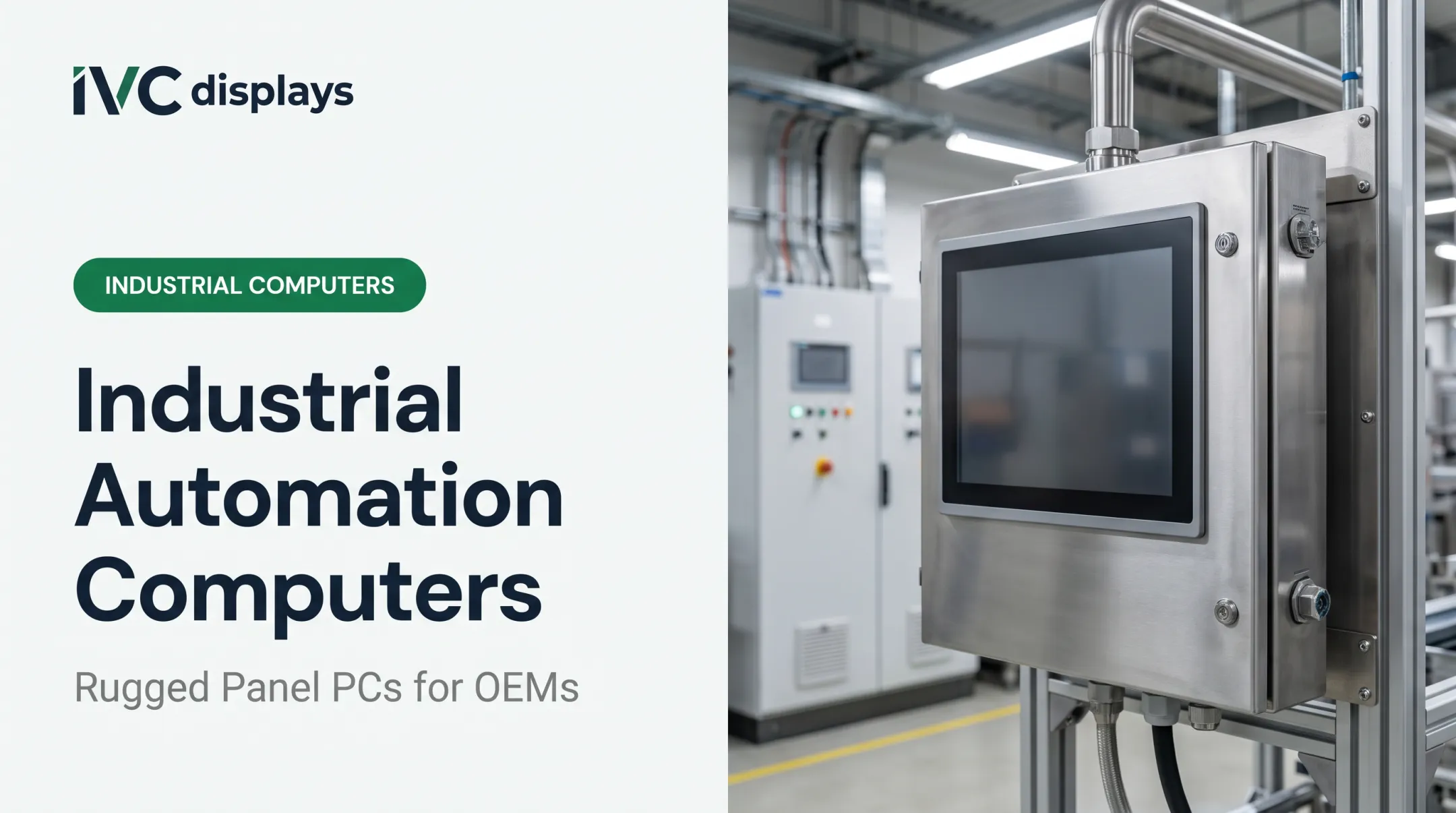
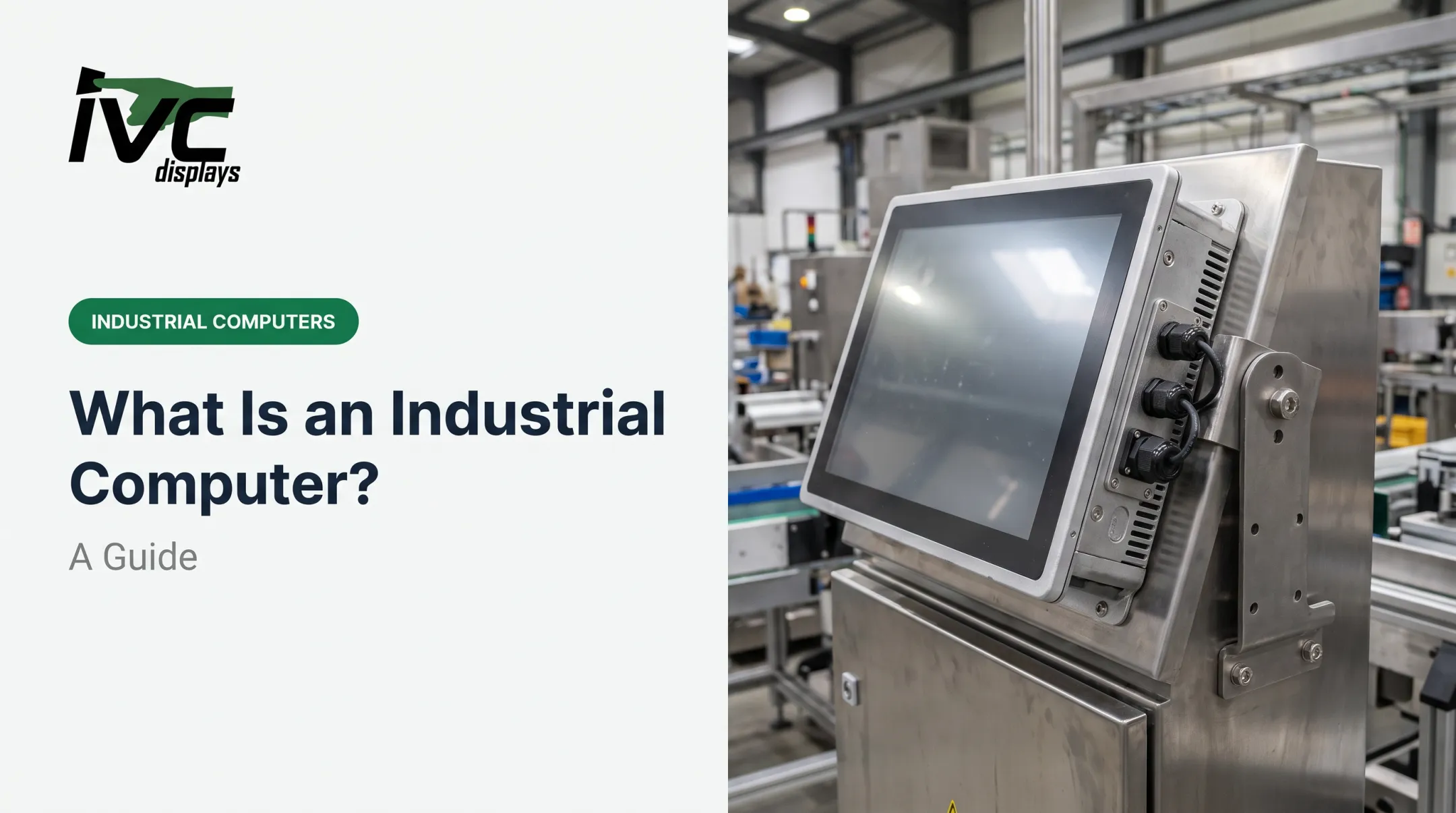
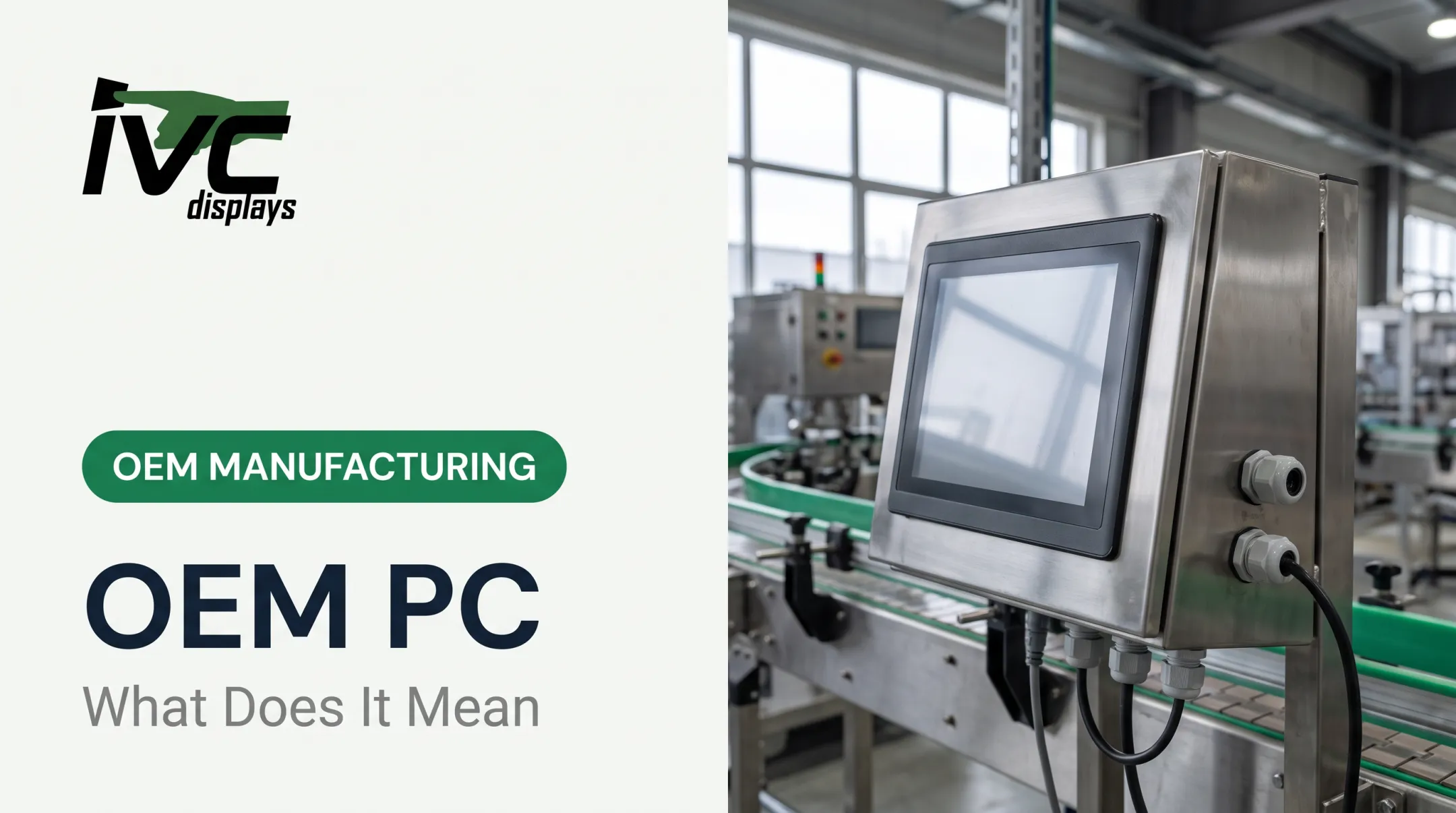
Panel PCs combine the display and computer in one HMI for production lines and machine cells. Operators work the touchscreen while the embedded system runs the interface and local logic behind it—common in manufacturing, food processing, and other operator-driven environments.

Classification by Behavior
Embedded systems also break down by how they operate:
- Hard real-time: Every deadline must be met, or the system fails (airbag deployment)
- Soft real-time: Tolerates occasional missed deadlines (video streaming)
- Standalone: Runs on its own with no network dependency
- Networked: Exchanges data continuously with other systems
- Mobile: Battery-powered and built for portability (vehicle-mount computers)
Matching form factor to environment—and behavior class to timing and connectivity needs—narrows the field before you compare processors, I/O, or enclosure ratings.
Common Examples and Real-World Uses
The industrial PC market alone is projected to reach $6.6 billion globally by 2028, a signal of just how widespread embedded computing has become across industries.
Household devices: Microwaves, smart thermostats, and washing machines all rely on embedded controllers to run their specific functions without needing a full operating system.
Manufacturing and automation: PLCs and embedded controllers drive production lines, robotics, and predictive maintenance systems, keeping equipment running without constant human oversight.
Logistics and transportation: Vehicle-mount computers and fleet tracking systems require hardware that survives constant vibration, temperature swings, and road shock.
Marine, oil & gas, and defense: These environments demand sealed, rugged enclosures that meet strict standards. IVC Displays engineers the NP-9XX-MA Marine Grade Panel PC for vessel navigation, engine monitoring, and offshore drilling, available in 12.1", 19", and 24" configurations with:
- IP65 front-panel protection
- Corrosion-resistant aluminum housing
- IEC 60945, IACS E10, and DNV compliance

For heavier industrial deployments, the IVC-XXPC-P Heavy Industrial Computer Series provides sealed, rugged computing built for extreme operating conditions.
Food processing and pharmaceuticals: FDA regulation 21 CFR 117.40 requires food-processing equipment to be cleanable and resistant to corrosion and sanitizers. IVC's Stainless Steel Waterproof Industrial Computer (NP-71X4S configuration) addresses this with:
- Fully sealed 304 or 316 stainless steel enclosure
- IP66/IP67/IP69K protection
- Waterproof M12 connectors
- Fanless sealed thermal design that eliminates contamination-prone air intakes
Choosing the Right Embedded Computer for Your Application
Match Architecture to Workload
ARM and x86 processors each have strengths. A 2026 comparison from SECO notes that modern ARM platforms combine high performance with low energy consumption, while x86 remains a strong, proven platform with broad software compatibility. Match your choice to the specific workload and connectivity needs, not general reputation.
Evaluate Environmental Demands
Before selecting hardware, assess:
- Temperature range at the deployment site
- IP rating needed for dust and moisture exposure
- Shock and vibration resistance for mobile or high-vibration equipment
Plan for Long-Term Lifecycle Support
Component obsolescence is a real cost. Commercial computers often last about three years on average, while purpose-built industrial systems commonly reach around 11 years.

Working with a manufacturer that offers custom engineering (enclosure design, I/O configuration, or OEM production) keeps your hardware platform stable across a multi-year deployment. IVC Displays pairs that custom work with long-term availability programs so you are not forced into redesigns every few years.
Frequently Asked Questions
What is an embedded computer?
An embedded computer is a specialized computing device built into a larger system to perform one dedicated function reliably. It combines a processor, memory, and I/O interfaces in a compact, often ruggedized form factor.
What are common examples of embedded computers?
Common examples include microwaves, thermostats, industrial panel PCs on factory floors, vehicle-mount fleet computers, and marine-grade navigation systems on offshore vessels.
What household devices use embedded computers?
Microwaves, smart thermostats, washing machines, and most modern kitchen appliances rely on embedded controllers to manage their specific functions.
Is a laptop an embedded computer?
No. Laptops are general-purpose computers built for varied, interactive tasks. Embedded computers are locked to one dedicated function within a larger system.
What is embedded hardware?
Embedded hardware refers to the physical components of an embedded computer—including the processor, memory, and I/O interfaces—as distinct from the software or firmware running on it.
Which programming languages are best for embedded systems?
C and C++ dominate embedded development due to their low-level hardware control. A 2024 Embedded.com article reports C usage at roughly 60-70% and C++ at 20-25% among embedded developers.