
Many facilities discover the hard way that standard office PCs weren't built for this world. Dust, heat, vibration, and washdown cycles kill consumer-grade hardware fast. A 2025 Deloitte survey of 600 U.S. manufacturing executives found that smart manufacturing adoption drives 10-20% improvements in production output — but only when the underlying hardware can actually survive the environment.
This guide covers how computers function across industrial settings, the core jobs they handle, and what separates equipment that lasts from equipment that doesn't.
Key Takeaways
- Industrial computers now drive automation, quality control, predictive maintenance, and data management across manufacturing floors
- Standard commercial PCs fail prematurely in dust, heat, and vibration-heavy environments
- Rugged, purpose-built hardware reduces unplanned downtime and extends equipment lifespan
- The right computer depends on your specific conditions: extreme temperatures, washdown cycles, mobility needs, or offshore exposure
How Are Computers Used in Industry?
Industrial computing touches nearly every stage of production. Here's where it shows up most:
- Automation control: Computers coordinate robotics, conveyor systems, and assembly-line tasks, cutting manual labor and reducing human error
- Real-time monitoring: Systems track temperature, pressure, and machine performance continuously, flagging problems before they cause a shutdown
- Data acquisition & analytics: Production data feeds quality reports, demand forecasting, and process optimization models
- CAD/CAM and CNC machining: Precision design software drives automated manufacturing of parts to exact tolerances
- Supply chain and inventory management: Production schedules sync with logistics and warehouse systems for smoother fulfillment
Adoption data makes the case clear. According to NIST's Manufacturing Extension Partnership, 46% of U.S. manufacturers now use AI tools on the floor. Of those, 72% report lower costs and better operational efficiency. More than 80% expect to expand AI use over the next two years.

None of this works without hardware that can survive where it's installed. A robotic controller that overheats on a hot plant floor, or a monitoring station that shorts out during a washdown, can stop an entire production line.
Core Functions That Keep Factories Running
Industrial computers power the plant-floor functions that keep production stable: maintenance, quality, operator control, and machine-to-machine communication.
Predictive Maintenance
Sensor data paired with analytics can flag equipment issues before they become failures. McKinsey's research on manufacturing analytics found that predictive maintenance typically reduces machine downtime by 30-50% and extends machine life by 20-40%.
NIST reports that preventive and predictive maintenance is tied for the top AI use case among U.S. manufacturers, with 54% already deploying it. Unplanned downtime affects roughly 82% of manufacturers over any three-year window, so the payoff is straightforward.

Quality Assurance & Inspection
AI-powered vision systems catch defects human inspectors miss. Cameras paired with machine-learning algorithms scan products at line speed, flagging inconsistencies in real time. NIST data shows 49% of U.S. manufacturers now use AI specifically for quality improvement, with 24% deploying it directly in quality operations.
Human-Machine Interfaces (HMI)
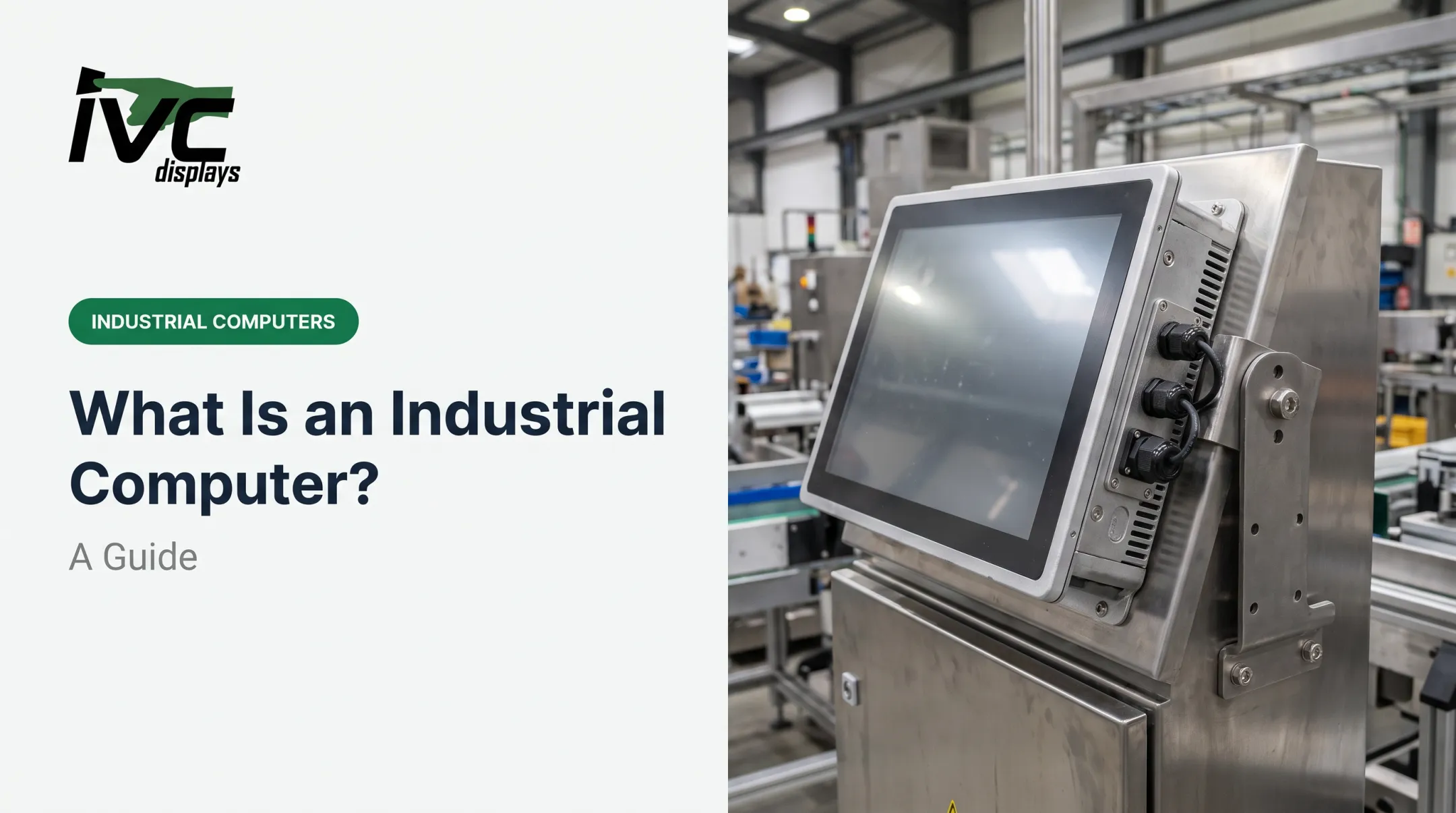
Operators need a way to see what's happening and make adjustments without stopping the line. HMIs give them graphical control panels (touchscreens, dashboards, and alarm displays) that translate raw machine data into something actionable. Those interfaces typically run on industrial panel PCs and rugged touch displays built for the plant floor. The governing standard is ANSI/ISA 101.01-2015, which covers HMI design for process automation systems in North America.
Industrial Networking & Communication
Machines, sensors, and control systems need to talk to each other. Protocols like EtherNet/IP, built on standard Ethernet and TCP/IP combined with the Common Industrial Protocol, let disparate equipment coordinate as one system rather than isolated islands.
Industrial PCs with Ethernet and serial I/O (RS-232/422/485) often act as the bridge, running the applications that turn shared data into control decisions.
Why Standard Computers Fail in Industrial Settings
Consumer-grade PCs are built for climate-controlled offices, not factory floors. Here's where they break down:
- Dust ingress — Standard chassis lack sealed enclosures, so particulates work into fans and circuitry
- Temperature sensitivity — Office PCs typically aren't rated for the wide swings common in plants or outdoor installations
- Vibration damage — Spinning hard drives and loose connectors don't survive near heavy machinery
- Short lifespan — Consumer components simply aren't tested for 24/7 continuous operation
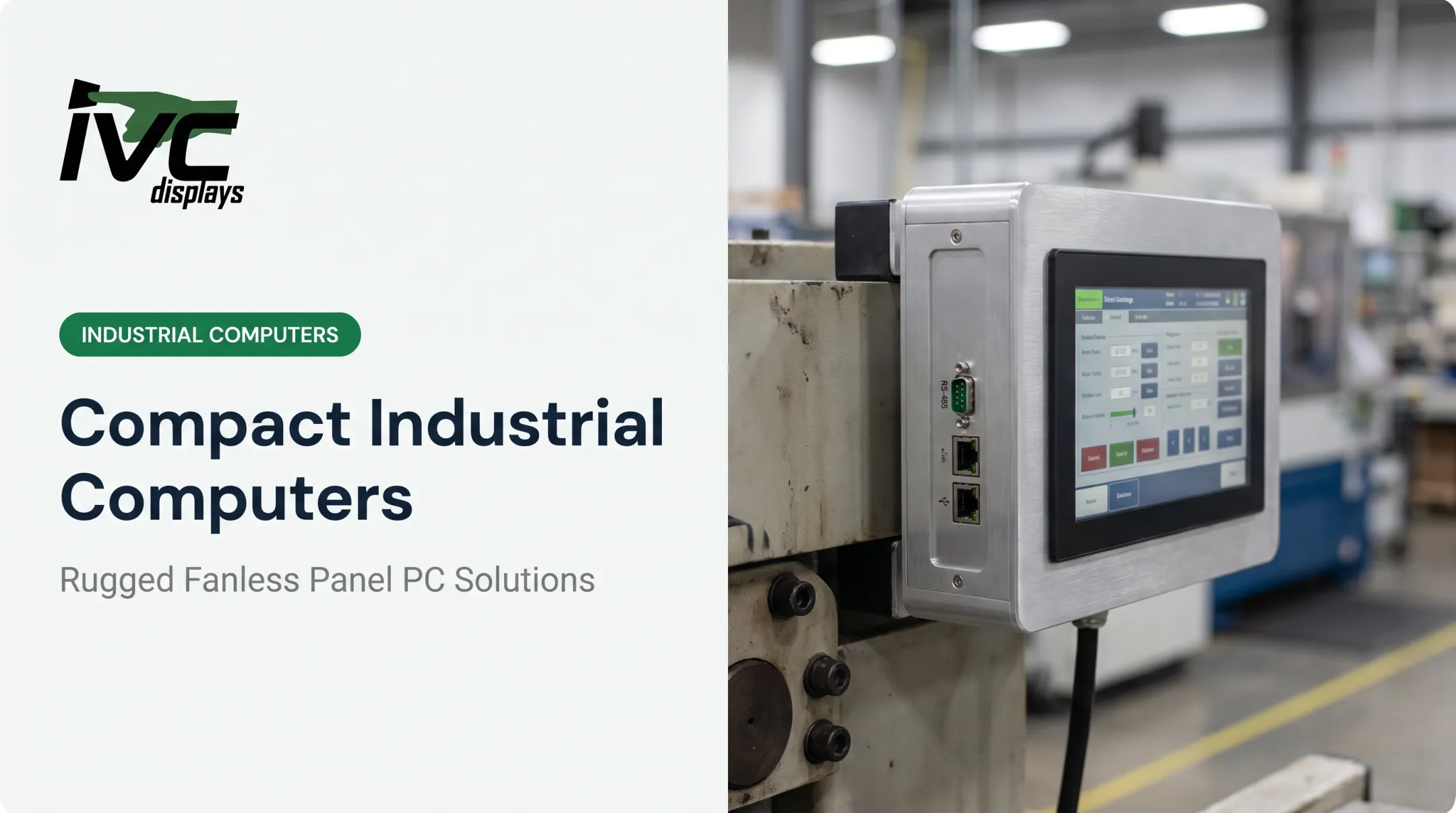
Industrial computers solve this through sealed, fanless designs and solid-state storage. IVC's IVC-XXPC-P heavy-industrial line, for example, supports operation from -20°C to +70°C, while many of the company's light-industrial models handle -20°C to +60°C, a range that would shut down a typical office desktop.
Enclosure standards matter here too. IEC 60529 defines the ingress protection (IP) ratings that grade resistance to dust and liquids, and it's the framework industrial hardware gets tested against — something consumer PC chassis simply aren't built to meet.
Specialized Environments Push Further
- Food processing requires washdown-rated, food-grade stainless steel enclosures
- Oil & gas often needs explosion-resistant designs certified to UL 1203 or ATEX standards
- Marine environments demand corrosion resistance and compliance with standards like IEC 60945
Choosing the Right Industrial Computer for Your Application
Picking hardware isn't one-size-fits-all. The right unit depends on where and how it'll be used.
Key selection factors:
- Operating temperature range — Match the rated range to your facility's actual conditions, not just typical room temperature
- IP rating — IP66 handles powerful water jets; IP67 tolerates temporary immersion; IP69K is built for high-pressure, high-temperature washdown
- Mounting style — Panel, VESA, machine-arm, or swing-arm mounts each suit different floor layouts
- Expandability — Confirm available I/O ports (RS-232/422/485, Ethernet, USB) and RAM/storage headroom match future needs
Different applications call for different form factors:
- Vehicle-mount logistics needs compact, shock-resistant computers built for forklifts and mobile equipment
- Marine/offshore applications call for corrosion-resistant housings and maritime certifications
- Clean manufacturing environments require sealed, washdown-capable stainless steel systems
IVC Displays builds across each of these categories. Its NP-9XX-MA marine-grade panel PCs (available in 12.1", 19", and 24" models) carry IEC 60945, IACS E10, and DNV certifications. Anti-corrosion aluminum housing suits shipboard navigation and offshore drilling controls.
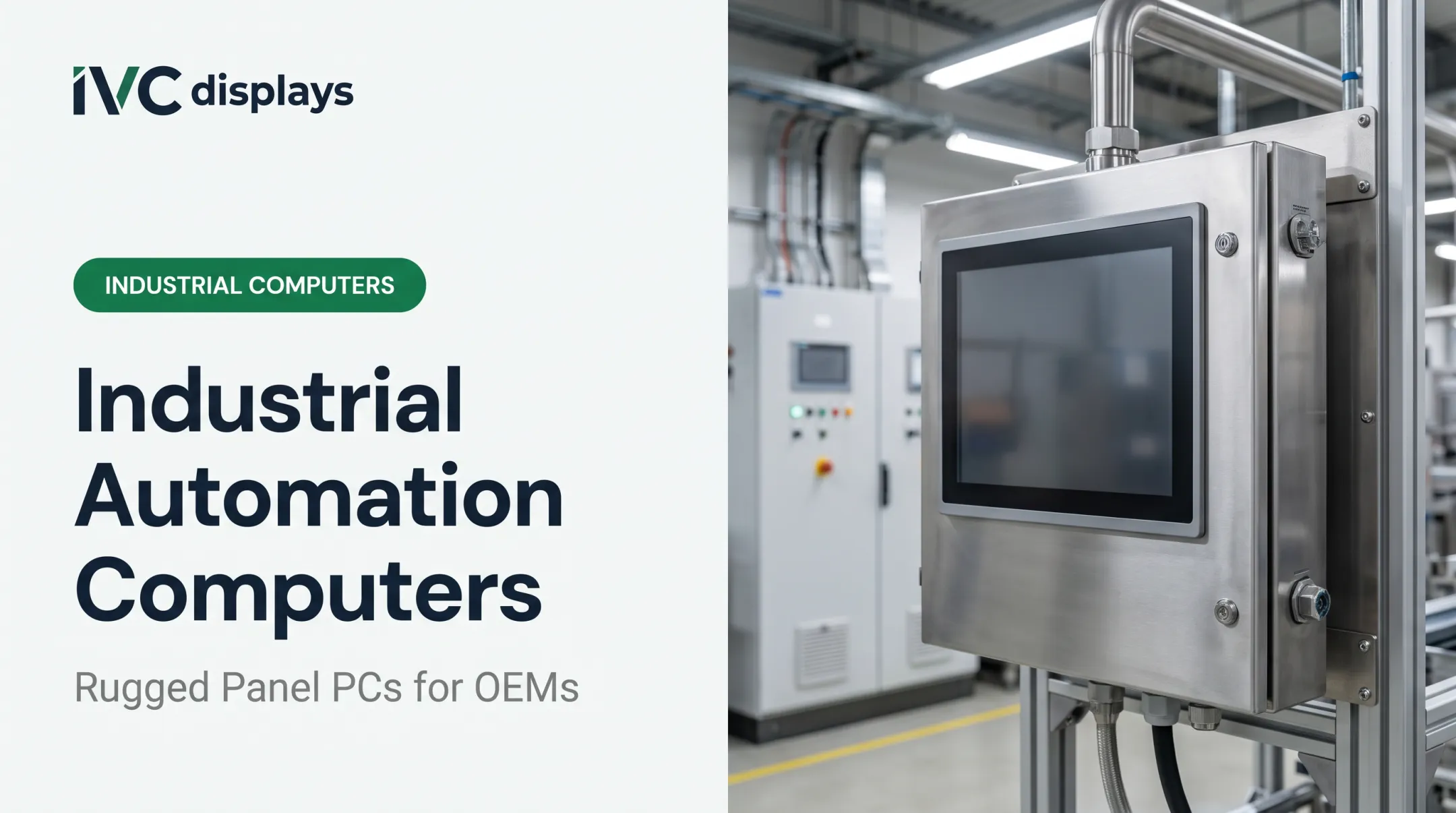
For clean manufacturing, the NP-71X4S stainless steel waterproof computer uses 304 or 316-grade steel with IP66, IP67, or IP69K protection depending on configuration. It fits pharmaceutical, dairy, and food-processing washdown zones. TIMET Metals, a titanium manufacturer, has deployed IVC's light industrial computers on its production floor.

Companies ordering 25+ units of a single configuration qualify for volume pricing. IVC's custom engineering covers enclosure design, I/O configuration, touchscreen selection, and mounting—useful for OEMs integrating panel PCs into their own equipment.
The Future of Computing in Manufacturing
Manufacturing hardware is shifting toward the edge. Rather than sending every data point to the cloud for processing, more facilities want computers that can analyze data on-site, in real time.
Deloitte's 2025 survey found manufacturers prioritizing edge-related investments over the next two years:
- 40% investing in data analytics
- 29% investing in AI
- 27% investing in Industrial IoT (IIoT)
NIST separately reports that 32% of manufacturers already use AI to analyze plant-floor IIoT data.
This trend depends on fanless, rugged edge computers that run near the equipment they monitor. IVC's ATOMIC-22 and NP-500-iX embedded computers fit that need: palm-sized, fanless units with -10°C to +60°C operating ranges, built for DIN-rail or wall-mount installation on the plant floor rather than in a server room.
As Industry 4.0 initiatives mature, edge hardware will handle more of the analytical work that once required a cloud round-trip.
Frequently Asked Questions
How are computers used in industry?
Computers coordinate automation and robotics, monitor equipment performance in real time, collect production data for analytics, and power quality-control inspection systems. They also connect production schedules with supply chain and inventory management.
What is the difference between an industrial computer and a regular PC?
Industrial computers use sealed, fanless designs, solid-state storage, and enclosures tested against standards like IEC 60529 for dust and water resistance. Regular PCs lack this protection and typically fail faster in dusty, hot, or vibration-heavy environments.
What industries rely most on industrial computers?
Manufacturing, oil and gas, food processing, marine and offshore, and defense sectors depend heavily on rugged computing hardware. Each faces environmental challenges (heat, moisture, vibration, or corrosion) that standard PCs can't handle.
Can industrial computers work in extreme temperatures?
Yes. Rugged designs are built and tested for wide temperature ranges; IVC's heavy-industrial line, for example, operates from -20°C to +70°C. Manufacturers reference IEC 60068 test standards when rating these ranges.
How do industrial computers support predictive maintenance?
They collect continuous sensor data on temperature, vibration, and performance, then feed it into analytics that flag potential failures early. This approach can cut downtime by 30-50% in typical applications.
Why do factories need washdown or marine-grade computer systems?
Food processing, pharmaceutical, and marine environments require frequent cleaning or face constant moisture and salt exposure. Stainless steel washdown enclosures and marine-certified housings prevent corrosion and contamination that would destroy standard hardware.