
Most conversations about computer vision (CV) stop at the software: the models, the training data, the algorithms. But a CV system is only as good as the hardware running it. Cameras, edge computers, and displays have to survive heat, dust, vibration, and washdown cycles that would kill consumer-grade electronics within weeks.
This article covers what computer vision actually is, where it's being deployed in manufacturing today, the real benefits and challenges, and — critically — the hardware infrastructure that determines whether your CV investment survives contact with the factory floor.
Key Takeaways
- Computer vision lets machines inspect, guide, and monitor production in real time using cameras and deep learning
- Primary plant uses: defect detection, robotic guidance, safety monitoring, traceability, and predictive maintenance
- Software gets the attention, but rugged edge hardware determines real-world reliability
- Machine-vision market set to hit $23.63B by 2030, up from $15.83B in 2025 (8.3% CAGR) (MarketsandMarkets, 2025)
What Is Computer Vision in Industrial Automation?
Computer vision is a subset of artificial intelligence that lets systems extract meaning from images and video, then act on it. IBM defines it as the AI capability for interpreting visual data using machine learning models. In a factory, that means a camera captures an image, software identifies patterns or anomalies, and the system triggers an action: rejecting a part, alerting a supervisor, or guiding a robotic arm. The process breaks into three steps:
- Image capture — cameras and sensors record the scene
- Interpretation — algorithms, often convolutional neural networks (CNNs), recognize patterns
- Output/action — the system flags, sorts, stops, or redirects based on what it "sees"

Is Computer Vision AI or Machine Learning?
Both, depending on the layer you're looking at. Computer vision is the broader AI discipline; machine learning and deep learning are the techniques that make modern CV accurate. CNNs remain the dominant model type for image-based tasks.
Computer Vision vs. Traditional Machine Vision
Basler draws a useful line here. Machine vision is the narrower, task-specific industrial implementation: fixed cameras, controlled lighting, and a defined task like measuring or reading a barcode. Computer vision is the broader capability that handles more visual variation. That matters when defects or part orientations aren't perfectly predictable.
The Hardware Stack Behind Industrial Computer Vision
Every CV deployment needs three hardware layers:
- Cameras and sensors to capture the image
- Edge processing units to run the interpretation in real time, often right at the line
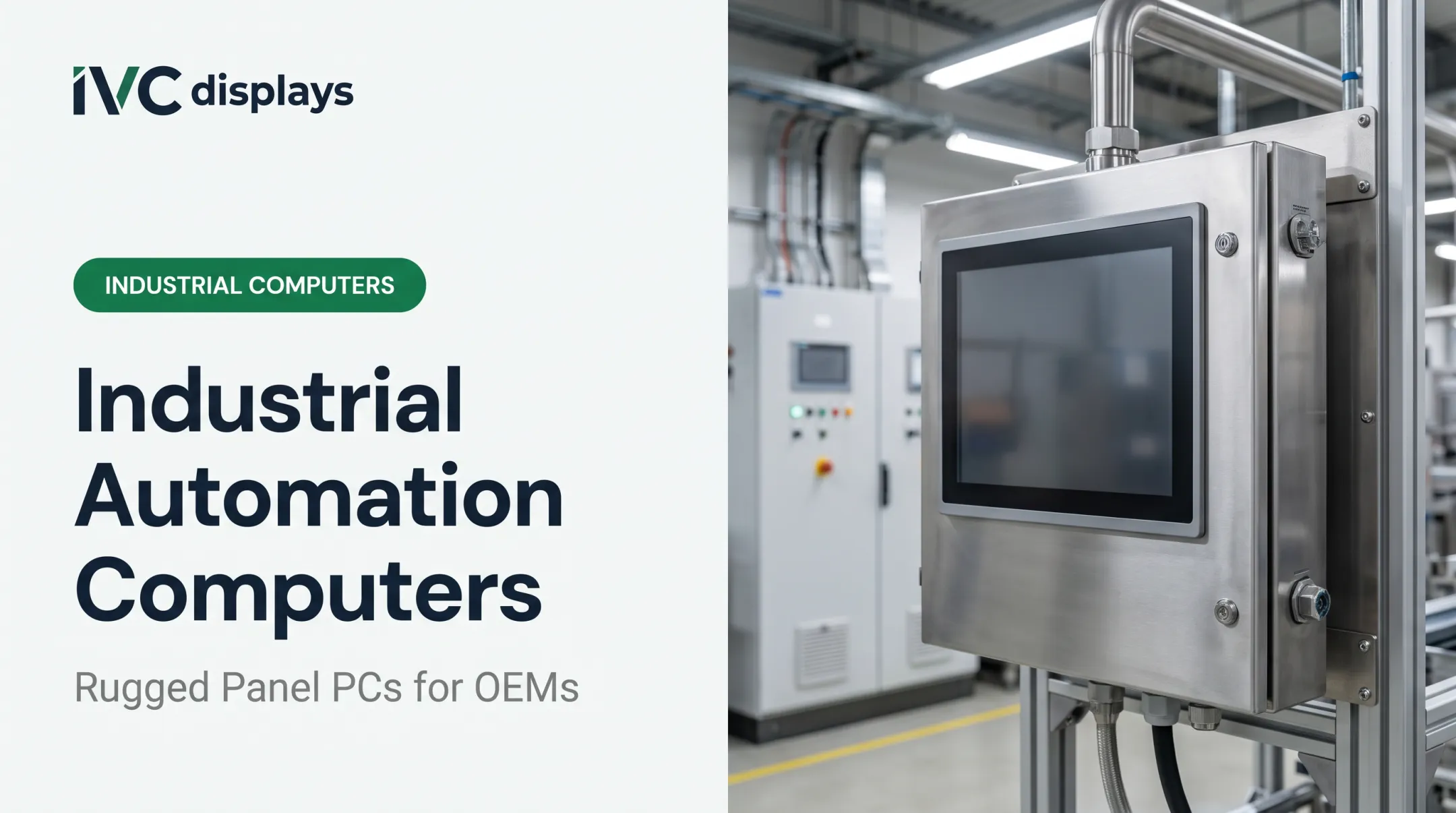
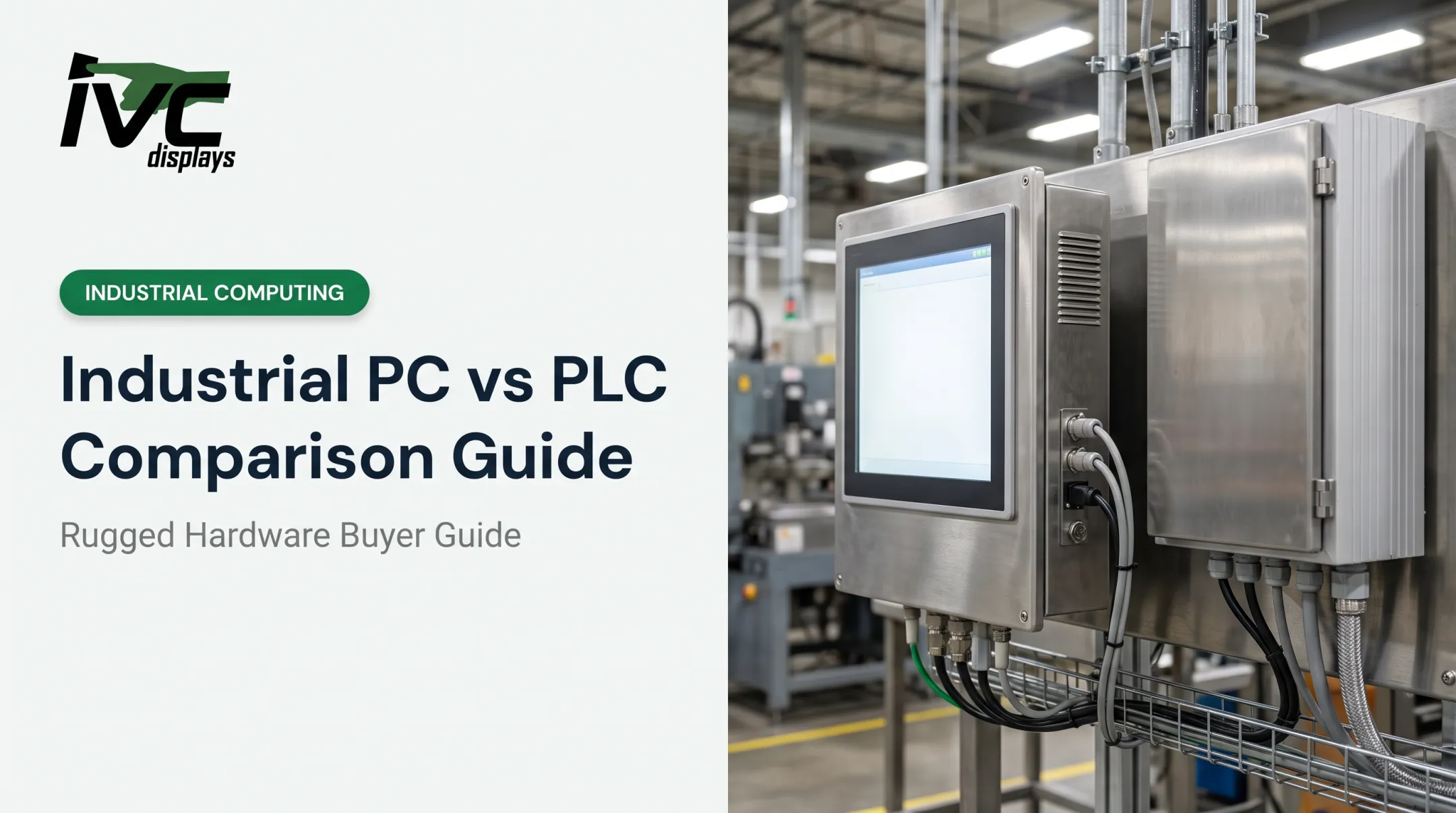
- Industrial displays/HMIs so operators can review flags, adjust settings, or intervene Consumer-grade laptops and monitors weren't built for factory conditions. Heat from nearby machinery, airborne dust, constant vibration, and washdown chemicals will degrade or destroy standard electronics fast. Industrial environments need fanless thermal designs, sealed enclosures, and wide operating temperature ranges—not office hardware repurposed for the plant floor.

Key Applications of Computer Vision in Manufacturing
Quality Control and Defect Detection
CV cameras inspect surfaces and internal structures at line speed, catching flaws human inspectors miss. One automotive vendor case reported a system catching 99.6% of lab-confirmed defects, compared to 84% for the plant's best human inspector (Overview.ai case study). A separate peer-reviewed casting-inspection study reported 99.86% accuracy on its test dataset, though the authors flagged uncontrolled lighting as a real-world variable to watch.
Takeaway: vendor numbers are a starting benchmark, not a guarantee. Validate against your own defect library before trusting a system on the line.
Robotic Guidance and Automated Assembly
Vision-guided robots locate, pick, and place parts without needing every position pre-programmed. A documented automotive work-cell case moved a manual process (roughly 90 seconds per part, up to four workers) toward a 5-second automated cycle requirement using a Cognex-based vision system. Bin-picking vendors now claim 98%+ success rates even on mixed-part bins (figures from vendor testing, not independent audits).
Worker Safety Monitoring
CV systems watch for:
- Missing PPE (hard hats, gloves, safety glasses)
- Workers entering restricted zones
- Posture or fatigue indicators during repetitive tasks
One vendor case reported a 62% reduction in safety events after deployment. However, a 2024 systematic review in Artificial Intelligence Review noted that broad industrial adoption of PPE-detection systems is still limited, and factors like motion blur can cause inconsistent readings. Treat safety CV as an early-warning layer, not a replacement for training and protocol.
Logistics, Sorting, and Traceability
Fixed-mount readers handle barcode scanning, pallet tracking, and automated counting without manual handling. A Texas-based 3PL reported a 0.5% read-rate improvement after switching to hands-free scanning. A 2025 Cognex survey of 283 manufacturing and logistics professionals found damaged or smudged codes were the top challenge for 41% of respondents. Label condition, not just camera quality, drives performance.
Predictive Maintenance
Thermal and visual monitoring catches equipment wear before it becomes a failure. In one documented case, a routine infrared inspection found a high-voltage connection running at 160°F, a loose connection that could have shut down the plant if left undetected. This isn't AI predicting failure; it's a structured visual workflow (baseline images, repeat routes, alarm thresholds) that catches physical precursors early.

Business Benefits of Computer Vision Adoption
Automating repetitive inspection and monitoring tasks frees workers for higher-value work. A Schneider Electric case documented through Cognex reported doubled production yield and a 70x reduction in false-bad rates after standardizing on AI-based inspection across 17 control areas.
Those throughput gains usually show up with quality, safety, and cost improvements as well:
- Cuts fatigue-driven inspection misses that appear late in a shift
- Holds every part to the same inspection criteria, cycle after cycle
- Flags safety risks continuous monitoring catches when a busy floor does not
- Lowers scrap and rework by catching defects earlier on the line
These are customer-reported outcomes, not universal benchmarks. Model your own ROI using yield, scrap rate, and rework data specific to your line.
Challenges in Deploying Computer Vision on the Factory Floor
Data quality. Automation World's 2025 reporting flagged that narrow or unbalanced training data, plus lighting changes like shadows or aging bulbs, can cause false positives or missed defects. CV models need diverse, representative image sets, including rare defect types.
Legacy integration. Older plant equipment wasn't designed with AI integration in mind. Fragmented data systems make it harder to feed clean, structured information into vision models.
Hardware survival. This is where a lot of pilots fail. Cameras, edge computers, and displays exposed to heat, dust, moisture, and vibration degrade fast if they're not built for it.
Rugged industrial hardware closes that gap. IVC Displays builds panel PCs, edge computers, and displays for these conditions:
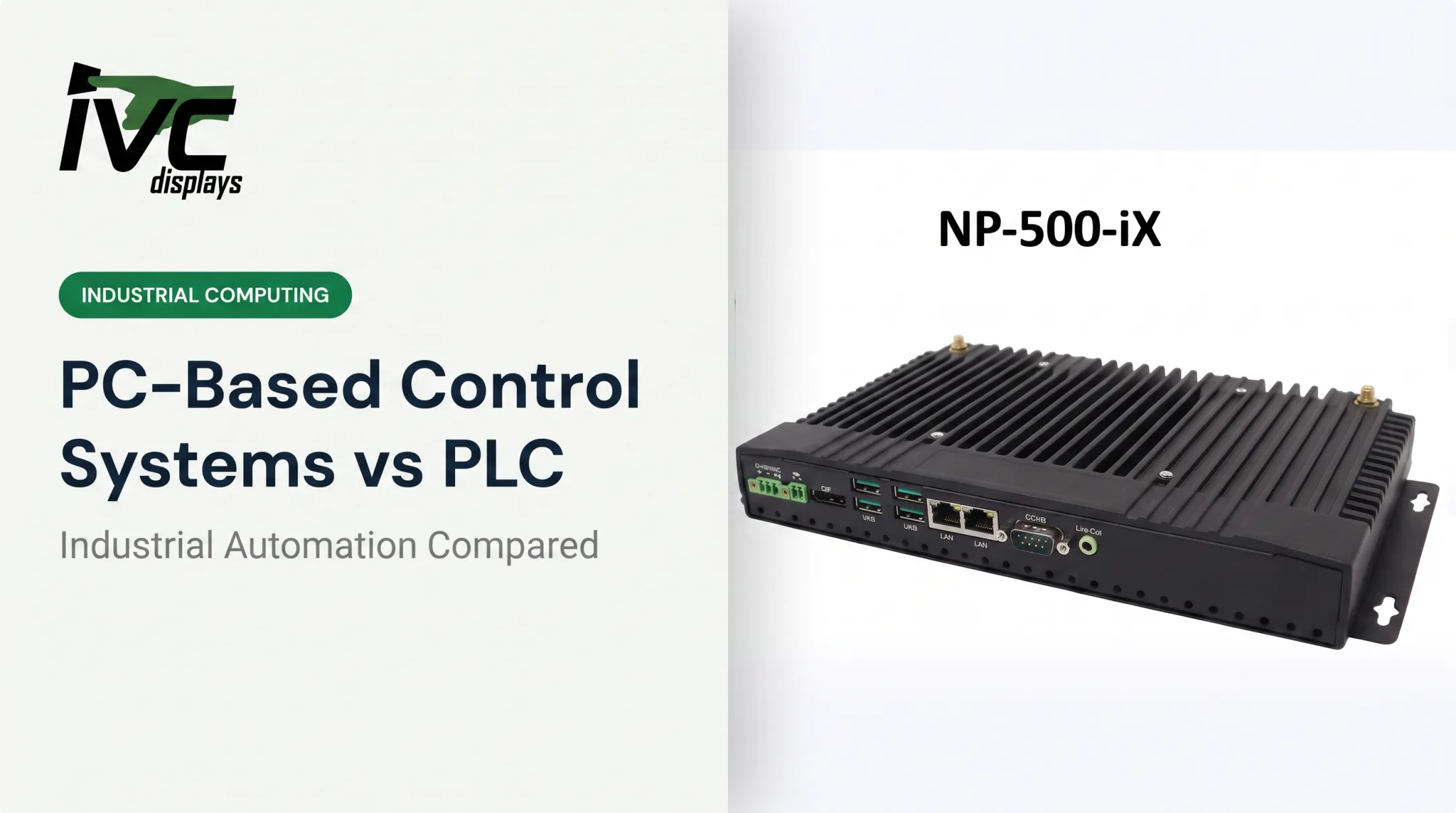
- Edge processing: fanless ATOMIC-22 and NP-500-iX units with dual Ethernet for camera and network links on the line
- Washdown environments: NP-71X4S stainless steel PCs (304/316) with IP66/IP67/IP69K sealing, fanless design, and M12 connectors for food, pharma, and chemical plants
- Operator displays: NP-5XXM touch monitors and NP-5XXOPN open-frame displays for reviewing flags and adjusting settings without consumer-grade screens on the floor

None of this replaces the CV software or model. It is the foundation that keeps inference running when consumer hardware would overheat or corrode.
Getting Started: Implementing Computer Vision in Your Facility
Don't try to automate everything at once. Follow a staged approach:
- Pick one high-impact pilot. Defect detection on a single line or safety monitoring in one zone gives you measurable results fast.
- Audit your environment first. Temperature swings, dust levels, moisture, and vibration should drive your camera and edge-hardware selection — not the other way around.
- Choose rugged, purpose-built hardware. Consumer PCs and monitors weren't designed for plant conditions. Prioritize long-term support and custom engineering options (enclosure, I/O, mounting, touchscreen) before you scale past a pilot line.
- Validate before expanding. Confirm your defect-detection or read-rate numbers on your own data before rolling out to additional lines.
Frequently Asked Questions
What is computer vision in industrial automation?
Computer vision is an AI technology that lets machines interpret images and video to guide automated decisions on the factory floor, from spotting defects to guiding robots. It combines cameras, sensors, and algorithms to replace or augment human visual inspection.
Is computer vision considered AI or machine learning in industrial automation?
Computer vision is a subset of artificial intelligence. It typically relies on machine learning and deep learning models, especially convolutional neural networks (CNNs), to interpret images and improve accuracy over time.
What are examples of computer vision applications in industrial automation?
Common applications include defect detection, robotic guidance for pick-and-place tasks, PPE and safety-zone monitoring, barcode reading and traceability, and thermal-based predictive maintenance.
What hardware is needed to run computer vision on a factory floor?
You need industrial cameras, edge computers or panel PCs to process images in real time, and rugged displays for operator interaction. Standard office-grade hardware typically fails under factory heat, dust, and vibration.
How much does it cost to implement computer vision in manufacturing?
Cost depends on camera quality, lighting and optics, edge-computing hardware, and integration complexity. Custom-engineered rugged hardware and software validation typically add more cost than the cameras alone.
Can computer vision work in harsh manufacturing environments like food processing or oil and gas?
Yes, with the right hardware. Washdown-rated, IP66/IP67/IP69K-sealed stainless steel systems support food and pharmaceutical plants, while marine-grade, corrosion-resistant enclosures suit oil and gas and offshore applications.