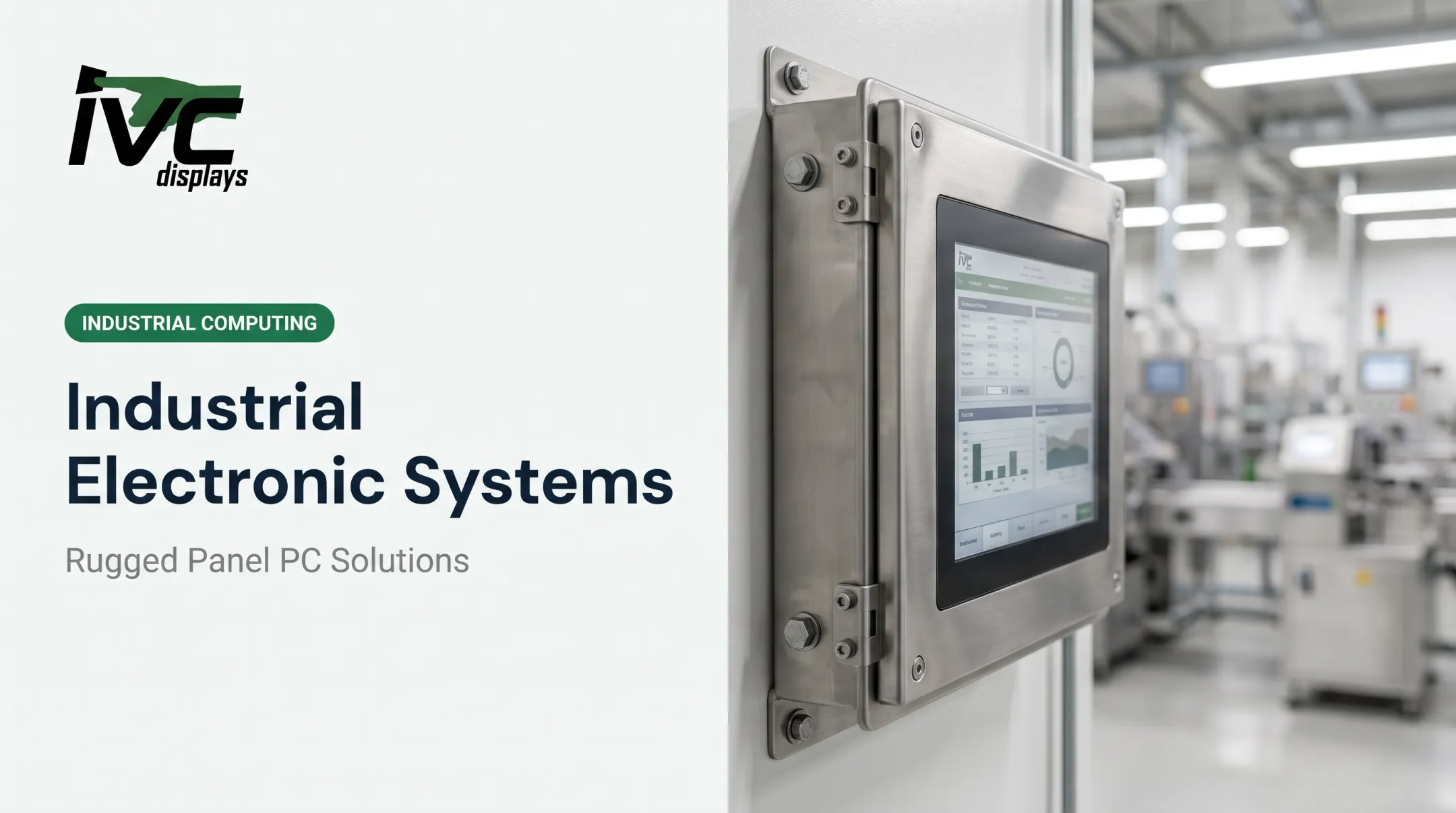

This guide covers what ruggedized design actually means, the engineering principles behind it, the standards that validate it, and how to pick a hardware partner that won't leave you stranded. Ruggedized electronics keep manufacturing lines, logistics networks, offshore platforms, and defense operations running when conditions get ugly.
Key Takeaways
- Ruggedized electronics resist temperature extremes, shock, vibration, moisture, dust, and electromagnetic interference
- MIL-STD-810 and IP ratings are engineering benchmarks, not guarantees: verify the test conditions
- Enclosure design and thermal management drive field reliability as much as the components inside
- Purpose-built rugged hardware cuts field failures and lowers total ownership cost versus modified consumer gear
What Does "Ruggedized" Actually Mean?
Ruggedized electronics are hardware built with protective features: sealed enclosures, reinforced chassis, and wider operating temperature ranges that survive conditions that would destroy consumer-grade devices. Think industrial computers, panel PCs, and displays built for vibration, dust, humidity, and electromagnetic noise that standard equipment was never designed for.
Marketing muddies the term. A phone case sold as "shockproof" is a consumer accessory with a durability claim, not an engineered industrial system.
Ruggedized vs. Rugged: The Real Distinction
Here's where buyers get confused:
- Ruggedized: commercial hardware retrofitted with a case, gasket, or coating
- Rugged (purpose-built): engineered from the ground up with sealed thermal design, industrial-grade components, and application-specific enclosure materials
The Instrumentation, Systems, and Automation Society (ISA) notes that industrial PCs differ from consumer PCs across ruggedness, reliability, long-term availability, and expandability—not just a protective shell.
That distinction matters when you evaluate quotes. A vendor selling "ruggedized" tablets that began as consumer hardware is not offering the same reliability as a system designed around IP69K sealing and fanless thermal management from day one.
Core Design Principles for Ruggedized Electronics
Real ruggedization happens at multiple layers simultaneously. Skip one, and the whole system is only as strong as its weakest point.
Thermal Management
Heat kills electronics faster than almost anything else. An industry whitepaper citing a U.S. Air Force Avionics Integrity Program study attributes over 50% of electronics failures to high temperatures. Treat that figure as directional rather than gospel, since the original methodology isn't publicly detailed.
Common approaches include:
- Fanless, sealed designs that eliminate moving parts prone to dust ingress and mechanical failure
- Conduction cooling that channels heat through the chassis itself instead of relying on airflow
- Component spacing that prevents thermal hot spots on the PCB
IVC Displays' heavy-industrial IVC-XXPC-P line, for example, uses a sealed fanless design rated from roughly -20°C to +70°C, depending on configuration. No fan means no failure point and no dust pathway.

Shock, Vibration, and Enclosure Integrity
A rugged metal chassis resists shock and vibration where a plastic consumer housing would crack. Sealed enclosures with gasketed seams keep moisture and dust out entirely rather than merely resisting them.
For washdown or corrosive environments, that means:
- Conformal coatings on exposed circuitry
- Waterproof M12 connectors and sealed I/O ports
- Fully sealed housings rated IP66, IP67, or IP69K depending on exposure severity
EMI Shielding and Material Selection
Motors, variable-frequency drives, and heavy machinery throw off electromagnetic interference that scrambles unprotected electronics. Proper EMC design means shielding at the enclosure level and careful PCB layout to route signal lines away from noise sources.
Material choice then becomes a balancing act:
| Material | Strength | Tradeoff |
|---|---|---|
| 304 stainless steel | General industrial durability, corrosion resistance | Heavier than aluminum |
| 316 stainless steel | Chemical and salt resistance for food/pharma | Higher cost than 304 |
| Anti-corrosion aluminum | Lighter weight for marine/mobile use | Less chemical resistance than 316 |
There's no universal answer here. The right choice depends on whether you're fighting salt spray, washdown chemicals, or just weight constraints on a vehicle mount.

Standards and Certifications That Define Ruggedness
Spec sheets throw around IP ratings and MIL-STD numbers like they're interchangeable. They're not, and knowing the difference protects you from paying for durability you're not actually getting.
IP Codes: Reading the Two Digits
The IP (Ingress Protection) code uses two numbers. The first rates solid-object protection from 0 to 6; the second rates liquid protection from 0 to 9, per IEC's official standard. So:
- IP65 — dust-tight, protected against water spray
- IP67 — dust-tight, protected against temporary immersion
- IP69K — dust-tight, protected against high-pressure, high-temperature washdown
For food processing or marine decks, that IP69K rating isn't a nice-to-have. It's the difference between a working device and a dead one after the first sanitation cycle.
MIL-STD-810 and NEMA-250
MIL-STD-810 is the U.S. Department of Defense's testing methodology for environmental stresses: shock, vibration, temperature, and humidity. Important nuance: the standard provides tailoring guidance for engineering direction, not a single universal pass/fail test every product must clear.
Vendors who claim blanket "MIL-STD-810 compliance" without specifying which test methods and levels they met are being vague on purpose.
NEMA-250 covers enclosure protection in the U.S. and aligns loosely with IP codes, but NEMA itself cautions that NEMA and IEC ratings can't be directly converted. The test methods differ. A NEMA Type 4X enclosure isn't automatically an IP67 enclosure, even if they sound similar on paper.

Ask vendors exactly which test methods and levels their equipment passed. "Rated to MIL-STD-810" without specifics is a red flag.
Industry Applications of Ruggedized Hardware
Manufacturing, Automation, and Food Processing
Food and beverage plants need washdown-ready hardware that survives daily high-pressure sanitation cycles. FDA regulations under 21 CFR 117.40 require equipment surfaces to be corrosion-resistant and cleanable, which rules out standard enclosures entirely.
Stainless steel panel PCs built for this environment typically include:
- 304 or 316 stainless steel housings, fully sealed
- IP66, IP67, or IP69K protection depending on wash intensity
- Glove-friendly resistive touchscreens for wet operator hands
On the automation side, manufacturers like TIMET use light industrial computers on titanium production lines. That same demand for consistent uptime on a busy floor drives ruggedized hardware well beyond washdown environments.
Marine, Oil & Gas, and Defense
Offshore environments combine salt spray, constant vibration, and wide temperature swings — a brutal combination for standard electronics. Marine-grade panel PCs need certification specific to maritime use, such as IEC 60945, which governs shipborne navigation and radiocommunication equipment testing.
NOAA, for instance, uses a heavy-industrial computer to monitor engine systems aboard the research vessel Fairweather. In that setting, sealed, fanless, wide-temperature-range hardware is required.

For defense and logistics OEMs, custom rugged hardware integration matters. Standard catalog units rarely fit existing vehicle or vessel systems without changes to the enclosure, I/O, or mounting.
Choosing the Right Rugged Hardware Partner
Evaluating vendors gets easier once you know what actually separates a serious rugged hardware manufacturer from someone reselling modified consumer gear.
Look for:
- Specific IP ratings and test methods, not vague "military-grade" claims
- Documented operating ranges, sealed designs, and enclosure materials matched to your environment
- Enclosure, I/O, and mounting changes tailored to your equipment, not generic add-ons
- A lifecycle program that does not force a redesign every two years
IVC Displays aligns with these criteria across rugged panel PCs, industrial monitors, vehicle-mount computers, and marine-grade systems. That includes IP66/IP67/IP69K stainless steel washdown units and NP-9XX-MA marine panel PCs certified to IEC 60945, IACS E10, and DNV.
OEM production support programs matter when you deploy hundreds of units across a fleet or production line and cannot absorb mid-run spec changes.
For OEM integrators specifically, ask about:
- Enclosure and chassis customization
- I/O and connector configuration
- Custom mounting for control cabinets or machinery
- Multi-year component availability guarantees
Standard catalog configurations typically ship within days to a couple of weeks. Custom builds take several weeks longer for engineering, sourcing, and testing. That tradeoff beats redesigning your control system every time a consumer-grade part goes obsolete.
Frequently Asked Questions
What does "ruggedized" mean?
Ruggedized electronics are hardware built or reinforced with protective features such as sealed enclosures, wide temperature tolerance, and shock resistance to survive conditions beyond standard consumer devices. It's distinct from simple marketing claims like "water-resistant."
Are rugged industrial computers worth the cost?
Yes, for most industrial applications. Rugged systems typically last 7-15 years versus 3-5 years for consumer PCs, and the upfront premium usually costs less than repeated field failures and downtime.
What is the difference between rugged and ruggedized electronics?
"Rugged" describes purpose-built systems engineered from the ground up for harsh environments. "Ruggedized" often means a commercial device reinforced after the fact , and is usually less reliable long-term.
What industries rely most on ruggedized electronics?
Manufacturing, defense, marine and offshore, oil and gas, and logistics are the primary users. Food processing and pharmaceuticals also depend heavily on washdown-rated rugged hardware.
How do I know if a device meets true ruggedization standards?
Check for specific IP ratings (like IP67 or IP69K) and documented MIL-STD-810 test methods , not just vague marketing language. Ask vendors which exact test levels their equipment passed.
What is the typical lifespan difference between rugged and standard commercial electronics?
Sealed designs and industrial-grade components cut failures from dust, moisture, and heat. That is why rugged industrial hardware commonly delivers 7-15 years in the field while commercial-grade equipment often lasts roughly 3-5 years.