
The cost of getting this wrong is steep. Siemens' 2024 downtime analysis found that unscheduled downtime consumes 11% of annual revenue at the world's 500 biggest companies—roughly $1.4 trillion globally. A separate ABB survey of over 3,200 maintenance leaders found two-thirds face unplanned downtime monthly, at $125,000 an hour.
This article breaks down what computer integration actually means, the four architectural models you'll encounter, the platforms that support them, and why none of it works without hardware built to survive where it's installed.
Key Takeaways
- Computer integration links hardware, software, and data systems so information moves automatically, without manual re-entry
- Four integration models exist: point-to-point, hub-and-spoke, common data format, and enterprise service bus (ESB)
- Rugged, purpose-built hardware is the physical foundation: integration fails if the field device fails first
- Platform choice splits between enterprise iPaaS tools and plant-floor SCADA/MES middleware
What Is Computer Integration?
Computer integration connects different computer systems, software applications, and hardware devices so they operate as one unified system. Instead of an operator reading a gauge and typing numbers into a spreadsheet, the data flows automatically, from the source to wherever it needs to go.
Integration typically happens at two levels:
- IT-level integration — connects business software: ERP, CRM, databases, financial systems
- OT-level integration — connects machines, sensors, and controllers on the physical plant floor
NIST's 2023 guidance on operational technology defines OT as programmable systems that interact directly with the physical environment: they monitor and control real equipment rather than only processing records. That job differs from syncing a CRM with an accounting platform. Plant-floor integration needs hardware built for physical conditions, not software alone.
A practical example: a factory floor panel PC captures cycle counts and machine status in real time, then pushes that data straight into the ERP. No clipboard, no spreadsheet, no lag between what happened on the line and what shows up in the report.
Why It Matters for Industrial and Commercial Operations
Integration cuts manual data transfer, reduces transcription errors, and speeds up decisions across manufacturing, logistics, and defense operations. When a supervisor doesn't have to wait for end-of-shift paperwork to know a line is underperforming, they can act that day instead of that week.
Manufacturing, automation, food processing, and oil & gas operations all depend on hardware-software ecosystems staying connected for uptime and traceability. A missed reading isn't just a data gap. In food processing or pharmaceuticals, it can mean a failed audit trail.
The Four Main Types of System Integration
Not every plant needs the same architecture. The right model depends on how many systems you're connecting and how much centralized control you want.
Point-to-Point Integration Each system connects directly to another. Simple to set up for two or three systems, but connections multiply fast. At scale, these setups become tangled, hard to troubleshoot, and expensive to maintain.
Hub-and-Spoke Integration A central hub manages connections to every system. This simplifies governance and makes it easier to add new applications, but the hub becomes a single point of failure. If it goes down, everything connected to it goes dark.
Common Data Format Integration Systems agree on a shared data standard (often XML-based) so they don't need custom translation for every pair. This cuts down on one-off connections but requires upfront work to define a format that fits every application's needs.
Enterprise Service Bus (ESB) Integration A messaging backbone that lets multiple applications communicate through standardized protocols. ESBs decouple applications from one another and scale well, though they require canonical-format design and an adapter for each connected system.
Which fits your operation?
| Business Size | Recommended Model |
|---|---|
| Small, few systems | Point-to-point |
| Growing, needs governance | Hub-and-spoke |
| Multi-department, varied data types | Common data format |
| Large, multi-site enterprise | ESB |

Popular Integration Platforms and Tools
Platform choice comes down to what you're connecting: business systems or plant-floor equipment.
Enterprise/business integration (iPaaS):
- Gartner defines iPaaS as vendor-managed cloud services for connecting internal and external applications
- Examples include MuleSoft Anypoint, Workato, Boomi, and Oracle Integration Cloud
- Boomi's platform specifically bundles integration, EDI/B2B management, and API governance in one suite
Plant-floor and OT integration:
- Ignition (Inductive Automation): server-based hub that connects equipment to SQL databases and bridges production with IT
- Kepware (PTC): links legacy OT devices to apps via OPC and proprietary protocols, feeding MES and SCADA clients
The priority determines the tool. If you're syncing ERP and CRM, look at iPaaS. If you're pulling machine data off the plant floor, you need SCADA/MES middleware instead.
Across every platform, integration is only as reliable as the hardware collecting and transmitting data at the source. A perfect ESB architecture means nothing if the panel PC on the line drops out when temperature or vibration spikes.

Why Rugged Hardware Is the Foundation of Reliable Computer Integration
Software can't fix a data flow problem caused by a device that stopped working. If the field hardware fails in extreme heat, dust, vibration, or a washdown cycle, the integration stops at that point, full stop.
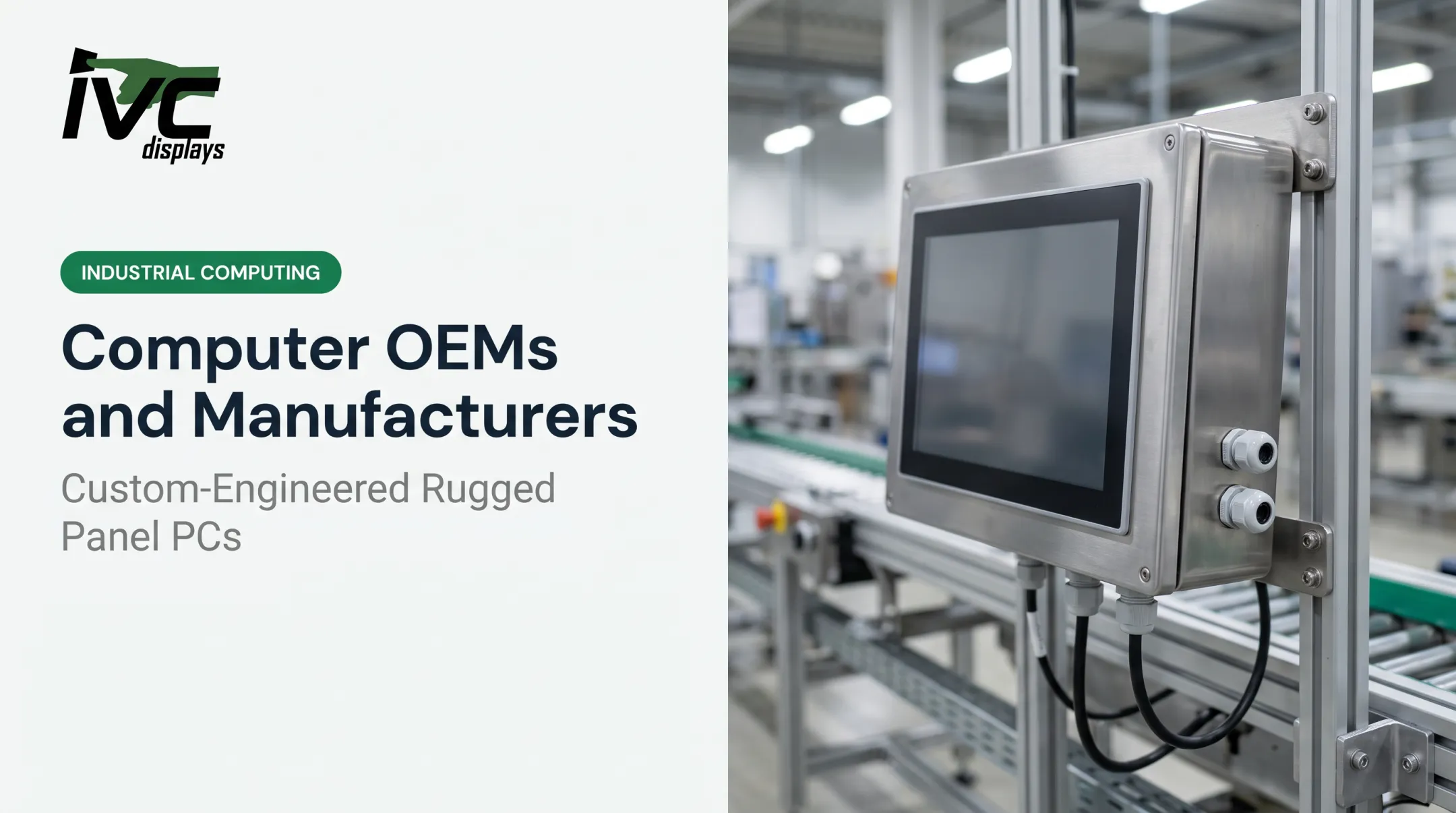
Rugged panel PCs, industrial monitors, and vehicle-mount computers are the hardware endpoints for integration in factories, warehouses, and offshore rigs. IVC Displays manufactures that class of hardware for OEM and plant integration across manufacturing, automation, logistics, and defense.
Where This Shows Up in the Field
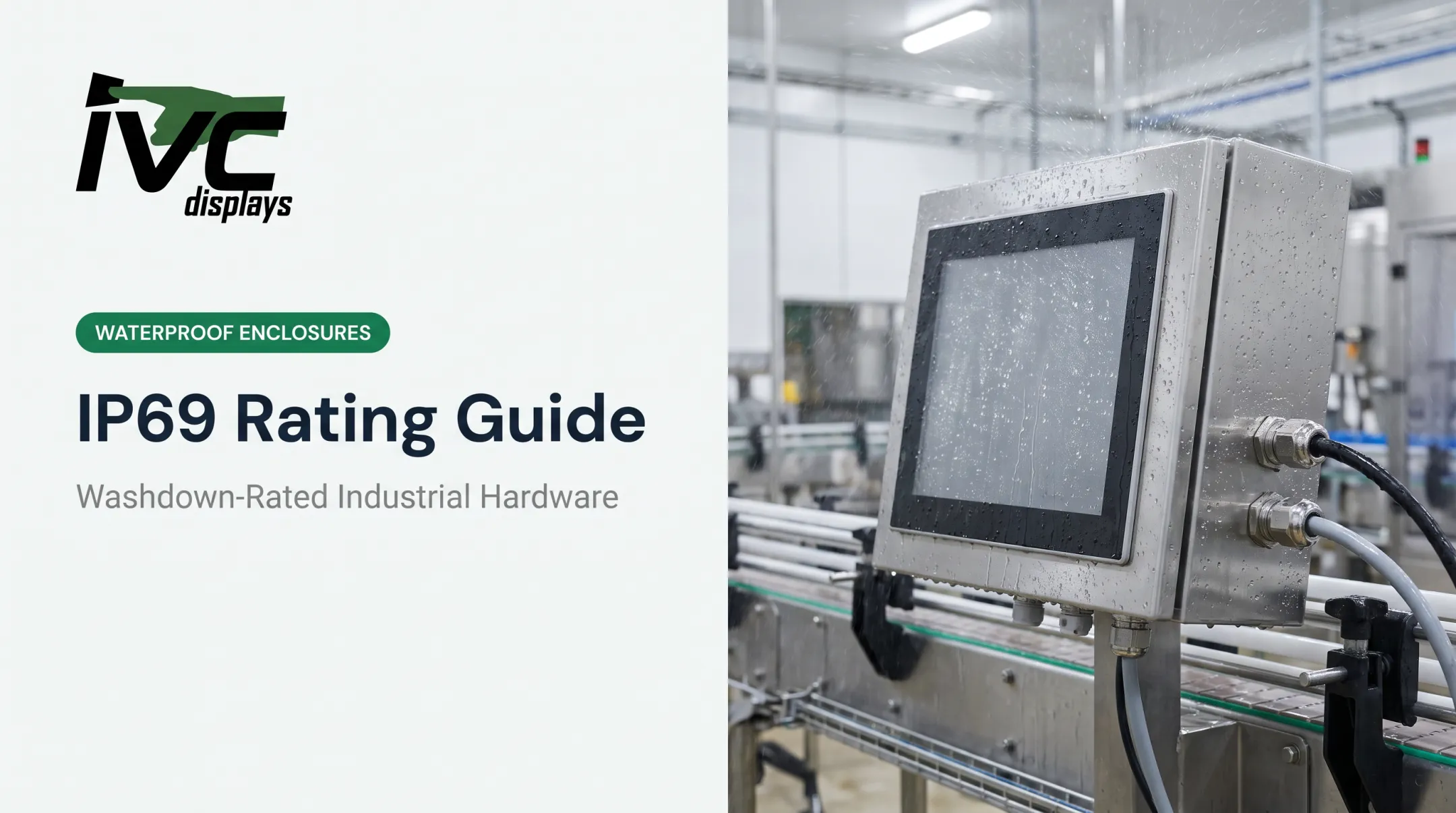
- Food processing washdown: IVC's NP-71X4S stainless steel PCs (IP66/IP69K) handle repeated high-pressure sanitation cycles
- Offshore data collection: NP-9XX-MA marine panel PCs (IEC 60945, IACS E10, DNV) support engine monitoring, navigation, and SCADA/HMI
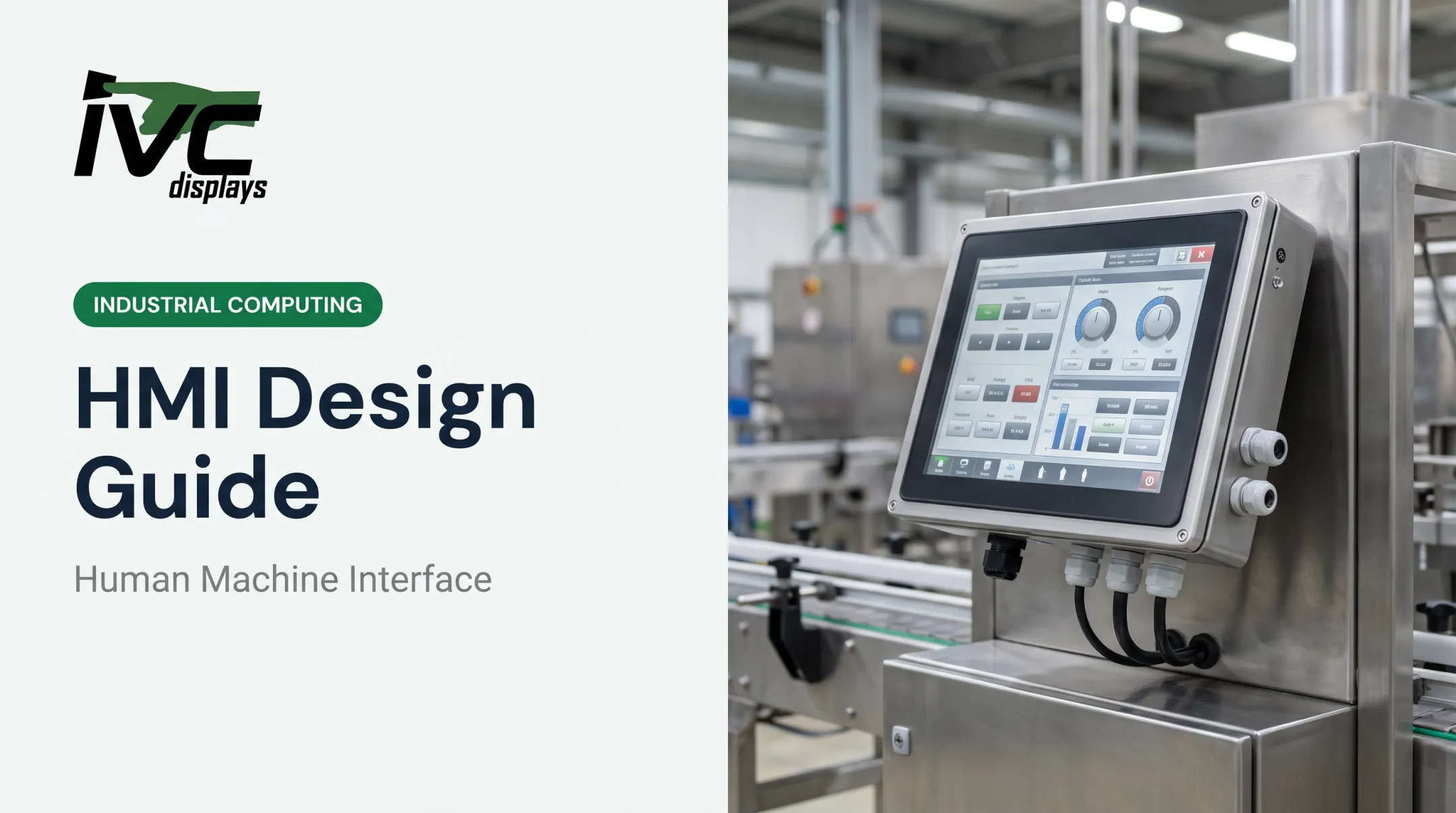
- Plant-floor HMI/SCADA: NP-9XXi fanless touchscreen PCs add IP66 front protection, dual Gigabit Ethernet, and RS-232/422/485 I/O
- Logistics and transportation: NP-6XXS units and open-frame monitors use IP66 aluminum bezels and wide-range DC power

Two design features do most of the heavy lifting on reliability: 9–36V DC wide-range power input, so cabinet voltage swings don't drop the system, and sealed fanless thermal design, so dust and vibration have no moving parts to kill. IVC's IVC-XXPC-P heavy-industrial series, for instance, operates from -20°C to +70°C using this approach.
That is why purpose-built industrial hardware holds an integration stack together longer than consumer PCs pressed into plant duty. Consumer machines are not built for daily temperature swings, particulates, or moisture, so they become the first break in the data path.

Benefits and Challenges of Computer Integration Systems
Benefits:
- Faster decision-making from real-time visibility across departments and sites
- Fewer manual entry errors and less duplicated data
- Better traceability for audits, recalls, and compliance reporting
Challenges:
- Legacy compatibility limits: CISA's 2025 guidance notes OT environments often mix proprietary protocols and equipment that is difficult or impossible to patch
- Expanded cyber exposure: Dragos reported 22% of 2024 OT vulnerability advisories were network-exploitable and perimeter-facing, up from 16% the year before
- Hardware failure in harsh environments that interrupts data flow at the source before it reaches a platform
Getting started: Prioritize your highest-value systems first rather than trying to integrate everything at once. Pick hardware and software rated for your actual operating environment, not just what's cheapest on paper.
A washdown-rated panel PC costs more upfront than a repurposed office computer, but it won't need replacing after six months of daily sanitation cycles.
Frequently Asked Questions
What is computer integration?
Computer integration connects different software, hardware, and data systems so they work as one system and share data automatically. It eliminates the need for manual data transfer between disconnected tools.
What are the four main types of system integration?
The four models are point-to-point (direct connections), hub-and-spoke (central hub manages links), common data format (shared standard), and ESB (messaging backbone). Each trades simplicity for scalability differently.
What are some popular integration platforms?
Common categories include iPaaS tools like MuleSoft and Boomi for business systems, and industrial SCADA/MES middleware like Ignition and Kepware for plant-floor data. The choice depends on whether you're connecting business software or machine-level equipment.
Why does hardware reliability matter in computer integration?
Integration depends on continuous, accurate data collection at the source. If field hardware fails in harsh heat, dust, or vibration, the entire data flow stops regardless of how good the software platform is.
How is IT integration different from OT integration?
IT integration connects business software like ERP and CRM systems. OT integration connects machines, sensors, and industrial controllers that interact directly with physical processes on the plant floor.
Is computer integration hard to set up for a manufacturing plant?
It does not have to be if you phase the work. Start with one or two critical systems, choose rugged hardware built for your environment, then expand once those links prove out.